翻刻
其頃の碩学(せきがく)直(ちよく)講(かう)味酒(あぢさけ)の浄(きよ)成(なり)といふ。博学(はくがく)
の師(し)有。空海(くうかい)浄(きよ)成(なり)を外典(げてん)の師(し)とし随(したか)ひ。毛詩(もうし)左伝(さでん)尚(じやう)
書(じよ)等をならひまなばせ給ふに。一を聞ては百を
さとりたまへは。浄成も感(かん)にたえて。家(いへ)の秘(ひ)
伝(でん)とするところまでのこりなくつたへさづけた
てまつる。それよりまた。岡田(をかだ)の博士(はかせ)に御あひあ
りて。左氏(さし)春秋(しゆんしう)をまなびたまひ。こゝやかしこと
きんがくせさせ給ひけり
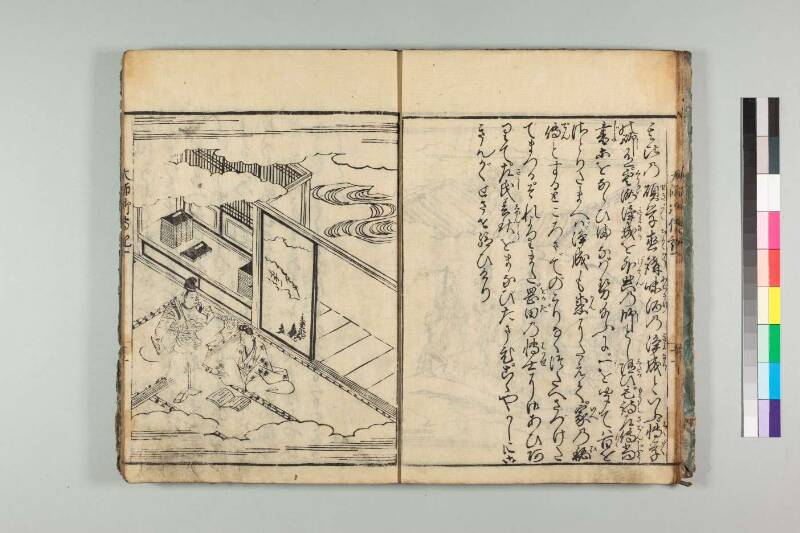
【挿し絵】
現代語訳
その頃の碩学で直講の味酒浄成という博学の師がいた。空海は浄成を外典(仏教以外の学問)の師として従い、毛詩・左伝・尚書などを習い学ばれるに、一を聞いては百を悟られたので、浄成も感動に堪えず、家の秘伝とするところまで残らず伝え授け申し上げた。それからまた、岡田博士にお会いになって、左氏春秋を学ばれ、あちこちで勤学なさったのであった。
【挿絵】
英語訳
At that time there was a learned scholar and lecturer named Ajisake no Kiyonari, a master of extensive learning. Kūkai followed Kiyonari as his teacher of secular studies (non-Buddhist learning), studying the Book of Songs, Zuo Zhuan, Book of Documents, and other texts. Since he could comprehend a hundred things upon hearing one, Kiyonari was moved beyond measure and transmitted to him without reserve even the secret teachings of his house. After that, he also met with Dr. Okada and studied the Zuo Commentary on the Spring and Autumn Annals, pursuing his studies here and there.
[Illustration]