翻刻
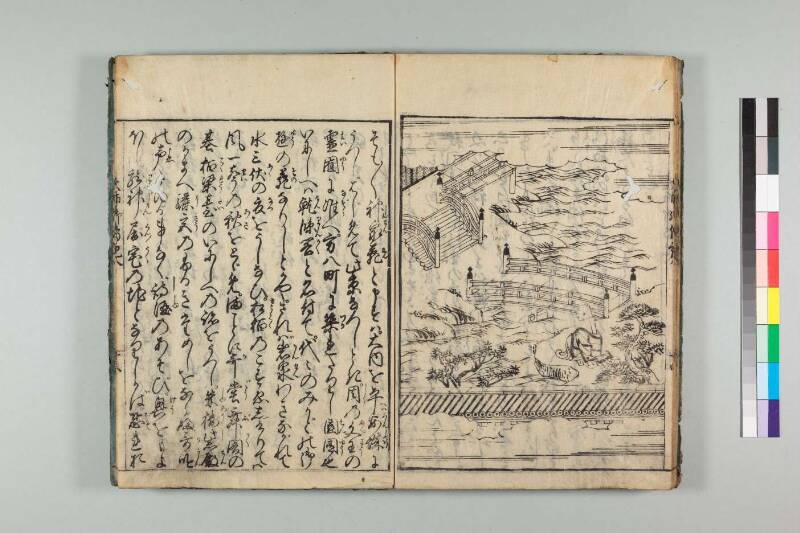
【挿し絵】
そも〳〵神泉苑(しんぜんえん)と申すは。大内を平安城(へいあんじやう)に
うつし。はじめて此京なつしとき周(しう)の文王(ふんわう)の
霊囿(れいゆう)に准(なぞら)へ。方八町に築(つか)れたりし園囿(えんゆう)也
いにしへは乾臨閣(けんりんかく)と名付て。代々のみかどの御
遊(ゆう)の苑(その)なりしとかや。されば岩泉(がんせん)わきながれて
水三 伏(ふく)の夏(なつ)をうしなひ。松柏(せうはく)のこすゑしけりては
風一 声(せい)の秋(あき)をとゞめ。まことに歌堂(かだう)舞閣(ぶかく)の
基 柏梁台(はくれうたい)のいにしへの跡をうつし。朱楼(しゆろう)紫殿(しでん)
のかまへ驪宮(りきう)のふるきためしをならふ。歌吟(かきん)
の声(こえ)たゆる事なく。詩趣(ししゆ)のあそび。興をもよ
ほし。竜神(りうじん)屈宅(くつたく)の地となりしかば。恐れお
現代語訳
【挿し絵】
そもそも神泉苑(しんぜんえん)と申すのは、大内(おおうち)を平安城(へいあんじょう)に移し、初めてこの京(みやこ)を定めた時、周(しゅう)の文王(ぶんのう)の霊囿(れいゆう)になぞらえて、四方八町に築かれた苑囿(えんゆう)である。昔は乾臨閣(けんりんかく)と名付けて、代々の帝(みかど)の御遊(ごゆう)の苑(その)であったとのことだ。それゆえ、岩間より泉が湧き流れて、水は三伏(さんぷく)の夏の暑さを和らげ、松や柏(かしわ)の梢(こずえ)が茂っては、風はひとたびの声をもって秋をとどめる。まことに歌堂(かどう)・舞閣(ぶかく)の基(もとい)は、柏梁台(はくりょうだい)の昔の跡を移し写し、朱楼(しゅろう)・紫殿(しでん)の構えは驪宮(りきゅう)の古きためしにならうものである。歌吟(かぎん)の声が絶えることなく、詩や趣(おもむき)の遊び興を催し、龍神が屈宅(くったく)される地となっていたので、恐れお〔それ敬われていた〕……
英語訳
[Illustration]
To begin with, what is called Shinsen'en was a garden enclosure built to span eight chō on each side, modeled after the sacred hunting park (靈囿, *lingyou*) of King Wen of Zhou, when the imperial capital was transferred to Heiankyō and this capital was first established. In former times it was named the Kenrin-kaku, and it is said to have served as the pleasure garden of successive emperors. Thus, springs welled up and flowed from among the rocks, their waters driving away the heat of the midsummer days of the "Three Hottest Periods," and as the pine and cypress treetops grew thick with foliage, a single breath of wind would call forth and hold the feeling of autumn. Truly, the foundations of its song pavilions and dance galleries evoked the legacy of the Boliang Terrace of antiquity, while the arrangement of its vermilion towers and purple halls followed the ancient precedent of the Lishan Palace. The sounds of song and verse never ceased; the pleasures of poetic inspiration stirred the spirit, and as it had become a place where the Dragon Deity took up residence, it was held in awe and reverence… [text continues on next page]