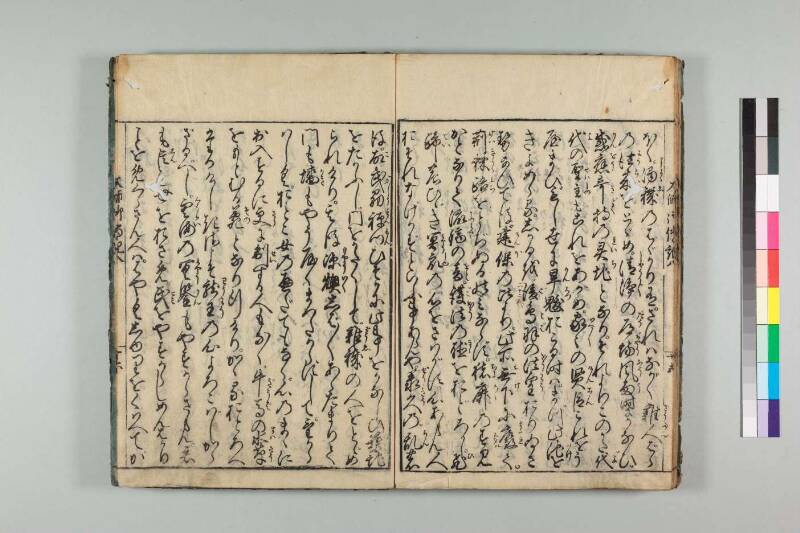
翻刻
ほく。濁穢(じよくゑ)のはゞかり有。されはながく雑人(ざうにん)ばら
の往来(わうらい)をとゞめ。清浄(しやうじやう)の道場(だうぢやう)風雨(ふうう)時にかなひ。
感応(かんをう)奇特(きどく)の霊地(れいち)となり。それよりこのかた代(よ)
代(よ)の聖主(せいしゆ)もこれをあがめ。家々(いへ〳〵)の賢臣(けんしん)これをう
やまひ。もし世に旱魃(かんはつ)おこる時は。まづ此 池(いけ)を
きよめらる。しかるを。後鳥羽(ごとば)の法皇(ほうわう)おりゐさ
せ給ひて後。建保(けんほ)の頃より。此所 無下(むけ)廃(すたれ)て。
荊棘(けいきよく)路(みち)をとぢゐるのみならず。猪鹿(ちよろく)のすみ
かとなりて流鏑(かふらや)の音(をと)。護法(ごほう)の聴(きく)をおどろかし。飛(ひ)
蹄(てい)のひゞき冥衆(みやうしゆ)の心をさはがす。心あらん人
おそれなげかずといふ事あらんや。承久(ぜうきう)の乱(らん)の
後。故(こ)武州(ぶしう)禅門(ぜんもん)ひそかに此事をかなしひ。築地(ついち)
をたかふし。門をかたくして。雑穢(ざうゑ)の人をとゞめ
られけり。其後 涼燠(りやういく)しば〳〵あらたまりて
門も墻(かき)もやうやくまつたからずして。けから
はしく。おとこ女のへだてもなく。心のまゝに
出入するに更(さら)に制(せい)する人もなく牛馬(ぎうば)の水草(すいさう)
をもとむる苑(その)となり行けり。かゝるおとろへ
たるけしき。さこそ竜王(りうわう)の心よろこばしから
ざるべし。空海の冥鑑(みやうかん)もやすからさらん。君
も臣(しん)も世をおさめ。民(たみ)をやすからしめんはかり
ことをめぐらさん人は。はやくしゆりをくはへて。か
現代語訳
(前頁より続き)……恐れ多く、穢れを憚る気持ちがあった。それゆえ、長らく雑人(ざつにん)どもの往来を禁じ、清浄な道場として、風雨も時節にかない、感応・奇特(きとく)の霊地となった。それ以来、代々の聖なる君主もこれを崇め、家々の賢臣もこれを敬い、もし世に旱魃(かんばつ)が起こる時は、まずこの池を清められるのであった。
しかるに、後鳥羽法皇が御退位なさった後、建保(けんぽ)の頃より、この場所はすっかり廃れてしまい、荊棘(いばら)が道を塞ぐのみならず、猪や鹿の棲み処となって、流鏑(かぶらや)の音が護法の神々の耳を驚かせ、蹄(ひづめ)の響きが冥衆(みょうしゅう)の心を騒がせた。心ある人が恐れ嘆かずにいられようか。承久の乱の後、故(こ)武州禅門(ぶしゅうぜんもん)はひそかにこのことを悲しみ、築地(ついじ)を高くし、門を固くして、雑穢(ぞうえ)の人々を立ち入らせないようにされた。その後、寒暖(かんだん)がたびたび移り変わり、門も垣(かき)もしだいに完全ではなくなって、見苦しくも、男女の区別もなく、心のままに出入りするのに、さらには制する人もなく、牛馬が水草を求める苑(その)となり果てていった。このようなすたれた様子は、さぞ龍王の心にも喜ばしくないことであろう。空海の冥鑑(みょうかん)(霊的な監視の目)も安からぬことであろう。君も臣も、世を治め、民を安らかにしようと謀(はか)りごとをめぐらす人は、早く修理を加えて、か〔の地を再興すべきである〕……
英語訳
(Continued from previous page)…and held in such reverent awe that there was a strong sense of reluctance toward any defilement or impurity. For this reason, the coming and going of common people was long forbidden, and as a pure and sacred training ground, with the winds and rains falling in their proper seasons, it became a sacred place renowned for spiritual responses and wondrous occurrences. From that time onward, successive holy sovereigns venerated it, and the wise retainers of every household held it in deep respect; and should a drought befall the land, it was first and foremost this pond that would be purified and consecrated.
However, after the Retired Emperor Go-Toba had abdicated, from around the Kenpo era onward, this place fell utterly into ruin. Not only did thorns and brambles close off the pathways, but it became a haunt for wild boar and deer, and the whistling sound of turnip-headed arrows startled the ears of the guardian deities, while the thundering of hooves disturbed the hearts of the spirits of the unseen world. Could anyone of feeling fail to fear and lament this state of affairs? After the Jōkyū Disturbance, the late Lord of Musashi, the Zen monk [Hōjō Yasutoki], privately grieved over this matter, raised the earthen walls, and secured the gates, so as to keep out those who would bring defilement. Thereafter, as the seasons came and went repeatedly, the gates and fences gradually fell into disrepair and became unsightly; men and women alike entered and exited as they pleased, with no one to restrain them, until it had degenerated into nothing more than a garden where cattle and horses roamed in search of water and grass. Such a scene of decay must surely have been displeasing to the heart of the Dragon King. Nor could Kūkai's watchful spirit from the beyond look upon this with any peace of mind. Those among the lords and their ministers who turn their thoughts to governing the realm and bringing peace to the people should swiftly undertake repairs and… [text continues on next page]