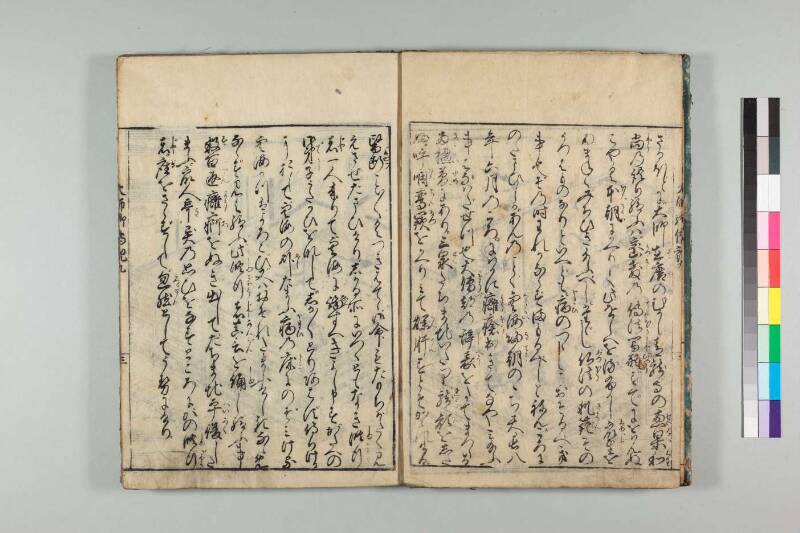
翻刻
【恵果寮を救給ふ事】
さるほどに。大師 在唐(ざいたう)のむかし青龍寺の恵果(けいくは)和(くわ)
尚(しやう)の語り給ふは。密教(みつけう)の伝法(でんほう)写瓶(しやびやう)。すでにをはんぬ
はやく本朝(ほんてう)にかへりて此をしへをるふし衆生(しゆじやう)を
あまねくみちひき給ふべし。たゞし仏法(ぶつほう)の机範(きはん)その
うつはものなりといへども。病(やまひ)のつゝしみおそるべき
事也。その説きわれかならずまもるべしとねんごろに
のたまひしか。あんのことく空海(くうかい)帰朝(きてう)のゝち天長八
年六月のころ。にはかに癰(よう)瘡(そう)おきて。なやみ給ふ
事はなはだせつ也。大 僧都(そうづ)の辞表(じへう)をたてまつる
両楹(りやうえい)夢(ゆめ)にあり。三 泉(せん)たちまちいたり。竜顔(れうがん)をした
ふ。呼咽(こいん)鸞闕(らんけつ)をかへりみて爛肝(らんかん)すとそかゝれける。
医 術(じゆつ)こと〳〵くつきはてゝ。御命もたもちがたく見
えさせたまひけり。しかる所にいつくともなき修行(しゆぎやう)
者(じや)一人来りて。空海に謁(えつ)すへきよし申す。かたへの
御 弟子(でし)うたかひをなして。しか〳〵とりあはず侍りける
におしくて。空海の臥(ふし)たまふ病(やまひ)の床(とこ)にのぞみける
空海かつはよろこび。又はおそれたまふけしきなゝめ
ならず見え給ふ。此 修行(しゆぎやう)者(じや)真言(しんごん)を誦(しゆ)し給ふ事
数(す)百 遍(へん)癰(よう)痾(あ)をぬい出して。たちまち平復(へいふく)した
まふ。衆人奇異(きい)の思ひをなすところに。かの修行(しゆぎやう)
者(じや)座(ざ)をさらずして。忽然(こつぜん)としてうせにけり。
現代語訳
【恵果の霊が大師をお救いになった事】
さて、大師がかつて唐に滞在されていた昔、青龍寺の恵果和尚がおっしゃったことには、「密教の伝法はすでに写瓶(瓶の水を移し注ぐように法を伝えること)をもって完了した。早く日本へ帰り、この教えを広め、衆生を広く導きなさい。ただし、仏法の軌範(手本)となる器であるとはいえ、病というものは慎み恐れるべきことである。その教えを説くあなたを、私は必ずお守りしよう」と、ねんごろにおっしゃっていた。
案の定、空海が帰朝された後、天長八年(八三一年)六月のころ、にわかに癰瘡(はれもの)が生じて、たいへん苦しまれた。大僧都の辞表を朝廷に提出された。両楹(宮殿の柱のそば)において夢を見られ、三泉(黄泉の国)がたちまち迫り来て、竜顔(天子のお顔)を慕い、呼び泣きながら宮殿を顧みて、肝も爛れる思いがすると書き記されている。
医術はことごとく尽き果てて、御命もとても保ちがたいように見えられた。ところが、どこからともなく修行者が一人現れて、空海にお目にかかりたいと申し出た。そばにいた御弟子たちは疑いを抱いて、取り合わずにいたのであったが、その者は押し通して、空海が臥せっておられる病床に近づいた。空海は半ば喜び、また半ば畏れておられる様子が尋常ではなく見えられた。この修行者が真言を数百遍誦すると、癰瘡を引き抜いてたちまち平癒なされた。人々が不思議に思っているところに、かの修行者は座を離れることなく、忽然として姿を消してしまった。
英語訳
【On How the Spirit of Huiguo Saved the Great Master】
Now, in the days of old when the Great Master was residing in Tang China, the Venerable Huiguo (Keika) of Qinglong Temple had said to him: "The transmission of Esoteric Buddhism has already been completed — the dharma water has been poured from vessel to vessel. Return swiftly to Japan and spread these teachings, guiding all sentient beings far and wide. However, though you are the vessel and standard of the Buddhist Law, illness is something to be feared and guarded against. I shall surely protect you as you propagate these teachings." So he had spoken, with the utmost sincerity and warmth.
Just as foretold, after Kūkai's return to Japan, around the sixth month of Tenchō 8 (831), he was suddenly struck by a carbuncle (yōsō), and his suffering was severe. He submitted his letter of resignation from his post as Senior Prelate (Daisōzu) to the court. It is written that in a dream beside the pillars of the palace hall, the realm of the underworld (Sansen) suddenly drew near; he yearned for the Imperial countenance, and calling out in tears, he looked back upon the palace with a heart that felt as though it were burning away.
All medical arts were exhausted, and it appeared that his very life could scarcely be sustained. At that moment, a lone ascetic appeared from no one knew where, and announced that he wished to have an audience with Kūkai. The attending disciples were suspicious and paid him little heed, but the ascetic pressed forward and approached the sickbed where Kūkai lay. Kūkai appeared with an expression that was far from ordinary — partly joyful, and partly awestruck. This ascetic chanted a mantra several hundred times, drew out the carbuncle, and Kūkai was instantly restored to health. As the assembled onlookers marveled at this wonder, the ascetic, without rising from his seat, vanished all at once without a trace.