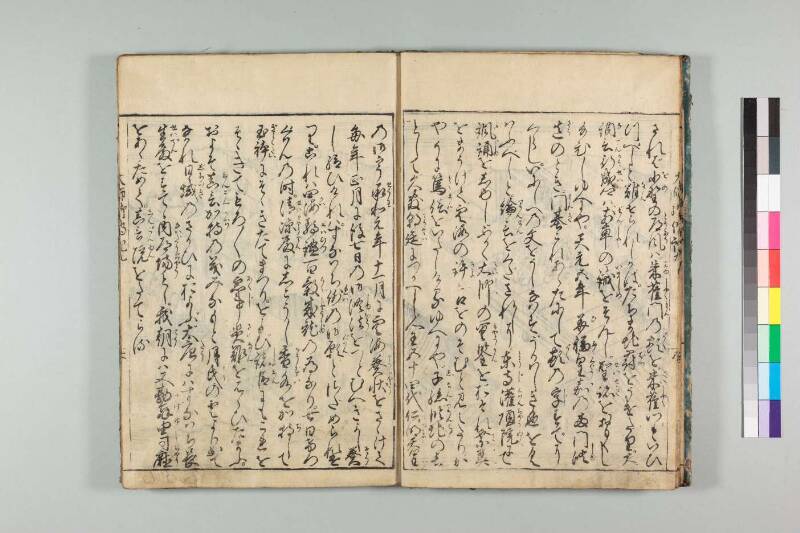
翻刻
されば小野(をの)の道風(とうふう)は。朱雀門(しゆしやくもん)の額(がく)を米雀(べいしやく)門といひ
つべしと難(なん)せられしかば。たちまち罰(ばつ)をうけたる。大
納言(なごん)行成(かうぜい)卿は。前者(ぜんしや)の誡(いましめ)をそんし。聖跡(せいせき)をおもくし
給ひしゆへにや。天元五年 美福(びふく)皇嘉(くはうか)の両門 修(しゆ)
造(ざう)のとき。門基(もんき)これあらたにして額(がく)の字(じ)すでに
くらし。いにしへの文をうしなはす。うるはしき色をく
はうべしと。綸言(りんげん)をくだされしに。東寺(とうじ)灌頂(くはんちやう)院(ゐん)にて
諷誦(ふじゆ)をしゆし。ふかくの冥鑑をおそれ祭奠(さいてん)
をまうけて。空海の許否(きよひ)をのそむと見えたり。か
やうに篤信(とくしん)をいたしけるゆへにや。子孫(しそん)臨地(りんち)の長
として。久敷 朝廷(てうてい)につかへし。人王五十四代 仁明(にんみやう)天皇(てんわう)
【後七日の法の事】
の御宇 承和(せうわ)元年十一月に空海奏状をさゝげて
毎年正月に後七日の御 修法(しゆほう)をつとむへきよし奏(そう)
し給ひけれは。すなはち例(れい)の御 願(ぐはん)とさだめられ
り。これは四 海(かい)静謐(せいひつ)百 穀(こく)成就(じやうじゆ)の為なり。七日けつ
ぐはんの時。清涼殿(せいりやうでん)にしこうし。香水(かうずい)を加持(かぢ)して
玉体(ぎよくたい)にそゝきたてまつり。および諸臣(しよしん)にもこれを
そゝきて。もろ〳〵の悪事(あくじ)災難(さいなん)をはらひたまふ。
およし真言(しんごん)加持(かぢ)の義みなもと月 氏(し)の雲より出て
なかれ日域(じちいき)のさかひにおよぶ。だい唐(たう)にはすなはち長
生殿(せいでん)をすてゝ内道場(ないどうぢやう)とし。我 朝(てう)には又 勘解由司(かげゆし)庁(ちやう)
をあらためて。真言(しんごん)院(ゐん)をたてらる
現代語訳
さて、小野道風は、朱雀門の額の文字を「米雀門」と読めると批判したところ、たちまち罰を受けた。大納言行成卿は、前人の戒めを尊重し、(弘法大師の)聖跡を重んじられたためであろうか、天元五年に美福門・皇嘉門の両門を修造する際、門の基礎を新たにして、額の文字がすでに薄暗くなっていた。昔の文字を失わずに、美しい彩色を加えるべきであると、勅命が下された。そこで東寺灌頂院において諷誦を修し、深く(弘法大師の)冥鑑を恐れ、祭奠を設けて、空海の許否を望んだと見える。このように篤信をいたしたためであろうか、(行成の)子孫は(その)地の長として、長く朝廷に仕えた。
人王五十四代・仁明天皇の御代、承和元年十一月に、空海は奏状を奉って、毎年正月に「後七日の御修法」を行うべき旨を奏上された。すなわちこれが恒例の御願(ごがん)と定められた。これは四海静謐・百穀成就のためである。七日結願の時、清涼殿に伺候し、香水を加持して玉体(天皇の御身)に注ぎ奉り、また諸臣にもこれを注いで、もろもろの悪事・災難を払われた。
そもそも真言加持の意義は、もとより月氏(インド)の雲より出て流れ、日本の地に及んだものである。大唐では長生殿を廃して内道場とし、我が朝(日本)ではまた勘解由司の庁を改めて、真言院を建てられた。
【後七日の法の事】
英語訳
Now, Ono no Tōfū criticized the characters on the plaque at Suzaku Gate, suggesting they could be read as "Beijaku Gate" (米雀門) instead of Suzaku (朱雀), and was immediately struck with divine punishment. Lord Dainagon Fujiwara no Yukinari, having respected the admonishment of his predecessor and held the holy traces of Kūkai in reverence, perhaps for this reason, when the two gates of Bifuku and Kōka were repaired in the fifth year of Tengen, the foundations of the gates were renewed and the characters on the plaques had grown dim. An imperial edict was issued stating that the ancient characters should not be lost and that beautiful coloring should be added to them. Therefore, prayers (fuzyū) were conducted at the Kanjō-in hall of Tō-ji Temple, and deeply fearing Kūkai's divine judgment, ritual offerings (saiten) were prepared, and it appears that his permission was sought from Kūkai. Perhaps because such deep faith was demonstrated, his descendants served the imperial court for a long time as the heads of their domain.
During the reign of Emperor Nimmyō, the 54th human sovereign, in the eleventh month of the first year of Jōwa, Kūkai presented a memorial to the throne requesting that the "Go-shichinichi no Mishuhō" (Post-Seven-Day Esoteric Rites) be performed every January. This was thereupon established as a standing imperial prayer. The purpose of this rite was to bring peace to the four seas and ensure the successful harvest of all grains. On the day of the final prayers on the seventh day, (the officiants) attended in the Seiryōden (Cool and Clear Hall) and, having performed the ritual consecration (kaji) of holy water, poured it over the imperial person and also over the assembled courtiers, thereby purifying them of all evil and calamity.
The meaning of Shingon ritual consecration originally emerged from the clouds of Gesshi (India) and flowed to reach the shores of Japan. In Great Tang China, the Chōsei Palace was abandoned and made into an inner place of Buddhist practice, and in our own court (Japan), the offices of the Kageyushi (Audit Officials) were likewise converted into the Shingon-in (Shingon Hall).
【On the Matter of the Go-shichinichi Rite】