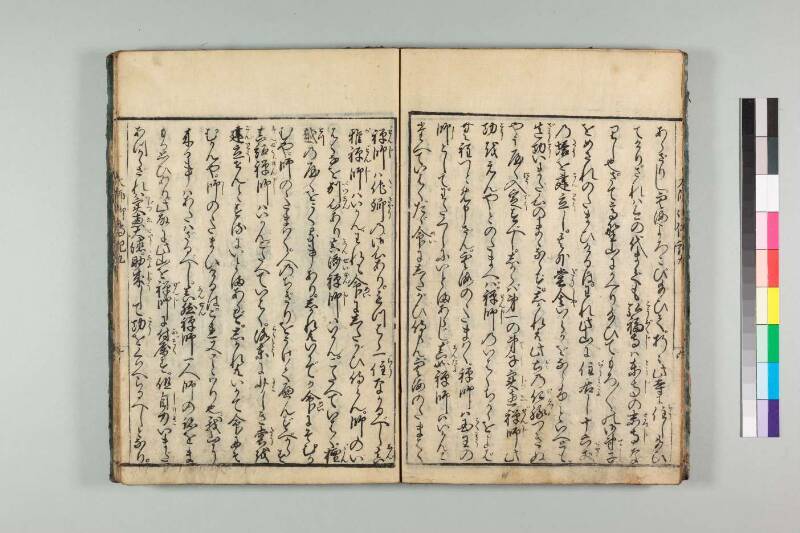
翻刻
あらざりし。空海よろこい給ひて。折々此寺に住(ぢう)し給ひ
てけり。されは今の代までも弘福(こうふく)寺(じ)は東寺(とうじ)の末寺(まつじ)な
りし也。さて高野山にかへり給ひて。もろ〳〵の御 弟子(てし)
をめされのたまひけるは。われ此山に住居(ぢうきよ)し十六 丈(ぢやう)
の塔(たう)を建立(こんりう)し。其外 堂舎(だうしや)いらかをならぶといへとも。
造功(ざうこう)いまだ心のまゝならず。しかれ共此 土(ど)の化縁(けえん)つきぬ
やうやく入定(にうでう)すべし。しからば第一の弟子(でし)実恵(じつゑ)禅師(ぜんじ)此
功(こう)をえんやとのたまへば。禅師(ぜんじ)のいはくちからをよば
む程つとめ申さん。空海のゝたまはく。禅師は国王(こくわう)の
師(し)として。わたくしにいとまあらじ。真如(しんによ)禅師はいかん。こ
たへていはく。たゞ命(めい)にしたがひ侍らん。空海のたまはく
禅師(ぜんし)は他卿(たきやう)の御心あり。もつはら一 住(ぢう)なるべし真(しん)
雅(が)禅師(ぜんじ)はいかん。われも命(めい)にしたがひ侍らん。師のい
はくなを別心(べつしん)あり真済(しんぜい)禅師(ぜんじ)はいかん。こたへていはく。壇(だん)
越(をつ)のやくをうくる事あり。しかれ共いかでか命(めい)にそむか
むや。師のゝたまはく。人のちぎりをうけてへんずべからす
真紹(しんぜう)禅師(ぜんじ)はいかん。こたへていはく。洛東(らくとう)に少(すこ)しき堂(だう)を
建立(こんりう)せんとするにいとまあらず。しかれ共いかで命にそ
むかんや。師(し)のたまひけるは。これ又ことはり也。我山に
来る事はあたはざるべし。真然(しんぜん)禅師一人師の跡をま
もる思ひあり。此故に此山を禅師(ぜんじ)に付属(ふぞく)す。但自力(じりき)いまだ
あつからざれは。実恵(じつゑ)大徳(たいとく)助成(じよじやう)して功(こう)をくはへらるへしとなり。
現代語訳
(空海は弘福寺を)たいそう喜ばれて、折々この寺にお住まいになった。それゆえ、今の世に至るまでも、弘福寺は東寺の末寺となっているのである。
さて、高野山にお帰りになって、諸々の弟子たちをお呼びになり、こうおっしゃった。「われはこの山に住まいして、十六丈の塔を建立し、その他の堂舎の甍を並べてきたが、造営の功はいまだ思い通りになっていない。しかしながら、この地における(人々を教化する)縁もそろそろ尽きてきた。やがて入定すべき時が来た。それならば、第一の弟子・実恵禅師がこの事業を引き継いでくれるであろうか。」とおっしゃると、禅師は「力の及ぶ限り、努め申し上げましょう」と申した。空海がおっしゃるには、「禅師は国王の師として、私的な余暇はあるまい。では、真如禅師はどうか。」答えて言うには、「ただ、仰せに従い申し上げましょう。」空海がおっしゃるには、「禅師には他の地への御志がある。もっぱら一か所に留まることは難しかろう。」真雅禅師はどうか。「私も仰せに従い申し上げましょう。」師がおっしゃるには、「なお別の志がある(から難しかろう)。」真済禅師はどうか。答えて言うには、「施主(檀越)の役目を受けることがある。それでもどうして命に背くことができましょう。」師がおっしゃるには、「人の約束を受けた以上、(それを)変えてはならない。」真紹禅師はどうか。答えて言うには、「洛東に小さな堂を建立しようとしており、余暇がない。しかしながら、どうして命に背くことができましょう。」師がおっしゃるには、「これもまた道理である。この山に来ることはできないであろう。」
真然禅師ただ一人、師の跡を守ろうという気持ちがある。この故に、この山(高野山)を禅師(真然)に付属(委託)する。ただし、(真然の)自力はいまだ十分ではないので、実恵大徳が助け支えて、事業を加えてくださるべきである。
英語訳
Kūkai was greatly pleased and took up residence at this temple from time to time. For this reason, even to the present day, Kōfukuji remains a branch temple of Tōji.
Thereafter, upon returning to Mount Kōya, Kūkai summoned all of his disciples and spoke to them thus: "I have dwelt upon this mountain, erected a pagoda of sixteen jō, and lined up the rooftiles of various halls and buildings, yet the work of construction has not yet proceeded as I had wished. Nevertheless, the karmic bonds of teaching in this land are drawing to a close, and the time has come for me to gradually enter into eternal meditation (nyūjō). In that case, would my foremost disciple, Zen Master Jitsue, carry on this work?" The Zen Master replied, "I shall endeavor to the best of my ability." Kūkai said, "The Zen Master serves as teacher to the sovereign and will have no time for private affairs. Then what of Zen Master Shinnyo?" He answered, "I shall simply follow your command." Kūkai replied, "The Zen Master has aspirations toward other lands; it would be difficult for him to remain in one place." "What of Zen Master Shinga?" He replied, "I too shall follow your command." The Master said, "And yet he too has other intentions." "What of Zen Master Shinzei?" He answered, "I have duties to fulfill for my patrons (danna). Nevertheless, how could I dare disobey your command?" The Master replied, "Having received a pledge from others, one must not break it." "What of Zen Master Shinshō?" He answered, "I am engaged in building a small hall in the eastern quarter of the capital and have no leisure. Nevertheless, how could I dare disobey your command?" The Master said, "This too is reasonable. He will not be able to come to this mountain."
Zen Master Shinzen alone harbors the intention to guard the Master's legacy. For this reason, this mountain (Mount Kōya) is entrusted to Zen Master (Shinzen). However, since his own capabilities are not yet fully mature, the Great Virtue (Daitoku) Jitsue should assist and support him, adding his efforts to the work.