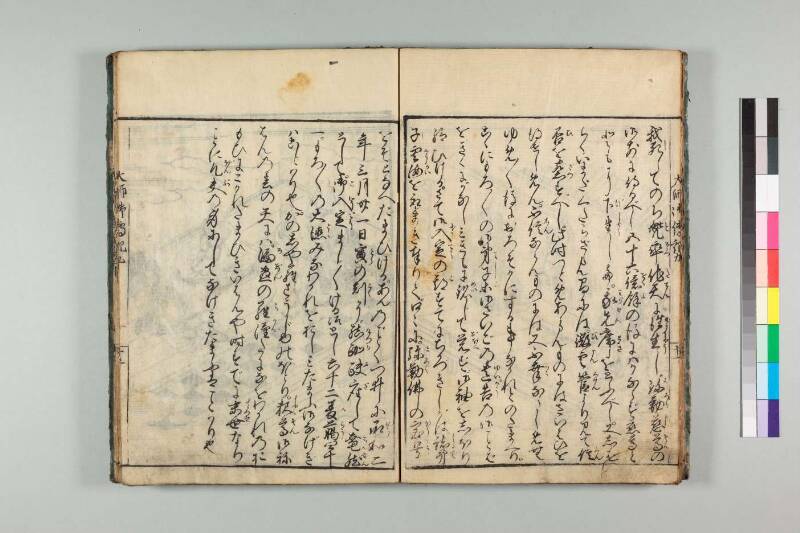
翻刻
我死してのち兜率(とそつ)他天(たてん)に往生(わうしやう)し。弥勒(みろく)慈尊(じそん)の
御前に侍るべし五十六 億(おく)余(よ)の後にはかならず慈尊と
ともに下生(げしやう)して。我(わが)先(せん)席(せき)をとふべし。又しば
らくいまだくたらざらん間には微雲管(びうんくはん)より見て信(しん)
否(ひ)を察(さつ)すべし。此時つとめあらんものにはさいはひを
得さしめん。不 信(しん)ならんものには又不幸ならしめむ
ゆめ〳〵後におろそかにする事なかれとのたまへり。
こゝにもろ〳〵の御 弟子(でし)等(ら)御さいごの遺告(ゆいがう)の御ことば
をきくに。かなしみきもに銘(めい)じて覚(おぼへ)ず。御袖をしほり
給ひける。さて御 入定(にうでう)の期(ご)すでにちかづきしかは。諸弟(しよで)
子(し)空海(くうかい)を取まき奉りて。口々に弥勒(みろく)仏の宝号(ほうがう)
【御入定の事】
をぞとなへたまひける。あんのごとくつゐに承和(せうわ)二
年三月廿一日 寅(とら)の刻(こく)に。結跏(けつか)趺坐(ふざ)して宛然(えんぜん)
として。御(ご)入定(にうでう)まし〳〵ける御とし六十二 夏(か)臈(らう)四十
一。もろ〳〵の大徳(とく)みなわかれをおしみたまふ御なげき
はことはり也。かのしや羅さうじゆのほとり。釈尊(しやくそん)御ね
はんの春の天には。漏尽(ろじん)の羅漢(らかん)だになをわかれのお
もひにこかれたまひきいはんや時すでに末世(まつせ)なり
ことに凡夫(ぼんぶ)の身にしてなげきたまふはことはり也
現代語訳
「私は死してのち、兜率天(とそつてん)に往生し、弥勒菩薩(みろくぼさつ)の御前に侍るであろう。五十六億余年の後には、必ず弥勒慈尊とともに下生(げしょう)して、私がかつて過ごした場所を訪れるであろう。また、しばらくの間、(肉身が)まだ朽ちていない間は、微雲の間より(この世を)見守り、(弟子たちの)信心のあるなしを察するであろう。その時、精励する者には幸いを得させ、信心のない者にはまた不幸をもたらすであろう。くれぐれも後々おろそかにすることがないように。」とおっしゃった。
ここに、諸々の御弟子たちは、最後の遺告(ゆいごう)の御言葉をお聞きして、悲しみが肝に銘じられ、思わず(涙で)袖を濡らされた。さて、御入定の期がすでに近づいたので、諸弟子たちは空海を取り囲み奉り、口々に弥勒仏の宝号(ほうごう)を
【御入定の事】
唱えられた。(大師が予告された)とおり、ついに承和二年三月二十一日、寅の刻に、結跏趺坐(けっかふざ)のお姿のまま、安らかに御入定あそばされた。御年六十二歳、夏臈(げろう)四十一。諸々の高僧たちが皆、別れを惜しまれたお嘆きはもっともなことである。かの沙羅双樹(さらそうじゅ)のほとり、釈尊が御涅槃に入られた春の空の下では、漏尽(ろじん)の羅漢(らかん)でさえ、なおも別れの思いに焦がれられたというのに、まして今は時すでに末世(まっせ)であり、とりわけ凡夫(ぼんぶ)の身でお嘆きになるのはもっともなことである。
英語訳
"After my death, I shall be reborn in Tuṣita Heaven and attend before Maitreya, the Compassionate Honored One. After five billion, six hundred million and more years have passed, I shall surely descend to this world together with the Honored Maitreya, and visit the places where I once dwelt. Furthermore, for a while, so long as my body has not yet decayed, I shall look down upon this world through the wisps of cloud and observe whether there is faith or the lack thereof among you. Those who apply themselves with diligence shall be made to receive good fortune; those who are without faith shall be made to suffer misfortune. Never, ever be negligent in the days to come." Thus he spoke.
Here, the many disciples, upon hearing the words of their master's final testament, found grief seared into their very hearts and, before they knew it, found their sleeves wet with tears. Now, as the time of the nyūjō drew near, the assembled disciples gathered around Kūkai, each calling out in unison the sacred name of Maitreya Buddha.
**[On the Matter of the Nyūjō]**
Just as he had foretold, on the twenty-first day of the third month of Jōwa second year, at the hour of the Tiger, seated in the posture of kekkafuza (full lotus position), he peacefully entered into nyūjō. He was sixty-two years of age; forty-one summers had passed since his ordination. That all the venerable monks deeply lamented and grieved at this parting was only natural. Even beside those śāla trees, beneath the spring sky when the World-Honored One Śākyamuni entered parinirvāṇa, even the arhats who had extinguished all defilements burned with the sorrow of parting — how much more so now, in this already degenerate age, is it only natural that those of common mortal constitution should grieve and lament.