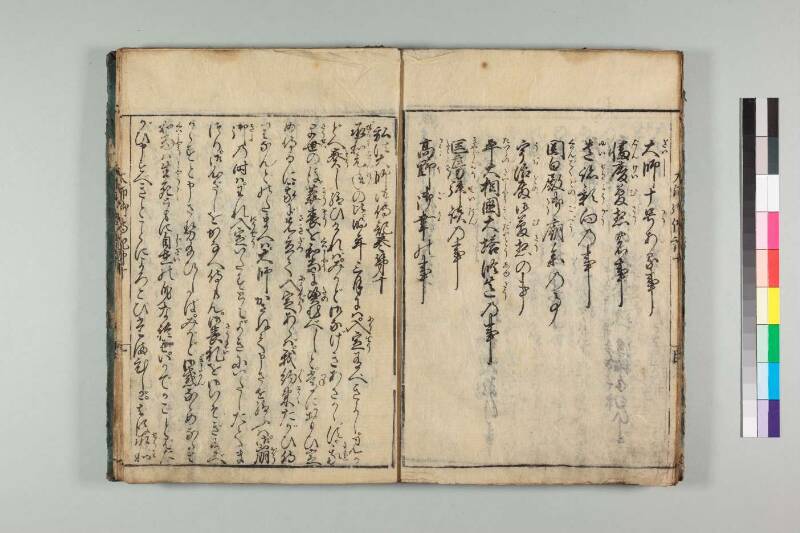
翻刻
大師(だいし)十 号(かう)ある事
幡慶(ばんけい)夢想(むさう)の事
遺跡(ゆいせき)影向(ようがう)の事
関白(くはんばく)殿(どの)御廟(ごべう)参の事
宇治(うぢ)殿(どの)御 夢想(むさう)の事
平(たいらの)大相国(だいしやうこく)大塔(だいたう)修造(しゆざう)の事
匡房(きやうはう)拝談(はいだん)の事
高野(かうや)御幸(ごかう)の事
弘法大師御伝記巻第十
【嵯峨天皇御崩御 并御棺南山へ飛行事】
承和(ぜうわ)元年(ぐはんねん)の頃。明年参月には入定(にうでう)有べきよし。みか
どへ奏(そう)し給ひければ。みかど御なげきあさからず。我(われ)
早世(さうせい)の後。葬喪(さうそう)を和尚(くはしやう)に憑(たの)むべしと。常(つね)におもひ定
め侍るに。我に先立(さきたつ)て入定(にうでう)あらば。我 約束(やくそく)たがひ侍
りなんとのたまへは。大師かさねて申させ給ふは。御 崩(ほう)
御(ぎよ)の時は。われ入定(にうでう)いたすとも。よきにいたしたてま
つり。御心ざしをかなへ侍らん。御 喪礼(さうれい)を御いそぎ有べ
からずと申させ給ひしかば。みかど御感(ぎよかん)なゝめならす
和尚(くはしやう)は生死(しやうじ)ともに自在(じざい)の身なれは。いかでかことばた
がひ申すべきとことによろこびたまひしが。其後 承和(せうわ)
現代語訳
**(巻第十 目録 つづき)**
- 大師に十の号がある事
- 幡慶の夢想の事
- 遺跡への影向の事
- 関白殿の御廟参りの事
- 宇治殿の御夢想の事
- 平大相国による大塔修造の事
- 匡房の拝談の事
- 高野への御幸の事
---
**弘法大師御伝記 巻第十**
【嵯峨天皇の御崩御、ならびに御棺が南山へ飛び行った事】
承和元年(834年)の頃、翌年(承和二年)の三月には入定なさるべき旨を、帝にご奏上なされたところ、帝はたいへん深くお嘆きになられた。「私が早く世を去った後は、葬送の儀を和尚(大師)にお頼みしようと、かねてより心に決めておりましたのに、私に先立って入定なさるならば、私との約束が果たされぬことになりましょう」とおっしゃったので、大師が重ねて申し上げられるには、「御崩御の折には、私が入定いたしておりましても、よいように取り計らい申し上げ、御心のご意向を叶えて差し上げましょう。御喪礼をお急ぎになる必要はございません」とお答え申し上げられた。帝はことのほかお喜びになられ、「和尚は生死ともに自在のお身であれば、どうして言葉を違えることがありましょうか」と、たいへん喜ばれた。その後、承和……
英語訳
**(Continuation of Table of Contents, Volume Ten)**
- The matter of the Great Master having ten honorific titles
- The matter of Bankei's dream vision
- The matter of the Master's manifestation at sacred sites
- The matter of the visit by the Lord Regent (Kampaku) to the mausoleum
- The matter of the Lord of Uji's dream vision
- The matter of the construction of the Great Pagoda by the Grand Minister Taira
- The matter of Kyōhō's audience and conversation with the Master
- The matter of the imperial visit to Kōya
---
**Biography of Kōbō Daishi, Volume Ten**
【On the Passing of Emperor Saga, and the Matter of His Coffin Flying to Nanzan (Mt. Kōya)】
Around the first year of the Jōwa era (834), the Great Master reported to the Emperor that he intended to enter into meditative samādhi (*nyūjō*) in the third month of the following year. The Emperor was deeply grieved. "After my own early death," the Emperor said, "I had long resolved in my heart to entrust my funeral rites to you, the Master. If you enter samādhi before me, our agreement will go unfulfilled." In response, the Great Master respectfully replied: "At the time of Your Majesty's passing, even though I shall have entered samādhi, I shall see to everything properly and fulfil your wishes. There is no need to hasten the funeral rites." The Emperor was extraordinarily moved and pleased, saying: "Since the Master is one who is free and unhindered in both life and death, how could he ever go back on his word?" The Emperor was greatly gladdened by this. Thereafter, in the Jōwa era…