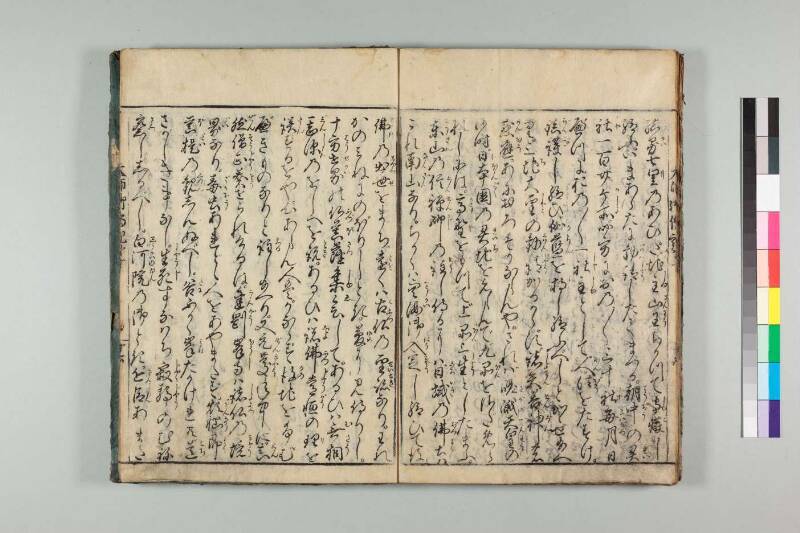
翻刻
結界七里のあひだ。地主(ぢしゆ)山王(さんわう)ちかつて守護(しゆご)し
給ふ。いまあらたに勧請(くはんじやう)したてまつる。朝中(てうちう)の霊(れい)
社(しや)一百廿 ケ(か)所(しよ)。四方におの〳〵三十 社(しや)毎月(まいげつ)日
べつに。おの〳〵一 社主(しやしゆ)として。人法(にんぽう)をたすけ。
鎮護(ちんご)し給ひ。を持(ち)し給ふべしとかゝせ給へ
り。三 地(ち)大 聖(しやう)の勧請(くはんじやう)かるからず。諸天(しよてん)善神(ぜんじん)の
感応(かんおう)。あなおろそかならんや。されば嵯峨(さがの)天皇(てんわう)の
御時。日本国(にほんごく)の霊地(れいち)をえらんで。九 品(ほん)をさだめら
れしには。高野(かうや)をもつて。上品(ぼん)上 生(しやう)としたまふ。
東山(とうさん)の信禅師(しんぜんじ)の住(ちう)し侍るには。日域(じちいき)の仏土(ぶつど)は
これ南山(なんざん)なり。ちかくは空海(くうかい)御 入定(にうぢやう)し給ひて後。
仏(ふつ)の出世(しゆつせ)をまち。遠(とを)くは古仏の聖跡(せいせき)なり。われ
かのみねにのぼりしとき。夢(ゆめ)に見侍りし。
十方(はう)世界(せかい)の仏(ふつ)菩薩(ぼさつ)集会(しゆゑ)して。あるひは無相(むそう)
甚深(じんしん)のをしへを説(とき)。あるひは諸仏(しよぶつ)常恒(じやうがう)の理を
談(たん)ずるをや。心あらん人は。かならず彼(かの)地をふむ
べきものなりと註(しる)したまへり。又 元亨(げんきやう)年中に。真(しん)
然(ぜん)僧正(そうじやう)奏(そう)せられけるは。金剛峯(こんがうふう)寺(じ)は諸仏(しよふつ)の境
界(がい)なり。毒虫(どくちう)あれども人をあやまたず。煩悩(ぼんなう)即(そく)
菩提(ぼだい)の観(くはん)しんぬべし。谷(たに)ふかく峯(みね)たかけれ共。道(みち)
さがしき事なし。生死(しょうじ)すなはち寂静(じやくじやう)のむね
察(さつ)ししるべし。白河(しらかはの)院(ゐん)の御とき。近臣(きんしん)あまた
現代語訳
結界七里の間、地主・山王はかねてより守護してくださっている。今あらたに勧請申し上げる。朝廷の霊社百二十か所、四方にそれぞれ三十社、毎月日ごとに、それぞれ一社を主として、人と法を助け、鎮護し、お守りくださるようにと、(大師は)お書きになられた。三地大聖の勧請は軽いものではない。諸天善神の感応が、どうしておろそかであろうか。
さて、嵯峨天皇の御代に、日本国の霊地を選んで九品を定められた際には、高野山をもって上品上生とされた。東山の信禅師が居住されていた際には、「日本の仏土はこれ南山(高野山)である。近くは空海が御入定なされた後、仏(弥勒仏)の出世をお待ちになっており、遠くは古仏の聖跡である。私があの峰に登った時、夢に見たことには、十方世界の仏・菩薩が集会して、あるいは無相甚深の教えを説き、あるいは諸仏常恒の理を談ずるのを見た。心ある人は、必ずあの地を踏むべきものである」と記されている。
また、元亨年中に、真然僧正が奏上されたことには、「金剛峯寺は諸仏の境界である。毒虫はいても人を害さない。煩悩すなわち菩提の観を深く知るべきである。谷は深く峰は高いけれども、道が険しいことはない。生死すなわち寂静の旨を察して知るべきである」と。白河院の御代に、近臣が数多く(続く)
英語訳
Within the seven-league sacred boundary, the local deity (jishu) and the Sannō deity have long served as protectors. We now freshly invoke their presence. The one hundred and twenty sacred shrines of the imperial court, thirty in each of the four directions, each taking turn by day each month, with each shrine serving as principal in turn, are to assist humanity and the Dharma, to protect and guard over all—thus did (the Great Master) write. The invocation of the Three Ground Great Sages is no trivial matter. How could the response of the heavenly deities and benevolent gods be anything but profound?
Now, in the reign of Emperor Saga, when the sacred sites of Japan were selected and ranked according to the Nine Grades of Rebirth, Mount Kōya was designated as the highest rank—the Upper Grade, Upper Birth (jōbon jōshō). When the Zen Master Shin of Higashiyama resided there, he wrote: "The Buddha-land of Japan is none other than the Southern Mountain (Nanzан/Kōya). In recent times, Kūkai has entered his eternal meditation (nyūjō), awaiting the coming of the Buddha (Maitreya) into the world; in distant times, it is the sacred site of ancient Buddhas. When I climbed that peak, I saw in a dream the Buddhas and Bodhisattvas of the ten directions assembled together, some expounding the teachings of the formless and profound, others discoursing on the eternal principle of all Buddhas. Any person of sincere heart should certainly tread upon that sacred ground."
Furthermore, during the Genkō era, the Sōjō (high priest) Shinzen memorialized to the throne: "Kongōbu-ji Temple is the realm of all Buddhas. Though poisonous insects exist, they do not harm people. One should deeply contemplate the principle that earthly passions are identical to enlightenment. Though the valleys are deep and the peaks high, the paths are not treacherous. One should perceive and understand the principle that life-and-death is identical to perfect tranquility." In the reign of the Retired Emperor Shirakawa, many close retainers... (continues)