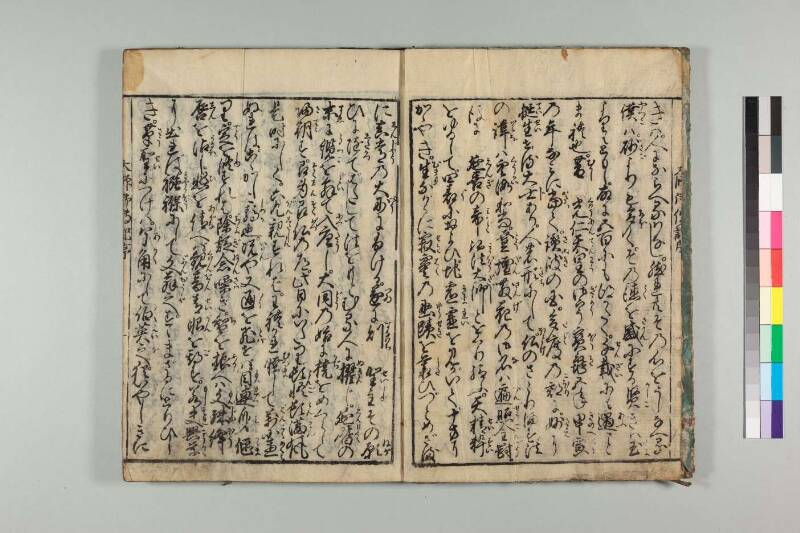
翻刻
きは。人にならへるはなし。然れ共その名をうなへる
僕(やつこ)は。砂(いさご)よりも多(おほ)く。その徳(とく)を盛(さかん)にする賢(かしこ)き玉(たま)
よりもともし。故に五百にも得かたく。千載(せんざい)にも遇(あふ)こと
まれ也。昔(むかし) 光仁天皇(くわうにんてんわう)の御宇(ぎよう)宝亀(ほうき)五年 甲寅(きのへとら)
の年なみに当(あたつ)て。讃岐(さぬき)の国。多度(たど)の郡(こほり)に。妙(たえ)に
挺生(ていせい)せる大 士(じ)あり。人の形(かたち)にして。仏(ほとけ)のさとります。法
の諱(いみな)は空海(くうかい)和尚。登壇(とうだん)散花(さんげ)の御 名(な)は遍照金剛(へんぜうこんがう)。
後に 延喜(えんぎ)の帝(みかど)弘法大師(こうほうだいし)とをくり給ふ。天 精粋(せいすい)
をゆるして。四 表(へう)におよひ。地 虚霊(きよれい)をみがいて。十方に
かゝやき。生(むまれ)ながらに寂寞(せきはく)の幽蹟(ゆうせき)を慕(した)ひ。つとめざる
に真常(しんじやう)の大 妙(べう)にふける。遂(つゐ)に則(すなはち) 聖主(せいしゆ)その願(ねが)
ひに随(したかつ)て。はたして法をもとむる人に擢(ぬきん)じ。延暦(えんりやく)の
末(すゑ)に纜(ともつな)を解(とい)て入唐(につたう)し。大 同(どう)の始に橈(かぢ)をめくらして
帰朝(きてう)す。即身(そくしん)即仏(そくぶつ)の道。此日にいたり。頓悟(とんご)頓満(とんまん)の風
是時にしく。六 凡親(ぼんしん)すれば。われかれ睦(むつま)して万国(ばんこく)恵(めくみ)
ぬれは。こゝかしこ静(しつか)也。況(いはん)や又 通(つう)を飛(とば)せば。目連(もくれん)身(み)傴(つゝま)
り。定(でう)を修(しゆ)すれは。除(ぢよ)疑念(ぎねん)噪(さは)ぎ。智(ち)を振(ふる)へは文殊(もんじゆ)絳(ほう)
唇(しん)を沾(うるほ)し。悲(ひ)を債(あがな)へば。観音(くはんをん)青眼(せいがん)を期(ご)す。若(もし)夫(それ)興学(こうかく)
に出れば。襁褓(きやうほう)にして文翁之(ぶんおうが)。すゝまざるにとりひし
き。草聖(さうせい)につけは。丫角(あかく)にして伯英之(はくえいが)。猶いやしきに
現代語訳
きものは、人に匹敵するものはない。しかしながら、その名前だけを受け継いでいる凡庸な者は砂粒よりも多く、その徳を盛んにする賢い宝玉のような人は極めて少ない。故に五百年にも得難く、千年にも遇うことは稀である。
昔、光仁天皇の御代、宝亀五年甲寅の年に当たって、讃岐の国多度郡に、妙なる挺生をした大士がおられた。人の姿をしているが、仏の悟りを得ておられる。法名は空海和尚、登壇散花の御名は遍照金剛である。後に延喜の帝(醍醐天皇)が弘法大師と贈り名された。天は精粋を許して四方に及び、地は虚霊を磨いて十方に輝いた。生まれながらにして寂寞たる幽玄な境地を慕い、努力せずとも真常の大妙に耽った。
ついに聖主(桓武天皇)がその願いに従って、果たして仏法を求める人として抜きん出て、延暦の末に船の綱を解いて入唐し、大同の初めに舵を巡らして帰朝した。即身即仏の道は、この日に至り、頓悟頓満の風はこの時に盛んになった。六道の凡夫が親しめば、自他睦まじくして万国に恵みが行き渡れば、あちこちが静寂となる。
況んや、また神通を飛ばせば目連も身を慎み、禅定を修すれば除疑念も騒がず、智慧を振るえば文殊が紅唇を潤し、慈悲を償えば観音が青眼を寄せる。もしそれ学問興隆に出れば、襁褓(幼児)の時から文翁のようであり、進まずともすでに優れていた。草聖(草書の聖人)については、丫角(幼少)の時から伯英のようであり、なお卑しいものでも
英語訳
there is nothing that can compare to humans. However, those mediocre people who merely inherit the name are more numerous than grains of sand, while wise gems who make virtue flourish are extremely rare. Therefore, such people are difficult to find even in five hundred years, and encounters with them are rare even in a thousand years.
Long ago, during the reign of Emperor Kōnin, in the fifth year of Hōki, the year of Kinoe-Tora, in Tado District of Sanuki Province, there was born a great being of wondrous birth. Though in human form, he possessed the enlightenment of Buddha. His dharma name was Monk Kūkai, and his ceremonial name at ordination was Henjō Kongō. Later, Emperor Engi (Emperor Daigo) bestowed upon him the title Kōbō Daishi. Heaven granted him pure essence that reached the four directions, and earth polished his spiritual brilliance that shone in all ten directions. From birth, he yearned for the profound traces of solitude, and without effort, he was absorbed in the great mystery of eternal truth.
Finally, the sacred sovereign (Emperor Kanmu) followed his wishes, and he indeed excelled as one who sought the dharma. At the end of the Enryaku era, he untied the ship's rope and entered Tang China, and at the beginning of the Daidō era, he turned the rudder and returned to Japan. The way of sokushin-jōbutsu (becoming Buddha in this very body) reached its culmination on this day, and the tradition of sudden enlightenment and sudden fulfillment flourished at this time. When the ordinary beings of the six realms became intimate, people lived harmoniously and when blessings spread to all nations, everywhere became tranquil.
Moreover, when he manifested supernatural powers, even Mokuren would humble himself; when he practiced meditation, doubting thoughts would not disturb; when he wielded wisdom, Manjushri would moisten his red lips; when he practiced compassion, Kannon would cast favorable glances. If he emerged in the promotion of learning, he was like Bunō even from infancy, excelling without effort. Regarding the sage of cursive script, he was like Hakuei even in childhood, and even in humble circumstances