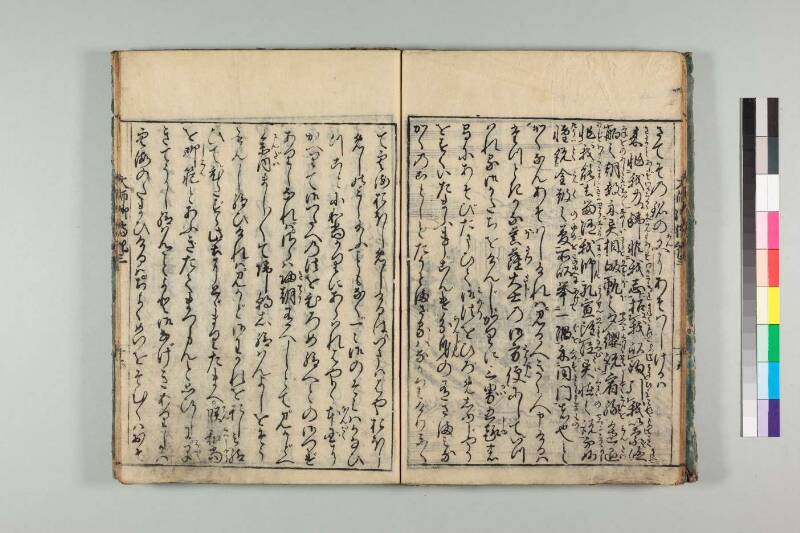
翻刻
さてその銘の文(ぶん)にあそはしけるは
来非(きたることあらず)_二我力(わがちから) ̄に_一帰非(かえらんにあらす)_二我志(わかこゝろさし) ̄に_一招(まねく) ̄に_レ我(われを)以(もつてし)_レ鉤(こう) ̄を引(ひくに)_レ我(われを)以策泛(もつてさくをかつへし)
舶之朝(ふねをのあしたには)数(しはヽ)示(しめし)_二異相(いさうを)_一帰(かへす)_レ帆(ほを)之 夕(ゆふへに)縷(くはしく)説(とく)_二宿縁(しゆくえんを)_一進退(しんたい)
非’あらず)_一我能(わがよくするに)_一去留(きよりう)随(したかふ)_二我師(わかしに)_一孔宣(こうせん)謂(いへとも)_レ泥(なづむ) ̄と異怪(いくわい)之(の)説(せつに)_一而(しかも)妙(めう)
憧(たうは)説(とく)_二金鼓(きんく)之(の)夢(ゆめ) ̄を_一所故(このゆへに)挙(あけ) ̄て_二 一 隅(ぐ) ̄を_一示(しめす)_二同門(とうもんに)_一者(もの)也と
かくなんあそはしけれは。見る人聞く人申けるは
たつときかな菩薩(ぼさつ)大士(だいじ)の御 方便(はうべん)にして。いつ
はれる御かたちをげんじ。かりに三 界(かい)五 趣(しゆ)の
間にあそびたまひて御法(みのり)をひろめしゆじやう
をすくいたまふ事。ごんけ分身(ふんじん)の有さま。みな
かくのことしとたうとまざるはなかりけり。かく
て空海おほしめしけるは。いまははやおほし
めしのこし給ふこともなく。一々御のそみはかなひ
つことに和尚かりにあらはれはやく本国(ほんごく)み
かへりて御つたへの法をひろめ給へとの御つげ
ありしなれば。さらは帰朝(きてう)有へしとて。みかどへ
参内まし〳〵て帰朝し給はんよしをそう
もんし給ひけれは。みかど御わかれをおしみ給
ひて。ひたすら此土にとゞまりたまへ。朕(ちん)和尚(くはしやう)
を師範(しはん)とあふぎたてまつらんと思ひしに。早(はや)
きてうし給はんことよと御なげきありしかは
空海のたまひけるは。ちよくめいをそむくはおそ
現代語訳
さて、その銘文にお作りになったのは——
来たることはわが力によらず、帰ることはわが志によらず。
我を招くに鉤(かぎ)をもってし、我を引くに策(むち)をもってすべし。
船の朝には、しばしば異相(不思議なしるし)を示し、
帆を返す夕べには、詳しく宿縁(前世からの因縁)を説く。
進退はわが能くするところにあらず、去留はわが師(仏・菩薩)に従う。
孔宣(孔子)は「泥む」と言えども、異怪の説とは異なりて、妙なるかな——
憧(仏の名)は金鼓の夢を説く。このゆえに一隅を挙げて、同門(同じ道を学ぶ者たち)に示すものなり。
とこのようにお作りになったので、見る人も聞く人も申しましたのは——
「いかに尊いことか。菩薩・大士の御方便(衆生を導く巧みな手立て)として、仮の御姿をお現しになり、かりに三界・五趣の間にお遊びになって御法(仏の教え)を広め、衆生をお救いになること——権化・分身のありさまは、みなかくのごとくであると、尊ばない者はなかった。」
さて、空海がお思いになったのは——「今はもはやお心残りのこともなく、一つひとつの御望みはかなった。そもそも和尚(恵果阿闍梨)が仮に現れて、『早く本国(日本)に帰って、お伝えの法を広めなさい』とのお告げがあったのであるから、それならば帰朝すべきであろう」とのことで、天子(唐の皇帝)のもとに参内なさって、帰朝いたしたい旨を奏聞なさいました。天子は御別れを惜しまれて、「ひたすらこの国(唐)にとどまってほしい。朕は和尚を師範としてお仰ぎしようと思っていたのに、早くも帰朝なさることよ」とお嘆きになったので、空海はおっしゃいましたのには——「勅命(みことのり)に背くことは恐れ多いことでございますが……」
英語訳
Now, what he [Kūkai] composed for the body of that epitaph inscription was as follows:
My coming was not by my own power; my return shall not be by my own will.
He beckoned me with a hook, he drew me on with the goad.
In the mornings aboard the ship, wondrous signs were shown again and again;
In the evenings of the returning sail, the karmic bonds of past lives were expounded in full detail.
My advance and retreat are not mine to determine; my going and staying follow my teacher [the Buddha/Bodhisattva].
Though Confucius spoke of being "mired," this is unlike the talk of strange marvels — how wondrous!
[The Bodhisattva] Tōdō expounded the dream of the Golden Drum. Therefore, raising up one corner [of the teaching], I present it to my fellow students of the Way.
When [Kūkai] had composed this, all who saw it and all who heard of it said:
"How august and venerable! As the skillful means [upāya] of a Bodhisattva and Great Being, he manifested a provisional form, and wandering for a time among the Three Realms and Five Destinies, he spread the holy Dharma and saved sentient beings. The manner of such an emanation body — a provisional manifestation in divided form — is truly just as described." And there was no one who did not hold it in the highest reverence.
Now, Kūkai reflected within himself: "There is nothing more left undone, and each and every wish has been fulfilled. Moreover, the Ācārya [Huiguo] appeared to me provisionally and gave me the instruction: 'Return quickly to your home country [Japan] and spread the Dharma that has been transmitted to you.' Therefore, I ought now to return to Japan." With this resolution, he presented himself at the palace of the Emperor [of Tang] and submitted a memorial requesting permission to return home. The Emperor was grieved at the parting and said: "I had earnestly wished that you would remain here in this land, and that I would look up to the Ācārya as my teacher and guide — yet now you would depart so soon!" At these lamentations, Kūkai replied: "To go against the imperial command is a grave matter indeed, yet…"