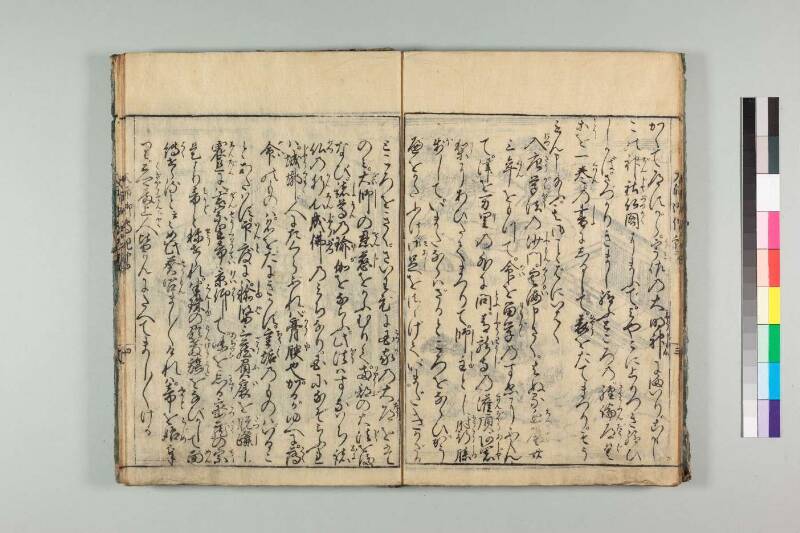
翻刻
【御朝帝参内の事并表をさゝげ給ふ事】
かくて道すがら。宇佐(うさ)の大 明神(みやうじん)にまいり。こゝかし
この神社(じんじや)仏閣(ぶつかく)にまふで。みやこに上りつき給ひ
しかば。さづかりきまし給ふところの。経論(きやうろん)道具(だうぐ)
等(とう)を一巻(くはん)の書(しよ)にしるして。表(ひやう)をたてまつり。そう
もん申給ふ。其御ことばにいはく
入唐(につたう)学法(がくほう)の沙門(しやもん)。空海(くうかい)申さく。去ぬる延暦(えんりやく)廿
三年(ねん)をもつて。命(めい)を留学(りうがく)のすゑにふくん
て。津を万里の外に問(とふ)。青龍(しやうりう)寺(じ)の灌頂(くはんぢやう)阿闍(あじや)
梨(り)にあひたてまつりて。師主(ししゆ)とし。肘行(ちうかう)膝(しつ)
歩(ほ)して。いまだならはざるところをならひ。かう
べをかたふけ。御足(みあし)をさゝげて。いまだきかざる
ところをきく。さいわひに国家(こつか)の大 道(だう)をた
のみ。大師(だいし)の恩慈(をんじ)をかふむりて。両部(りやうぶ)の大 法(ほう)をま
なび。諸尊(しよそん)の瑜伽(ゆが)をならふ。此 法(ほう)はすなはち諸(しよ)
仏(ふつ)の肝心(かんしん)成仏(じやうぶつ)のみちなり。国になぞらふれ
は。城郭(じやうくわく)。人にたくらぶれば。膏腴(こうゆ)也。かるがゆへに。薄(はく)
命(めい)のものは。名をだにきかず。重垢(ちうく)のものは。つるこ
とあたはず。印度(いんと)には。輸婆(しゆば)三蔵(ざう)負扆(ふい)を脱躧(だつし)し。
震旦(しんだん)には。玄宗(げんそう)皇帝(くわうてい)景仰(けいかう)して。味(あぢはひ)を忘(わす)る密蔵(みつざう)の宗(そう)
是より帝(みかど)と称(せう)せられ。半(はん)珠(じゆ)の顕教(けんけう)旗(はた)をなびかして。面(めん)
縛(ばく)せらると云々如_レ此 奏聞(そうもん)まし〳〵けれは。帝(みかど)を始(はじめ)奉
り。公卿(くぎやう)殿上(てんじやう)人皆かんにたへてまし〳〵ける
現代語訳
【朝廷への参内のこと、並びに表を奉ることについて】
こうして道すがら、宇佐の大明神にお参りし、あちらこちらの神社仏閣に詣でて、都にお上りになったので、(唐で)授かりなさったところの経論・道具等を一巻の書にしるして、表(上奏文)を奉り、奏聞申し上げられた。その御言葉に言うには、
唐に渡り法を学んだ沙門、空海が申し上げます。去る延暦二十三年、留学の命を身に受けて、万里の彼方の津(港)を尋ね求めました。青龍寺の灌頂阿闍梨にお会い申し上げて、師主とし、肘で進み膝で歩むようにして(全身全霊をもって)、いまだ習っていなかったことを習い、頭を垂れ、御足にすがって、いまだ聞いたことのなかったことを聞きました。幸いに国家(日本)の大道を頼みとし、大師の恩慈をこうむって、両部の大法を学び、諸尊の瑜伽(ゆが)を習いました。この法はすなわち諸仏の肝心であり、成仏への道であります。国に例えれば城郭のようなものであり、人に例えれば膏腴(肥沃な土地・豊かさ)のようなものです。それゆえに、薄命のものはその名さえも聞くことができず、重垢(深い煩悩を持つもの)はたどり着くことができません。インドでは、輸婆三蔵が(皇帝の)背後の御座から出でて(重んじられ)、中国では、玄宗皇帝が景仰して(法の)味わいを忘れるほどでありました。密蔵の宗(密教)はこれより帝と称されるようになり、半珠の顕教は旗を靡かせて(勢いを失い)面縛されたと言われています。このように奏聞なさったので、帝をはじめ奉り、公卿・殿上人は皆、感に堪えておられた。
英語訳
【On the Matter of Attending the Imperial Court, and on Presenting the Memorial】
Along the way, Kūkai visited the Great Deity of Usa, and after paying his respects at various shrines and temples here and there, he arrived in the capital. He then compiled the sutras, treatises, and ritual implements he had received (in Tang China) into a single written document, and presented a memorial (hyō) to the throne, making his report. His words were as follows:
I, Kūkai, a monk who went to Tang China to study the Dharma, humbly submit this memorial. In the twenty-third year of Enryaku, bearing the imperial command as a student abroad, I sought out harbors ten thousand leagues away. I had the honor of meeting the Abhiṣeka Ācārya of Qinglong Temple, took him as my master, and with utmost devotion — crawling on elbows and walking on knees — I learned what I had not yet learned. Bowing my head and clinging to his feet, I heard what I had not yet heard. Fortunately, relying on the great path of our nation and receiving the benevolent grace of the Great Master, I studied the great Dharma of the Two Mandalas and learned the yoga of the various honored deities. This Dharma is the very essence of all Buddhas and the path to attaining Buddhahood. Compared to a nation, it is like the castle walls that protect it; compared to a person, it is like rich and fertile land. For this reason, those of poor fortune cannot even hear its name, and those laden with heavy karmic defilements cannot hope to reach it. In India, the Tripiṭaka master Śubhakarasiṃha emerged from behind the imperial throne (in honor), and in China, Emperor Xuanzong held it in such reverence that he forgot all else. The school of the secret treasury (esoteric Buddhism) has since been called imperial, while the exoteric teaching of the half-jewel has had its banners brought low and been bound face-to-face (in submission). Having made this memorial to the throne, the Emperor himself and all the court nobles and senior courtiers were moved beyond words.