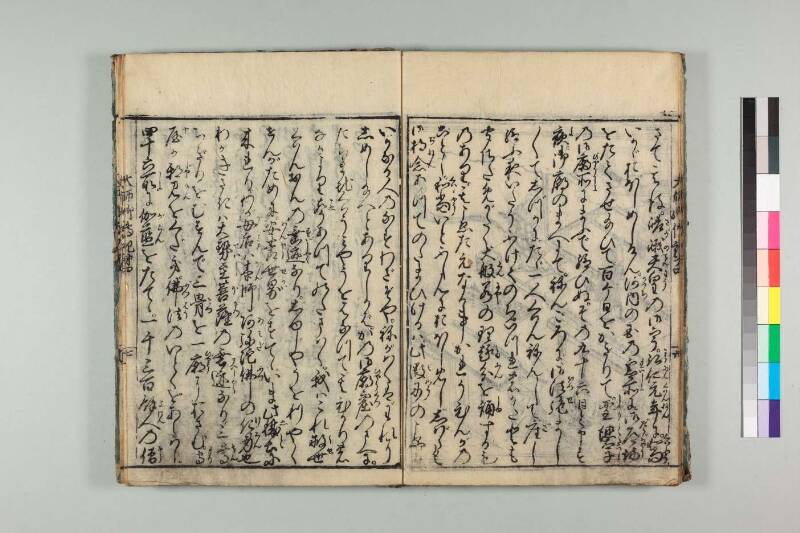
翻刻
【聖徳太子の御廟へ参詣奇特多き事】
さて其後。嵯峨(さがの)天皇(てんわう)の御宇。弘仁(こうにん)元年(くはんねん)に。和尚(くはしやう)
いかゞおぼしめしけん。河内(かはち)の国の霊所(れいしよ)に。御道場(だうぢやう)
をたてさせ給ひて。百ケ日をかぎりて。聖徳(しやうとく)太子(たいし)
の御 廟(びやう)所(しよ)にまふで給ひぬ。その九十六日と申す
夜(よ)。御廟のまへにて。ねんごろに。御 法施(ほつせ)まし
〳〵て。しづかに。たゞ一人くはんねんして。座(ざ)し
給ふ。夜いたうふけてのち。いづれのかたとも
聞さだめがたく。大 般若(はんにや)の理趣分(りしゆふん)を誦(じゆ)するも
のあり。其こゑたえなる事かれうびんがの
ごとし。和尚(くはしやう)いとふしんにおぼしめし。しばらく
御 持念(ぢねん)あつてのたまひけるは。此 微妙(みめう)のこゑは。
いかなる人のなすわざぞや。ねがはくは。われに
しめし給へとありしかば。かの御 廟窟(ひやうくつ)のまへに。
たちまちくはうみやうをはなつて。其ひかりの
なかより声(こゑ)あつてのたまはく。我はこれ救世(くせ)
くはんおんの垂迹(すいしやく)なり。しゆじやうをりやく
せんがために。安養(あんやう)世界(せかい)をすてゝ。いま此 穢土(ゑど)に
来れり。わが母后(ぼこう)は本師(ほんじ)阿弥陀(あみだ)仏(ふつ)の化身(けしん)也
わがきさきは大 勢至(せいし)菩薩(ぼさつ)の垂迹(すいしやく)なり。三尊(ぞん)
ちぎりをむすんで。三 骨(こつ)を一廟(びやう)におさむ守(もり)
屋(や)か邪見(じやけん)をくだき。仏法(ぶつはう)のいとくをあらはし。
四十六 所(しよ)に伽藍(がらん)をたてゝ。一千三百 余人(よにん)の僧(そう)
現代語訳
【聖徳太子の御廟へ参詣し、奇特なことが多かった事】
さて、その後、嵯峨天皇の御代、弘仁元年(810年)に、和尚(空海)がどのようにお思いになったのか、河内の国の霊地に御道場を建てられて、百日間を期限として、聖徳太子の御廟所に参詣された。その九十六日目という夜、御廟の前にて、ねんごろに法施を行われ、静かにただ一人で観念して座しておられた。夜がたいそう更けてのち、どの方角からとも聞き定めがたく、大般若経の理趣分を誦するものがあった。その声の美しいことは、迦陵頻伽のようであった。和尚はたいそう不思議にお思いになり、しばらく持念(心を集中して念じること)をなさった後、おっしゃるには、「この微妙な声は、いかなる人のなす業であろうか。願わくは、我にお示しください」とおっしゃったところ、かの御廟の窟の前に、たちまち光明を放って、その光の中から声があっておっしゃるには、「我はこれ救世観音の垂迹(化身)である。衆生を利益(りやく)せんがために、安養世界(極楽浄土)を捨てて、今この穢土(えど)に来たのである。我が母后は本師阿弥陀仏の化身であり、我が后は大勢至菩薩の垂迹である。三尊が誓いを結んで、三骨を一廟に納めた。守屋が邪見を打ち砕き、仏法の威徳を顕し、四十六か所に伽藍を建てて、一千三百余人の僧を
英語訳
【On the Many Wonders That Occurred During the Pilgrimage to Prince Shōtoku's Mausoleum】
After this, during the reign of Emperor Saga, in the first year of the Kōnin era (810), the master Kūkai, moved by some resolve, established a sacred place of practice in a holy site in the province of Kawachi, and set out to make one hundred days of pilgrimage to the mausoleum of Prince Shōtoku. On the night of the ninety-sixth day, he stood before the sacred mausoleum, reverently performed a Dharma offering, and sat alone in quiet contemplation. Deep into the night, from a direction impossible to determine, there came the sound of someone reciting the Rishu-bun section of the Mahāprajñāpāramitā Sūtra. The voice was of such exquisite beauty that it resembled the song of the Kalaviṅka bird. The master found this most wondrous, and after concentrating his mind in meditation for a time, he spoke aloud: "Whose work is this sublime and beautiful voice? I humbly beseech you—please reveal yourself to me." At this, before the cave of the sacred mausoleum, there suddenly burst forth a radiant light, and from within that light a voice spoke, saying: "I am the manifestation of Kuse Kannon, the Bodhisattva of Salvation. In order to bring benefit to all sentient beings, I have forsaken the Pure Land of Amitābha and have come now to this impure world. My royal mother was the embodiment of Amitābha Buddha himself; my consort was the manifestation of Mahāsthāmaprāpta Bodhisattva. The three honored ones bound their vows together, and their three sets of remains were enshrined within this single mausoleum. I crushed the heterodox views of Mononobe no Moriya, revealed the mighty virtue of the Buddha-Dharma, established temple complexes in forty-six locations, ordained more than one thousand three hundred monks,