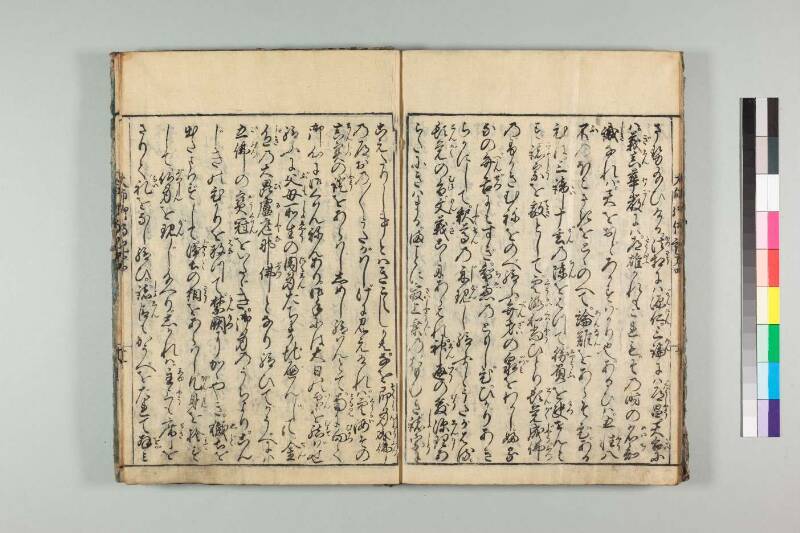
翻刻
させたまひける。法相(ほつさう)は源仁(げんにん)。三 論(ろん)に道昌(だうしやう)。天台(たい)に
は義真(ぎしん)。華厳(けごん)には。道雄(たうおふ)かれもこれも。その時の名知(めいち)
識(しき)なれば。天をおどろかすばかり也。あるひは五 性(しやう)八
不(ふ)のほこさきをとゝのへて。論難(ろんなん)をあらそひ。ある
ひは。三 体(たい)十 玄(げん)の陣(ちん)をはつて。勝負(しやうぶ)をを決(けつ)せんと
す。諸宗(しよしう)を敵(てき)として、空海(くうかい)和尚(くはしやう)ひとり頓覚(とんがく)成仏(じやうぶつ)
のたかきむねをのべ給ふ。弁才(べんざい)の泉(いづみ)をわかし。ふるな
の弁舌(べんぜつ)にもすぎ。智恵(ちゑ)のともしび。ひかりあき
らかにして。釈尊(しやくそん)の示現(じげん)し給ふかとうたがはる。
頓覚(とんがく)の旨(むね)。文義(もんぎ)こゝにあらはれ。神通(じんづう)の教(けう)深理(しんり)あ
あらたにきはまる。まことに最上乗(さいしやう〴〵)のおもむき。諸宗(しよしう)に
こえたりし事とはきこえしか共。なを即身(そくしん)成仏(じやうふつ)
の道。おの〳〵うたがはしげに見えければ。空海(くうかい)その
真実(しんじつ)の証(しやう)をあらはししめし給はんとて。南(みなみ)に向(むかつ)て
御心を御くはんねんあり。御手には大日の印(いん)を結(むす)ばせ
給ふに。父母(ふも)所生(しよしやう)の肉身(にくしん)たちまちへんじて。金(こん)
色(じき)の大 毘盧遮那(びろしやな)仏(ぶつ)となり給ひて。かうべには
五(ご)仏(ぶつ)の宝冠(ほうくはん)をいたゞき。御身のうちより。こん
じきのひかりを放(はな)つて。禁闕(きんけつ)にかゝやき。穢土(ゑど)を
出たまはずして。浄土(じやうど)の相(さう)をあらはし。凡真(ぼんしん)を捨(すて)ず
して仏身(ぶつしん)を現(げん)じ給へり。しかれは、主上(しゆしやう)も席(せき)を
さりて。礼(らい)をなし給ひ。諸臣(しよしん)もかうべをたれて拝(をが)み
現代語訳
(論じ合うことになりました。)法相宗(ほっそうしゅう)からは源仁(げんにん)、三論宗(さんろんしゅう)からは道昌(どうしょう)、天台宗からは義真(ぎしん)、華厳宗からは道雄(どうゆう)と、いずれもその時代の名だたる知識人(高僧)たちでありましたから、天をも驚かすほどの論戦となりました。ある者は五性(ごしょう)・八不(はっぷ)の論の矛先を整えて論難を争い、またある者は三体(さんたい)・十玄(じっげん)の陣を張って勝負を決しようとしました。諸宗を相手にして、空海和尚はただ一人、頓覚成仏(とんかくじょうぶつ)の高い宗旨を述べられました。その弁才は泉のようにあふれ出て、古代インドの名弁者にも勝り、智慧の灯火は光り輝いて、まるで釈尊がお示現なさったかと疑われるほどでありました。頓覚の旨、文義(もんぎ)がここに明らかになり、神通の教え、深理がここに新たに極まりました。まことに最上乗の趣旨が諸宗を超えていることは聞こえ渡りましたが、それでもなお即身成仏の道については、各々が疑わしそうに見えましたので、空海はその真実の証(あかし)をお示しになろうとして、南に向かって御心に深く観念(かんねん)なさいました。御手には大日如来の印(いん)をお結びになると、父母から生まれたその肉身がたちまち変じて、金色の大毘盧遮那仏(だいびるしゃなぶつ)となり給いました。頭には五仏の宝冠(ほうかん)をいただき、御身の中から金色の光を放って禁闕(きんけつ、宮中)を輝かせ、穢土(えど)をお出になることなく浄土の相(すがた)を現し、凡身(ぼんしん)を捨てることなく仏身を現じ給いました。そこで天皇も席をお立ちになって礼拝なさり、諸臣たちも頭を垂れて拝み(申し上げました)。
英語訳
(Each was to set forth and debate the profound principles of his own school.) Representing the Hossō school was Gennin; the Sanron school, Dōshō; the Tendai school, Gishin; and the Kegon school, Dōyū. Each of these was among the most eminent and learned monks of the age, and so the debate was of a magnitude to astonish even the heavens. Some sharpened the spearheads of the doctrines of the Five Natures (*goshō*) and the Eight Negations (*happu*), contending in vigorous disputation; others arrayed their arguments in the formations of the Three Truths (*santai*) and the Ten Mysteries (*jūgen*), seeking to determine the victor. With all of these schools as his opponents, the Venerable Kūkai alone expounded the lofty doctrine of sudden awakening and the attainment of Buddhahood (*tongaku jōbutsu*). His eloquence welled forth like a spring, surpassing even the great debaters of ancient India; the lamp of his wisdom shone with brilliant light, so that one might have wondered whether Śākyamuni himself had appeared. The meaning and purpose of sudden awakening, its textual and doctrinal implications, were made manifest here; the deep truths of the teaching of divine powers reached their fullest expression anew.
It was widely acknowledged that the purport of the supreme vehicle (*saijōjō*) surpassed all the other schools. And yet the assembled monks still appeared to harbor doubts about the path of attaining Buddhahood in this very body (*sokushin jōbutsu*). And so Kūkai resolved to demonstrate the true proof of this reality. Turning to face the south, he entered into deep contemplative absorption, and formed with his hands the mudrā of Mahāvairocana. In that very instant, the flesh-body born of his father and mother was transformed, and he became the golden Mahāvairocana Buddha. Upon his head he wore the jeweled crown of the Five Buddhas, and from within his body he radiated golden light that illuminated the imperial palace. Without departing from this defiled world, he manifested the form of the Pure Land; without casting aside his ordinary body, he revealed the Buddha-body. At this, the Emperor himself rose from his seat and made obeisance, and all the assembled ministers bowed their heads in reverent worship.