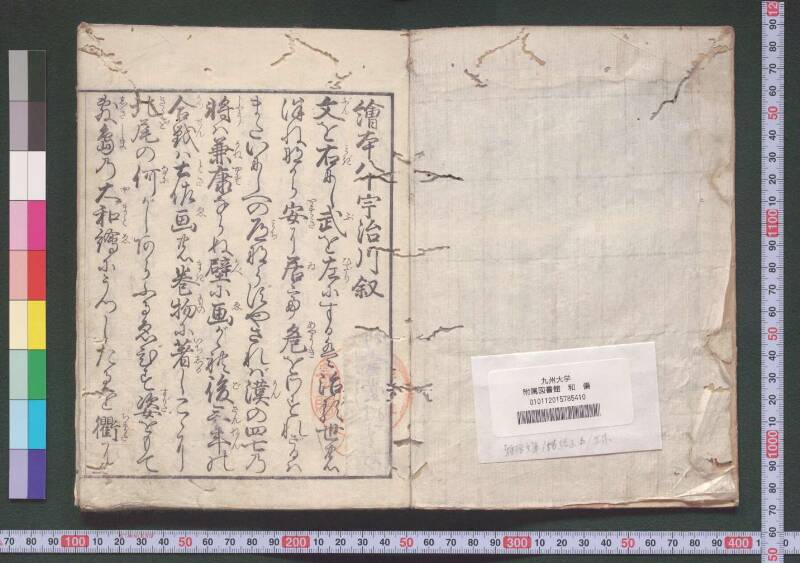
翻刻
絵本八十宇治川叙
文(ぶん)を右(みぎ)にし武(ぶ)を左(ひだり)にするは治る世の
つねなから安(やすき)に居(ゐ)て危(あやうき)をわすれざるは
またいにしへの道(みち)ならずやされば漢(かん)の四七の
将(しやう)は兼康(かねやす)ならぬ壁(かべ)に画(ゑ)がゝれ後三年(ごさんねん)の
合戦(かつせん)は土佐画(とさゑ)の巻物(まきもの)に著(いちじる)しこゝに
北尾(きたを)の何(なに)がしあらふるゑひす姿(すがた)をもて
敷島(しきしま)の大和絵(やまとゑ)にうつしたるを衢(ちまた)に
現代語訳
絵本八十宇治川序文
文を右とし武を左とするのは、治まった世の常であるが、安らかな時にあっても危険を忘れないのは、また古来からの道ではないだろうか。そうであるから、漢の四面楚歌の将軍は兼康ではない壁に描かれ、後三年の合戦は土佐絵の巻物に著されている。ここに北尾の某が、荒々しい武士の姿をもって、敷島の大和絵に写したものを街角に
英語訳
Preface to Picture Book: Eighty Tales of the Uji River
To place literature on the right and military arts on the left is the norm in peaceful times, but to not forget danger even in times of peace—is this not also the way of the ancients? Thus, the general of Han's "Four Sides Chu Songs" is painted on walls (though not by Kaneyasu), and the Later Three Years' War is recorded in Tosa-style scroll paintings. Here, a certain person from the Kitao [school] has depicted fierce warrior figures in Shikishima's Yamato-e style and [displayed them] on street corners