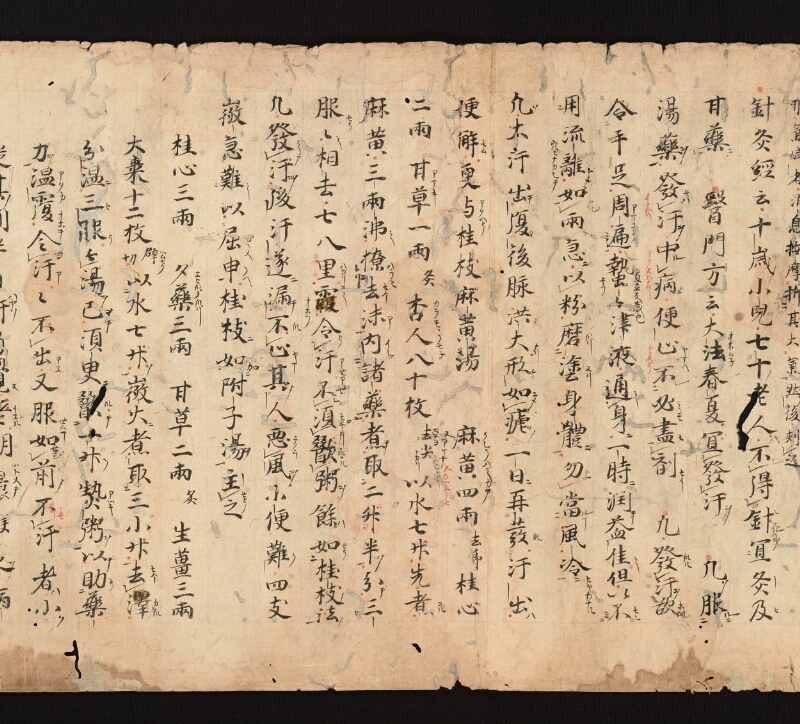
翻刻
針灸経云十歳 ̄ノ小児七十歳 ̄ノ老人 ̄ハ不 ̄レ_レ得_レ針 ̄スルヿヲ宜_二灸及 ̄ヒ
甘薬 ̄ニ_一 医門方云 大法(オホムネ)春夏宜_レ発_レ汗 ̄ヲ 凡 ̄ソ服 ̄ルニ_二
湯薬 ̄ヲ_一《振り仮名:発| セハ|オコスハ》_レ汗 ̄ヲ《振り仮名:中| ル|アタヌルナリ》_レ病 ̄ニ便《振り仮名:止|ヤマハ|トヽメヨリ》不 ̄レ_二必 ̄シモ尽 ̄サ_一レ剤(サイ) 凡発 ̄スル_レ汗 ̄ヲ欲(ホツス)
令_二手足 周遍(アマネク)_一《振り仮名:蟄|直立反蔵也|チツ》々津₋液通 ̄シ_レ身 ̄ニ一₋時 ̄ニ潤 ̄テ益佳 ̄シ但以不 ̄サレ_三
用_二《振り仮名:流||穴ヒナカシテ》₋離 ̄レメ如 ̄ナル_一レ雨急 ̄ニ以_レ粉 磨(スリ)_二塗(ヌリ)身₋体 ̄ニ_一勿_レ当 ̄ルヿ_二風₋ 冷(ヒヤカナル) ̄ニ_一
凡 ̄ソ大汗出 ̄テ復 ̄タ後脈洪₋大 ̄ナリ形 ̄チ如 ̄ニメ_レ瘧 ̄ノ一₋日 ̄ニ再₋発 ̄ス汗出 ̄ハ
便解 ̄スム更 与(アタヘリ)桂枝麻₋黄₋湯 《振り仮名:麻黄|クレノハシカミ|又アマナ又カツネクサ》#1四両《割書:去節|》桂心
二両 甘草(アマキ)一両[灸]杏人(カラモヽノサネ)八十枚《振り仮名:去|ステヨ|ニ》《振り仮名:尖||トカリ》以水七升先煮 ̄コル
麻黄三両沸 ̄シ《振り仮名:撩_二去|ハラヒサケ|トリ》沫(ミ)_一内(イレ)_二諸₋薬_一煮 ̄テ取_二 二升半 ̄ヲ_一分 ̄チ三 ̄ヒ₋
服 ̄セリ服 ̄シ相去七八 里(ハカリニシ)《振り仮名:覆||オホフ》令 ̄リ_レ汗(アセアセ)不 ̄レ_レ須(モチヰ)_レ歠(スヽル)_レ粥 ̄ヲ余 ̄ハ如 ̄セリ_二桂₋枝 ̄ノ法 ̄ノ_一
凡発 ̄シテ_レ汗 ̄ヲ後汗遂 ̄ニ漏 ̄テ不(ス)_レ止(ヤマ)其 ̄ノ人 悪(ニクム)_レ風 ̄ヲ小便難 ̄ク四支
微急難 ̄シ_二以屈(カヽメ)申(ノヘ)_一桂枝 ̄ニ如[加]_二附₋子₋湯_一主 ̄セリ_レ之
桂心三両 夕薬(エヒスクスリ)三両 甘草二両[灸] 生姜三両
大棗十二枚《割書:群(ツムスク)|切》以_二水七升 ̄ヲ微火 ̄ニ煮取_二 三小升_一去(サケ)_レ滓(カス)
分温 ̄ニ三 ̄ヒ服々_レ湯 ̄ヲ已 ̄ヲテ須₋更 ̄ニ歠(スヽテ)_二 一升 ̄ノ熱(アツキ)粥 ̄ヲ_一以 ̄テ助 ̄リ_二薬₋
力 ̄ヲ_一温(アタヽカ)覆(オホテ)令 ̄リ_レ汗 ̄ミ々不_レ出(ミエ)又服 ̄セムヿ如 ̄セヨ_レ前 ̄ノ不 ̄トモ_レ汗者 ̄ハ小 ̄ク
従 ̄リ_二其 ̄ノ間半日 許(ハカリ)_一乃覚 ̄ヌ_レ差(イエル)明₋晨(ツトメテ)候_レ之 ̄ヲ病₋
現代語訳
## 『針灸経』および『医門方』より — 発汗療法と処方
**【『針灸経』より】**
『針灸経』に云う:十歳の小児と七十歳の老人は、鍼(はり)を施すことを得ず(してはならない)。灸および甘薬(かんやく、甘味の薬)を用いるのがよい。
---
**【『医門方』より — 発汗の大法】**
『医門方』に云う:大法(おおむね)として、春・夏には発汗させるのがよい。
およそ湯薬(とうやく)を服するに際して汗を発し(もしくは:起こして)、病に中(あた)るならば、すみやかに止(や)めよ(服薬を止めよ)。必ずしも(一)剤を尽くさなくてよい。
およそ汗を発するには、手足のすみずみ(周遍)にまで〔振り仮名注:「蟄」は直立反、意味は「蔵なり」、読みは「チツ」〕津液(しんえき、体液)が身に通じ、一時(いっとき)に潤うことを良しとする(それがより佳い)。ただ、(汗が)流れ離れること(穴から流れ出すこと)が激しい雨のようになってはならない。粉(こな薬)を(身体に)磨り塗って身体に塗り、風や冷(ひやか)なるものに当たることなかれ。
およそ大汗が出た後、また脈が洪大(こうだい、大きく盛んな脈)となり、形(さま)が瘧(おこり)のようで、一日に再び発する(二度起こる)場合、汗が出れば便ち解する(すなわち病が解ける)。改めて桂枝麻黄湯(けいしまおうとう)を与えよ。
**【桂枝麻黄湯の処方】**
> 麻黄(クレノハシカミ、またはアマナ、またはカツネクサ)四両〔節を去る〕
> 桂心(けいしん)二両
> 甘草(アマキ)一両〔灸(あぶる)〕
> 杏人(カラモモのサネ、杏仁)八十枚〔尖(とがり)を去れ〕
水七升をもって、まず麻黄を三沸(さんふつ)煮て、沫(あわ)を払い去り(撩去し)、諸薬を入れ、煮て二升半を取り、三つに分けて服せよ。服する間隔は七・八里(の距離を歩く程度の時間)ほどにせよ。(服した後は)(衾などで体を)覆い(オホフ)、汗(アセ)をかかせよ。粥を啜(すす)る必要はない。その余は桂枝(けいし)の法のようにせよ。
---
**【発汗後の漏汗(ろうかん)に対する処方】**
およそ発汗の後、汗がついに漏れて止まず、その人が風を悪(にく)み(嫌い)、小便が難しく(出にくく)、四肢が微かに急(ひきつれ)て、屈伸(かかめ・のへ、曲げ伸ばし)が難しい場合には、桂枝(けいし)に附子(ぶし)を加えた湯(桂枝加附子湯)がこれを主(つかさど)る。
**【桂枝加附子湯の処方】**
> 桂心(けいしん)三両
> 夕薬(エヒスクスリ、芍薬)三両
> 甘草二両〔灸(あぶる)〕
> 生姜三両
> 大棗十二枚〔群(つむすく)に切る〕
水七升をもって微火(よわび)にて煮て、三小升(さんしょうしょう)を取り、滓(かす)を去り、(温かいうちに)三たびに分けて温服(おんぷく)せよ。湯を服し終わって、さらに一升の熱(あつき)粥を啜り、もって薬力を助けよ。温かく(体を)覆(おお)い、汗(が出ることを)令(しめ)よ。(汗が)出て見えなくなった(止んだ)ならば、また前のように服せよ。汗が出ない者は、その間から半日ほど(経てば)、乃ち差(い)ゆること(病が癒えること)に覚(き)づく。明晨(つとめて、翌朝)これを候(うかが)い、病(の様子を観察せよ)——
英語訳
## From the *Shinkyū-kyō* (Classic of Acupuncture and Moxibustion) and the *Imon-hō* (Medical Prescriptions) — Sweating Therapies and Formulas
**[From the *Shinkyū-kyō* 針灸経]**
The *Shinkyū-kyō* says: Children of ten years of age and elderly persons of seventy years of age must not receive acupuncture needling. It is appropriate to use moxibustion and sweet-flavored medicines (*kanyaku*).
---
**[From the *Imon-hō* 医門方 — The General Rule for Inducing Sweating]**
The *Imon-hō* says: As a general rule (*ōmune*), in spring and summer it is appropriate to induce sweating.
When administering herbal decoctions (*tōyaku*) to induce sweating, if sweating [is brought about and] strikes (*ataru*) the disease [effectively], stop [the administration of medicine] immediately. It is not necessary to exhaust an entire preparation (*zai*, a full dosage).
When inducing sweating, it is best to have the fluids of the body (*shin'eki*, body fluids, i.e., *jin ye* 津液) flow through to the extremities of the hands and feet (*shūhen*, comprehensively throughout) *[phonetic gloss: "蟄" (*chitsu*) — fanqie reading 直立反, meaning "to store / conceal"]*, circulate throughout the body, and moisten [it] all at once — that is the superior result. However, one must not allow the sweat to pour off in streams (flowing out of the pores) like a sudden rainstorm. Apply powdered [medicine], grinding and rubbing it onto the body, and do not expose [the patient] to wind or cold.
When a great sweat has broken out and then the pulse again becomes flooding and large (*kōdai*), and the patient's condition resembles a malarial attack (*okori*), recurring twice in a single day — if sweating occurs the condition is promptly resolved. Administer *Keishi-maō-tō* (Cinnamon Twig and Ephedra Decoction, 桂枝麻黄湯) once again.
**[Formula: *Keishi-maō-tō* 桂枝麻黄湯]**
> Ephedra (*maō*, 麻黄) — *kure-no-hashikami*, also known as *amana* or *katsunekusa* — 4 *ryō* [remove the nodes]
> Cinnamon heartwood (*keishin*, 桂心) — 2 *ryō*
> Licorice root (*kanzo*, 甘草) — 1 *ryō* [dry-roasted]
> Apricot kernel (*kyōnin*, 杏仁; *karamomo no sane*) — 80 pieces [remove the pointed tips]
Using 7 *shō* of water, first boil the ephedra until three full rolling boils have occurred, skim off the foam (*撩去沫*), add all the other medicines, boil down to obtain 2½ *shō*, divide into three portions, and take [one portion] at a time. Each dose should be spaced approximately the time it takes to walk seven or eight *ri* apart. Cover [the patient with bedding] to induce sweating. There is no need to sip gruel (*kayu*). For the remainder [of the method], follow the protocol for Cinnamon Twig Decoction (*Keishi-hō*).
---
**[Formula for Persistent Leaking Sweat (*rōkan*) After Sweating Treatment]**
When, after inducing sweating, the sweat continues to leak and does not stop, and the patient has an aversion to wind, difficulty urinating, mild cramping in the four limbs, and difficulty bending and extending [the limbs], *Keishi-ka-bushi-tō* (Cinnamon Twig Decoction Plus Aconite, 桂枝加附子湯) governs this condition.
**[Formula: *Keishi-ka-bushi-tō* 桂枝加附子湯]**
> Cinnamon heartwood (*keishin*, 桂心) — 3 *ryō*
> Peony (*shakuyaku*, 芍薬; *ebisukusuri*) — 3 *ryō*
> Licorice root (*kanzo*, 甘草) — 2 *ryō* [dry-roasted]
> Fresh ginger (*shōkyō*, 生姜) — 3 *ryō*
> Large jujube (*taiso*, 大棗) — 12 pieces [cut into pieces / torn apart]
Using 7 *shō* of water, simmer over a gentle flame, reduce to obtain 3 small *shō*, remove the dregs (*kasu*), and take warm in three divided doses. After taking the decoction, one should then sip one *shō* of hot rice gruel to assist the efficacy of the medicine. Cover [the patient] warmly to promote sweating. If sweating appears [and then stops], take [the medicine] again as before. For those who do not sweat, after about half a day [they will] find that recovery has been achieved. The following morning, observe [the patient's condition] — and the illness [continues to be assessed as follows...]