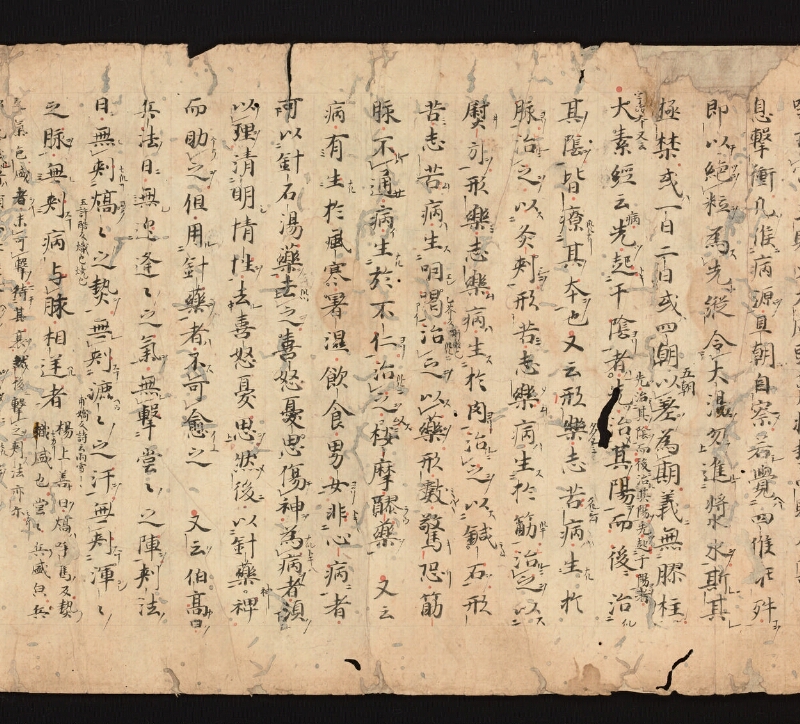
翻刻
息撃衝凡 ̄ソ候 ̄ニ_二病源 ̄ヲ_一且朝自察 ̄メ若 ̄シ覚 ̄ヘハ_二 四候□【乖ヵ】殊 ̄ヿヲ_一
即以 ̄テ絶 ̄ツヲ_レ粒為 ̄ス_レ先 ̄ト縦令_レ下大渇 ̄ヲ勿 ̄ラ_上進 ̄ルヿ_二漿水 ̄ヲ_一斯 ̄レ其 ̄レ
極禁或 ̄ハ一₋日二₋日或 ̄ハ四₋朝[五朝]以_レ差 ̄ヲ為_レ期義 ̄ニ無_二膠柱_一
《割書:|先 ̄ツ治 ̄シ_二其 ̄ノ陰 ̄ヲ_一而後 ̄ニ治 ̄ス其陽 ̄ヲ_一先 ̄ツ起_二于陽 ̄ヨリ_一者》
大素経(宇治本又云) 云[病]先 ̄ツ起 ̄トキ_二干陰 ̄ヨリ_一者 ̄ハ先 ̄ツ治 ̄メ_二其 ̄ノ陽 ̄ヲ_一而後 ̄ニ治 ̄ス_二
其 ̄ノ陰 ̄ヲ_一皆療 ̄スルナリ_二其 ̄ノ本 ̄ヲ_一也又云形 楽(タノシミ)志 苦(クルシム)病 ̄ハ生 ̄ナル_二於
脈 ̄ヨリ_一治 ̄ルニ_レ之 ̄ヲ以 ̄ス_二灸刺 ̄シヲ_一形苦 ̄ミ志楽 ̄メム病 ̄ハ生 ̄ス_二於 筋(スチ)_一治 ̄ルニ_レ之 ̄ヲ以 ̄ス_二
熨(ヰ)₋引 ̄ヲ_一形楽 ̄ミ志楽 ̄ム病 ̄ハ生 ̄ス_二於肉 ̄ヨリ_一治 ̄ルニ_レ之 ̄ヲ以 ̄ス_二鍼(シム)₋石 ̄ヲ_一形
苦 ̄ミ志苦 ̄ム病 ̄ハ生 ̄ス_二咽(エン)《振り仮名:喝|乙芥反斯声也|アイ 》治 ̄スルニ_レ之 ̄ヲ以 ̄ス_レ薬 ̄ヲ形 数(シバヽヽ)驚 ̄キ恐 ̄リ筋₋
脈不 ̄ルハ_レ通 ̄せ病 ̄イ生 ̄ナル_二於不₋仁 ̄ヨリ_一治 ̄スルニ_レ之 ̄ヲ[以ス]_二按₋摩 醪(ラウ)₋薬_一
病有_三生 ̄ナル_二於風₋寒暑₋湿飲₋食男₋女 ̄ヨリ_一非 ̄トキ_二心₋病 ̄ニ_一者
可_下以_二針₋石₋湯薬 ̄ヲ_一去(スツ)_上レ之 ̄ヲ喜₋怒憂₋思傷 ̄テ_レ神 ̄ヲ為(ナス) ̄トキハ_レ病 ̄ヲ者湏 ̄ク_三下
以 ̄テ_レ理 ̄ヲ清_二₋明 ̄シ情性 ̄ヲ_一去 ̄ル_中喜₋怒憂₋思 ̄ヲ_上然 ̄メ後 ̄ニ以_二針₋薬_一神
而助 ̄ケリ_レ之 ̄ヲ但用 ̄ル_二針₋薬 ̄ヲ_一者 ̄ハ不(ス)_レ可_レ愈(イエ)之 又云 ̄ク伯₋髙 ̄カ曰 ̄ク
兵₋法 ̄ノ曰 ̄ニ無 ̄シ_三迎_二逢々之気 ̄ヲ_一無 ̄シ_レ撃_二堂々 ̄ノ之陣 ̄ヲ_一刺₋法 ̄ノ
曰無 ̄シ_レ刺(サスヿ)_二《振り仮名:熇|コク|玉許酷反熾也焼也》々之熱 ̄ヲ_一無 ̄シ_レ刺 ̄スヿ_二 《振り仮名:瀌|ヘウ|甫嬌反詩云雨雪》々( ノ)之汗 ̄ヲ_一無_レ刺 ̄スヿ_二渾(コン)々( ノ)
之脈 ̄ヲ_一無 ̄シ_三刺 ̄スヿ_二病与_レ脈相逆 ̄ヘル者_一《割書:楊₋上₋善 ̄カ曰 ̄ク熇 ̄ハ呼篤 ̄ノ反熱|熾盛(サカリ)也堂々兵 ̄ノ盛皃兵》
《割書:之気色盛者 ̄ヲハ未_レ可_レ撃 ̄ツ待(マチ)_二其衰 ̄ヲ_一然後 ̄ニ撃_レ之 ̄ヲ刺 ̄ス法亦 尓(シカリ)|邪気盛者消 ̄ハ₋息按₋摩 ̄シ折_二其大気_一然 ̄ノ後 刺(サス)_レ之 》
現代語訳
【『南海伝』より続き — 四大の乱れと養生法】
(風大が動いて気が)息(いき)をつき、(体を)衝き(撃ち)動かす。およそ病の根源(病源)を(よく)候(うかが)うには、毎朝自ら(自分の体を)察するがよい。もし四候(四大の候、すなわち地・水・火・風のいずれかの状態)が(常と)異なることに気づいたならば、すみやかに絶粒(ぜつりゅう、食を断つこと)をもって先となせ。たとえ大いなる渇き(激しい口渇)が生じても、漿水(しょうすい、飲み物・粥のような液体食)を進め(飲ませ)ることなかれ。これがその(養生の)極めて重要な禁(いましめ)である。あるいは一日・二日、あるいは四朝(四日)〔五朝(五日)〕、(病が)差(い)ゆることを期(ご)となせ。義(意味)は膠柱(こうちゅう、融通のきかないこと)にあるにあらず(かたく規則に縛られることはない)。
---
【『大素経』(宇治本にも「又云う」とある)より】
『大素経』に云う(宇治本はまた次のように云う):病がまず陰より起こった者は、まずその陽を治めてから、後にその陰を治する。〔割注:まずその陰を治めてから後にその陽を治する。まず陽より起こった者は(の場合)〕いずれも(療法は)その本(根本)を療するのである。
また云う:形(体)が楽しみ(安逸であり)、志(心)が苦しむ(苦悩する)病は、脈より生じる。これを治するには灸・刺(きゅう・しん、灸と鍼)をもってする。形が苦しみ、志が楽しむ(精神的には平穏な)病は、筋(すじ)より生じる。これを治するには熨引(ウインン、温罨法と導引)をもってする。形が楽しみ(体が安逸で)、志も楽しむ(心も安らかな)病は、肉より生じる。これを治するには鍼石(しんせき、鍼と砭石)をもってする。形が苦しみ、志も苦しむ(体も心も苦しむ)病は、咽喝(えんかつ、咽喉の渇き)より生じる。〔振り仮名注:「喝」は「乙芥反」の反切で、その声は「アイ」〕これを治するには薬をもってする。形がしばしば驚き恐れ、筋脈が通じなくなる病は、不仁(ふじん、感覚の麻痺・しびれ)より生じる。これを治するには按摩と醪薬(ろうやく、薬酒の一種)をもってする。
病に、風・寒・暑・湿・飲食・男女(の事)より生じるものがある。(これらが)心病(精神的な病)でないときは、鍼・石・湯薬(とうやく)をもってこれを去る(取り除く)ことができる。喜・怒・憂・思(の感情)が神(精神)を傷つけて病を為すときは、まず理(ことわり)をもって情性(感情・性情)を清明にし、喜・怒・憂・思を去り、然る後に鍼・薬をもって(精)神(を)助けるがよい。ただ鍼・薬のみを用いる者は、(その病を)愈(い)やすことはできない。
また云う:伯髙(はっこう)が曰く——
兵法に曰く:「逢々(ほうほう、意気盛んに)の気を迎え(て戦うこと)なかれ、堂々の陣を撃つことなかれ」と。刺法(しほう、鍼の法)に曰く:「熇々(こくこく)の熱を刺すことなかれ」〔振り仮名:「熇」はコク、反切「玉許酷反」、意味は「熾(さかん)なり、焼なり」〕、「瀌々(ひょうひょう)の汗を刺すことなかれ」〔振り仮名:「瀌」はヘウ、反切「甫嬌反」、詩に「雨雪」とあり〕、「渾々(こんこん)の脈を刺すことなかれ」、「病と脈とが相逆(あいさか)らえる者を刺すことなかれ」と(言う)。
〔割注:楊上善(ようじょうぜん)が曰く:「熇は呼篤の反(反切)で、熱の熾盛(さかんなこと)なり。堂々とは兵の盛んなるさまである。兵の気色が盛んな者は、いまだ撃つべからず、その衰えを待って然る後にこれを撃て。刺す法もまた然り。邪気が盛んな者は、消息(しょうそく)し、按摩して、その大気(たいき、邪気の勢い)を折り、然る後にこれを刺せ」と。〕
英語訳
**[Continuing from the *Nankai-den* — The Four Great Elements in Disarray and Methods of Health Cultivation]**
[The wind element stirs and the vital energy (*ki*)] strikes and beats [the body] with its breath. As for observing (*ukagau*) the root causes of illness (*byōgen*) in general, one should examine (*察する*) oneself every morning. If one becomes aware that the four signs (*yonkō* — the conditions of earth, water, fire, and wind) have deviated in any way from the norm, one should immediately make fasting (*zetsuryū*, the cutting off of grain/food) the first course of action. Even if great thirst (*daikatsu*) arises, do not drink fluids or gruel (*shōsui*). This is the paramount prohibition. Whether for one day, two days, or four mornings [five mornings], take recovery (*ie*) as one's aim. The principle is not [to be understood with] rigid inflexibility (*kōchū*, like gluing a peg in place).
---
**[From the *Taiso-kyō* 大素経 (*Huangdi Neijing Taisu*) — also cited in the Uji manuscript]**
The *Taiso-kyō* says (and the Uji manuscript also states): When illness first arises from the *yin* [aspect], first treat its *yang*, and thereafter treat its *yin*. *[Interlinear note: "First treat its yin, then thereafter treat its yang; as for one who first arises from yang..."*] In all cases, the therapy treats the root (*hon*) of the condition.
It also says: When the body (*katachi*) is at ease and the will (*kokorozashi*) is suffering, the illness arises from the [blood] vessels (*myaku*). To treat this, use moxibustion and acupuncture (*kyū-shi*). When the body is suffering but the will is at ease, the illness arises from the sinews (*suji*). To treat this, use *wiin* — that is, warm compresses (*unan-hō*) and *dōin* (therapeutic exercises / guided stretching). When the body is at ease and the will is also at ease, the illness arises from the flesh (*niku*). To treat this, use acupuncture needles and stone [lancets] (*shinseki*). When the body is suffering and the will is also suffering, the illness arises from *en-katsu* — dryness of the throat and thirst. *[Phonetic gloss: "喝" (*katsu*) is read with the fanqie spelling 乙芥反, and is pronounced "ai".]* To treat this, use medicine (*kusuri*). When the body repeatedly startles and fears, and the sinews and vessels (*kinmyaku*) fail to circulate properly, the illness arises from *fujin* — numbness and loss of sensation. To treat this, use massage (*anma*) and medicinal wine (*rōyaku*).
Among illnesses, there are those that arise from wind, cold, heat, dampness, food and drink, and sexual activity [between men and women (*danjo*). When these are] not heart-diseases (*shinbyō*, i.e., conditions of mental-emotional origin), they can be removed (*suteru*) using acupuncture, stone [lancets], and herbal decoctions (*tōyaku*). However, when joy, anger, grief, and anxious thought (*ki, do, yū, shi*) injure the spirit (*shin*) and thereby cause disease, one must first, through reasoned understanding (*kotowari*), bring clarity and lucidity to one's feelings and character (*jōsei*), remove the joy, anger, grief, and anxious thought, and thereafter use acupuncture and medicine to assist the spirit. Those who rely on acupuncture and medicine alone will be unable to effect a cure.
It also says: Hakkō (*Bogāo* 伯髙) said:
The military arts (*heihō*) say: "Do not advance to meet an army whose spirit is at its peak (*hōhō no ki*); do not strike an array that stands in imposing formation (*dōdō no jin*)." The art of needling (*shihō*) says: "Do not needle scorching, blazing heat (*kokkoku no netsu*)" *[phonetic gloss: "熇" (*kok*) — fanqie 玉許酷反, meaning 'blazing' (熾) and 'burning' (焼)]*, "do not needle torrential, pouring sweat (*hyōhyō no kan*)" *[phonetic gloss: "瀌" (*hyō*) — fanqie 甫嬌反, appearing in the *Shi jing* (Book of Odes) in the line 'rain and snow' (雨雪)]*, "do not needle a churning, surging pulse (*konkoku no myaku*)", and "do not needle [a patient] in whom the disease and the pulse are in mutual opposition (*aiisakarau*)."
*[Interlinear note: Yōjōzen (楊上善, *Yáng Shànshàn*) said: "'熇' is read with the fanqie 呼篤反 and means the blazing, flourishing heat. 'Dōdō' (堂々) describes an army at its most formidable. One in whom the spirit and color of the army's force is in full flourish should not yet be struck — wait for its decline, and only then strike. The same principle applies to needling. When the evil *qi* (*jaki*) is at its peak, allow it to dissipate and recede, perform massage to break down its great force (*taiki*), and only thereafter needle it."]*