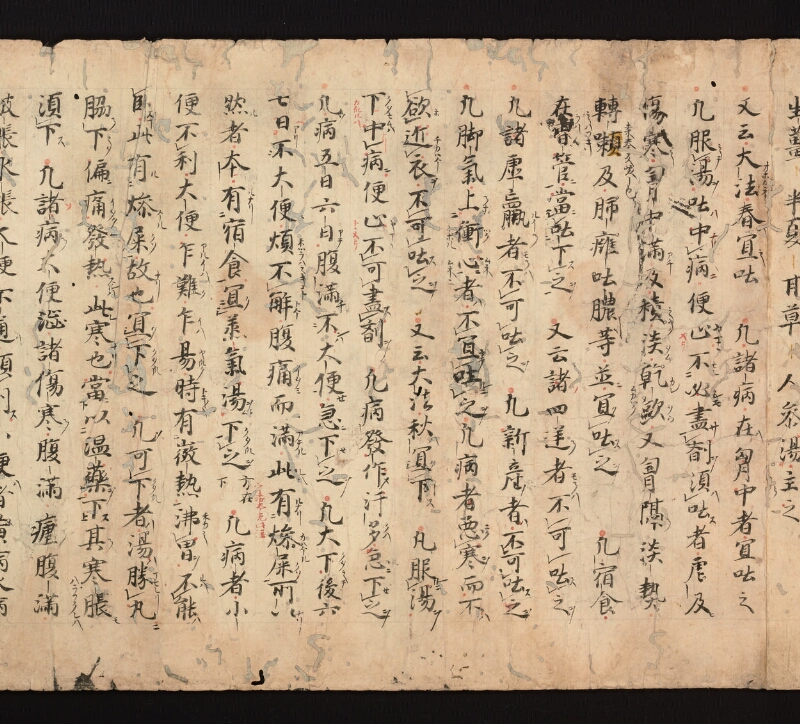
翻刻
又云 大法(オホムネ)春 ̄ハ宜 ̄シ吐 凡諸₋病在 ̄ハ胸中者宜吐之
凡服 ̄シテ_レ湯 ̄ヲ吐 ̄ハ中 ̄ナリ_レ病 ̄ニ便《振り仮名:止|ヤマヽ| メリ》不 ̄サレ_二必 ̄シモ尽 ̄サ_一レ剤 ̄ヲ須 ̄ハ_レ吐 ̄ス者虐及 ̄ヒ
傷₋寒 ̄シ胸₋中₋満(ミチ)及 積(シヤク)淡(タム)《振り仮名:乾₋欧|カン ヲウ|ムカツク》又胸₋隔 ̄ノ淡₋熱
《振り仮名:転₋嗽|桑奏反咳也|シハフキ》及肺₋癕₋吐₋膿等並 ̄ニ宜 ̄ク_レ吐 ̄ス_レ之 ̄ヲ 凡宿₋食
在 ̄ラハ_二胃₋管 ̄ニ_一《振り仮名:当| ニ| シ》_レ吐_二₋下 ̄ス_レ之 ̄ヲ_一 又云諸 ̄ソ四₋逆 ̄ノ者(モノハ)不_レ可_レ吐 ̄ス_レ之 ̄ヲ
凡諸虚₋羸(ルイノ)者(モノハ)不_レ可_レ吐_レ之 ̄ヲ 凡新₋産 ̄ノ者 ̄ハ不_レ可_レ吐 ̄ス_レ之 ̄ヲ
凡脚₋気 上(ノホ)_二《振り仮名:衝心|ツク ムネ|トホル ムネ》 ̄ニ_一者 ̄ハ不_レ宜 ̄カラ_レ吐 ̄ルニ_レ之 ̄ヲ凡病者悪(ニク)_レ寒 ̄ヲ而不 ̄ハ
_レ欲(ホ)_レ近(チカツケ)_レ衣 ̄ヲ不_レ可_レ吐 ̄ス_レ之 ̄ヲ 又云大法秋 ̄ハ《振り仮名:宜| ク| シ》_レ 下 ̄ス 凡服 ̄ルニ_レ湯 ̄ヲ
《振り仮名:下|クタサムハ|カスルハ》中 ̄ナリ_レ病 ̄ニ便《振り仮名:止|ヤマヽ|トヽメリ》不_レ可_レ尽 ̄ス_レ剤 ̄ヲ 凡病発₋作 ̄メ汗多 ̄クハ急 ̄ニ下 ̄セ_レ之 ̄ヲ
凡 ̄ソ病五₋日六₋日 ̄ミテ腹満 ̄チ不 ̄ンハ_二大便 ̄セ_一急 ̄ニ下 ̄セ_レ之 ̄ヲ 凡大 下後(クタシテ)六
七日 ̄アリ不大₋便 煩(ワツラハシキコト)不_レ解(トケ)腹 痛(イタミ)而満(ミチル)此(レハ)有 ̄ルナリ_二燥(カハケル)₋屎(クソ)_一所以 ̄ナリ
然 ̄ル者本有 ̄ルナリ_二宿₋食_一《振り仮名:宜| ク| シ》_二承₋気湯 ̄ヲ下(クタス)_レ一之 ̄ヲ《割書:宇治本无此注|方在|下》凡病₋者小₋
便不_レ利大₋便 乍(アルイハ)難 ̄ク乍 ̄イハ易(ヤスク)時(トキ〱)有_二微₋熱_一沸(ワカシ)_レ胃 ̄ヲ不 ̄ルハ_レ能 ̄ハ
臥 ̄スヿ此有 ̄ル_二燥 ̄ケル₋屎(クソ)_一故 ̄ナリ也《振り仮名:宜| ク| シ》_レ 下(クタス)_レ之 凡 ̄ソ可_レ 下(クタス)者 ̄ハ湯 ̄ハ勝(マサレリ)_レ丸 ̄ニ
脇 ̄ノ下(シタ)偏 ̄ニ痛(イタク)発₋熱 ̄スルハ此 ̄レ寒 ̄ナリ也当 ̄ニ_下以_二温₋薬 ̄ヲ_一 下 ̄ス_上其 ̄ノ《振り仮名:寒₋脹||ハラフクレハ》 ̄モ
湏_レ 下 ̄ス 凡 ̄ソ諸病 ̄ノ大₋便₋渋諸₋傷₋寒 ̄ノ腹₋満瘧 ̄ノ腹₋満
鼓₋脹水₋脹大₋便不通 ̄ハ《振り仮名:須|| ヘシ》_レ利 ̄ス小便 ̄ハ者黄病水病
現代語訳
## 【涌吐法・攻下法の大則】
### 涌吐(吐かせること)の大則
また云う:大法(おおむね)、春は吐(はか)せるのがよい。
およそ諸々の病が胸中(きょうちゅう・胸の中)にある者は、吐(はか)せるのがよい。
およそ湯(とう・煎じ薬)を服して吐けば、病に当たった(効いた)ということであり、すなわちやめてよく、必ずしも剤(くすり・一服分)を飲み尽くす必要はない。
吐(はか)せるべき者——(その適応証は):虐(おこり・マラリア様の病)および傷寒(しょうかん・熱性疾患)で胸中が満(み)ち(胸満)、積痰(しゃくたん・積もった痰)あるいは乾嘔(かんおう・むかつき)、また胸膈(きょうかく・胸と横隔膜の間)の痰熱(たんねつ)、転嗽(てんそう・咳のこと〔桑奏反〕)、および肺癰(はいよう・肺の膿瘍)で膿を吐くもの等、並びに吐(はか)せるのがよい。
およそ宿食(しゅくしょく・食べ物が胃に停滞していること)が胃管(いかん・胃の管、胃の部位)にある場合は、吐下(はきくだし)させるべきである。
また云う:およそ四逆(しぎゃく・手足が冷え切った状態)の者は、吐(はか)せてはならない。
およそ諸々の虚羸(きょるい・虚弱でやせ衰えた)の者は、吐(はか)せてはならない。
およそ新産(しんさん・産後間もない)の者は、吐(はか)せてはならない。
およそ脚気(かっけ)が上衝(じょうしょう・突き上げて)して心(むね)に衝(つ)く者は、吐(はか)せるのはよくない。
およそ病者が寒を悪(にく)んで、衣(ころも)を近づけようとしない(脱ぎたがる)場合は、吐(はか)せてはならない。
---
### 攻下(下すこと)の大則
また云う:大法(おおむね)、秋は下(くだ)すのがよい。
およそ湯(とう)を服して下すのが病に当たれば、すなわちやめてよく、剤(くすり)を飲み尽くしてはならない。
およそ病が発作(ほっさ)して汗が多い場合は、急いでこれを下すべし。
およそ病が五日・六日(たってもなお)腹が満(み)ちて大便がなければ、急いでこれを下すべし。
およそ大いに下した後、六七日あっても大便がなく、煩(わずらわしさ・苦悶)が解けず、腹が痛み、かつ満(み)ちる——これは燥屎(そうし・乾燥した宿便)があるためである。しかして、もともと宿食(しゅくしょく)があるのである。承気湯(じょうきとう)をもってこれを下すのがよい。
> 【割注】「宇治本にはこの注なし。方は下(しも)にあり。」
およそ病者が小便不利(しょうべんふり・小便が出にくい)で、大便がある時は難く、ある時は易(やす)く(出る)、時々微熱があり、胃(い)が沸(わ)く(いきりたつ)ようで、臥(ふ)すことができない——これは燥屎(乾いた宿便)があるためである。これを下すのがよい。
およそ下すことができる者には、湯(とう・煎じ薬)は丸(がん・丸薬)よりも優れている。
脇の下(わきのした)が偏(かたよ)って痛み、発熱するのは、これは寒(かん・寒邪)である。温薬(おんやく・温める薬)をもって下すべきである。その寒脹(かんちょう・寒による腹脹れ)もまた下すべきである。
およそ諸々の病で大便渋(たいべんじゅう・大便が滞ること)、諸傷寒の腹満、瘧(おこり・マラリア様熱病)の腹満、鼓脹(こちょう・太鼓のように腹が張ること)、水脹(すいちょう・水腫による腹脹)、大便不通——(これらは)小便を利(通)じさせるべきものである——黄病(おうびょう・黄疸)、水病(すいびょう・浮腫・水腫の病)……
英語訳
## [General Principles of Emesis and Purgation Therapy]
### General Principles of Emesis (Inducing Vomiting)
It further says: As a general rule (*ōmune*, the overarching principle), in **spring**, emesis (inducing vomiting) is appropriate.
As a general rule, in all diseases where the illness is located within the chest (*kyōchū*), emesis is appropriate.
As a general rule, if after taking a decoction (*tō*) the patient vomits, this means the medicine has struck (*atatta*) the disease; one may then stop, and it is not necessary to finish the entire preparation (*zai*).
Those for whom emesis is appropriate — [the indications are]: *nue* (虐, malaria-like intermittent fever) and *shōkan* (傷寒, cold-damage fever illness) with fullness in the chest (*kyōman*); accumulated phlegm (*shakutan*) or dry retching (*kan'ō*, nausea without vomiting); also phlegm-heat (*tannetsu*) in the chest and diaphragm region; *tenshō* (転嗽, coughing — fanqie reading: *sōzō-han*); and *haiyō* (肺癰, lung abscess) with expectoration of pus — all of these alike are appropriate for emesis.
As a general rule, if undigested food (*shukushoku*, retained food) is present in the gastric tract (*ikan*, the stomach and its passageway), one should cause the patient to both vomit and purge (*hakikudashi*, emesis and downward purgation).
It further says: As a general rule, persons with *shigyaku* (四逆, reversal cold of all four limbs) must not be made to vomit.
As a general rule, persons who are *kyorui* (虚羸, vacuous and emaciated, weak and wasted) must not be made to vomit.
As a general rule, persons who have recently given birth (*shinsan*, newly postpartum) must not be made to vomit.
As a general rule, persons in whom *kakke* (脚気, leg qi, beriberi) surges upward (*jōshō*) and thrusts into the heart region (*mune*, chest) must not be made to vomit.
As a general rule, if a sick person has an aversion to cold (*nikumu*) and does not wish to bring clothing close (i.e., wants to remove their clothing), they must not be made to vomit.
---
### General Principles of Purgation (Inducing Downward Evacuation)
It further says: As a general rule, in **autumn**, purgation (*kudasu*) is appropriate.
As a general rule, when taking a decoction (*tō*) that purges downward, if it strikes the disease, one should stop, and must not finish the entire preparation (*zai*).
As a general rule, when a disease flares up (*hossa*) and there is profuse sweating, urgently purge it.
As a general rule, when a disease has persisted for five or six days, the abdomen is full, and there has been no bowel movement, urgently purge it.
As a general rule, after a major purging, if after six or seven days there is still no bowel movement, the distress (*wazurawashisa*, vexation) does not resolve, and the abdomen is painful and full — this is because there are *sōshi* (燥屎, dry, desiccated stools). This is because there was originally retained food (*shukushoku*) present. It is appropriate to purge with **Jōki-tō** (承気湯, Order-Restoring Decoction, *Chéng Qì Tāng*).
> **Interlinear note:** "This note is absent in the Uji manuscript (*Uji-bon*). The formula (*hō*) is found below (*shimo*)."
As a general rule, when a sick person has difficulty urinating (*shōben furi*), and the bowel movements are sometimes difficult and sometimes easy, and from time to time there is a slight fever, and the stomach is "boiling" (agitated, seething), and the patient is unable to lie down — this is because there are dry stools (*sōshi*, desiccated feces). It is appropriate to purge.
As a general rule, for those in whom purgation is appropriate, a decoction (*tō*, liquid preparation) is superior to pills (*gan*).
When there is localized pain below the ribs (*waki no shita*, hypochondrium, one side), and the patient has fever — this is a cold condition (*kan*, cold pathogen). One should purge using warm/warming medicines (*onyaku*, thermally warm medicinals). Even in cold-induced abdominal distension (*kanchō*, distension due to cold), one must still purge.
As a general rule, [in all of the following conditions]: difficulty in defecation (*taibin jū*, constipation) in various diseases; abdominal fullness (*fukuman*) in the various *shōkan* (cold-damage) illnesses; abdominal fullness in *nue* (疟, malaria-like fever); *kochō* (鼓脹, drum-like abdominal distension); *suichō* (水脹, water-swelling, abdominal dropsy); and constipation (*taibin futsū*, inability to defecate) — [for those requiring urination to be facilitated] — *ōbyō* (黄病, yellowing disease, jaundice) and *suibyō* (水病, water disease, edema/dropsy)…