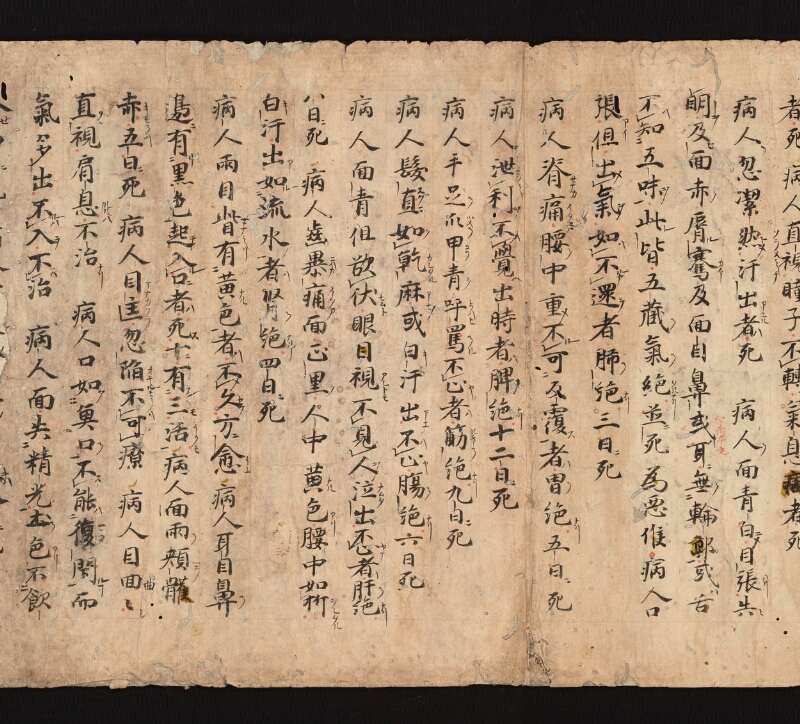
翻刻
病人 ̄ノ忽潔₋然 ̄トメ汗 出(ミユル)者 ̄ハ死 病人 ̄ノ面青₋白 ̄ニメ目 張(ハリ)失 ̄ヒ
_レ明 ̄ヲ及 ̄ヒ面赤 ̄ク唇 ̄ル騫(カケ)及面目鼻 或(宇治本无) ̄ハ耳 ̄ニ無 ̄ク_二輪郭_一或 ̄ハ舌
不 ̄ハ_レ知_二 五₋味 ̄ヲ_一此 ̄レ皆五₋蔵 ̄ノ気 ̄ノ絶 ̄タルナリ並 ̄ニ死為悪候病人口
張 ̄アイ但出 ̄メ_レ気 ̄ヲ如 ̄ハ_レ不 ̄ルカ_レ還 ̄ラ者肺 ̄ノ絶 ̄ナリ三日 ̄ニ死
病人脊(セナカ)痛(イタミ)腰 ̄ノ中重 ̄メ不 ̄ル可_二反覆 ̄ス_一者 ̄ハ胃 ̄ノ絶 ̄ナリ五₋日 ̄ニ死
病人 泄(モラシ)_レ利 ̄ヲ不_レ覚 ̄ヘ出時者 ̄ハ脾 ̄ノ絶 ̄ナリ十二₋日 ̄ニ死
病人手足 ̄ノ爪(ツメノ)甲(コフ)青 ̄ク呼(ヨハヒ)罵(ノル)不_レ止(ヤ)者 ̄ハ筋(スチノ)絶 ̄ナリ九₋日 ̄ニ死
病人髪 直(スグニ)如 ̄ク_レ乾 ̄カシタル麻(アサノ)或白 ̄キ汗 出(ミエ)不 ̄ハ_レ止(ヤ)腸 ̄ノ絶 ̄ナリ六日死
病人面青但欲_レ伏 ̄セムト眼目 視(ミレトモ)不_レ見_レ 人 ̄ヲ泣(ナムタ)出不_レ止(ヤマ)者 ̄ハ肝 ̄ノ絶 ̄ナリ
八日 ̄ニ死 病人歯 暴(ニハカ)痛(イタミ)面正黒 ̄ク 人₋中黄 ̄ナル色 ̄アリ腰中如_レ折(ヲレタル)
白 ̄キ汗 出(ミ)如 ̄ル_二流水 ̄ノ_一者 ̄ハ腎 ̄ノ絶 ̄ナリ四日 ̄ニ死
病人両目 眦(マナシリ)有_二黄 ̄ナル色_一者 ̄ハ不 ̄メ_レ久(ヤラ)方 ̄ニ愈(イエ)病₋人耳目鼻 ̄ノ
辺 ̄ニ有 ̄リ_二黒色_一起 ̄テ入 ̄ル_レ口 ̄ニ者 ̄ハ死 ̄ス十 ̄ニ有 ̄ラン_二 三 ̄モ活(イクモ)_一病人面両 ̄ノ頬(ツラ)₋𩪼
赤(キモノハ)五日 ̄ニ死病人 目匡(マナカフラ)#1忽陥(オチルモノハ)不_レ可_レ療 病人目[曲]囬々 ̄シ
直(タヽ)視肩₋息 ̄スルハ不₋治 ̄ナリ 病人口如 ̄ク_二魚口 ̄ノ_一不 ̄ス_レ能 ̄ハ_二復(マタ)閉 ̄ルヿ_一而
気多出不 ̄ルハ_レ入 ̄ラ不 ̄ス_レ治 病人面失_二精₋光_一土 ̄ノ色 ̄アリ不_二飲₋
現代語訳
## 【諸病不治証 第二・続き】
病人が忽ちに潔然(けつぜん)として汗が(全身に)出るように見える者は死ぬ。
病人の顔が青白くなり、目が張り(見開き)、明(め・視力)を失い、及び顔が赤く、唇が騫(か)け(欠け・干からびて縮み)、また顔・目・鼻、あるいは耳に輪郭がなくなり、あるいは舌が五味(ごみ・甘・酸・辛・苦・鹹〔かん〕の五つの味)を知ることができなくなる——これらはいずれも五臓の気が絶えたものであり、いずれも死に至る悪い兆候である。
病人の口が張り開いたまま、ただ気(いき)を出すばかりで、還(もど)らないかのような者は、肺(はい)の絶である。三日で死ぬ。
病人の脊(せなか)が痛み、腰の中が重くなり、寝返りができない者は、胃(い)の絶である。五日で死ぬ。
病人が利(便・大小便)を漏らして、出るときに気づかない者は、脾(ひ)の絶である。十二日で死ぬ。
病人の手足の爪甲(つめ)が青くなり、(苦しさのあまり)呼び罵(のの)しって止まない者は、筋(すじ)の絶である。九日で死ぬ。
病人の髪が、乾かした麻(あさ)のようにまっすぐに(逆立つように)なり、あるいは白い汗が出て止まない者は、腸(ちょう)の絶である。六日で死ぬ。
病人の顔が青く、ただ伏せようとするばかりで、眼目(まなこ)は見えども人を見ることができず、涙(なみだ)が出て止まない者は、肝(かん)の絶である。八日で死ぬ。
病人の歯がにわかに痛み、顔がまったく黒くなり、人中(じんちゅう・鼻と上唇の間のくぼみ)に黄色い色があり、腰の中が折れたようで、白い汗が流水のように出る者は、腎(じん)の絶である。四日で死ぬ。
病人の両目の眦(まなじり・目頭・目尻)に黄色い色がある者は、久しからずして、まさに癒(い)える(病が治る)。
病人の耳・目・鼻の辺りに黒色があって、(口の方へ)起きて入る——口に入る者は死ぬ。十(人)に三(人)ほどは活きるであろう。
病人の顔の両頬(ほお)の頬骨(𩪼)が赤い者は、五日で死ぬ。
病人の目眶(まなかふら・目の周りのくぼみ・眼窩〔がんか〕)が忽ちに陥(お)ちる(くぼむ)ものは、治療できない。
病人の目が廻々(かいかい・くるくると)として直視(たださに・ぼんやりと一点を見つめ)し、肩息(かたいき・肩で息をする)する者は、不治である。
病人の口が魚の口のようで、また閉じることができず、気(いき)がよく出て入らない者は、治らない。
病人の顔が精光(せいこう・顔の輝き・生気ある艶)を失い、土の色があり、飲(食い飲み)せず——(以下次ページへ続く)
英語訳
## [Section Two: Signs of Incurable Diseases, Continued]
If a sick person suddenly breaks out in a sudden, complete (*ketsuzento shite*) sweat [visible all over the body], that person will die.
If a sick person's face turns blue-white, the eyes stare wide open and lose their brightness (*me*, vision/brightness), and furthermore the face turns red, the lips become shrivelled and cracked (*kake*, dried and retracted), and the face, eyes, nose, or ears lose their defined outlines (*rinkaku*), or the tongue becomes unable to distinguish the Five Flavours (*gomi*: sweet, sour, pungent, bitter, and salty) — all these are signs that the *qi* (vital energy) of the Five Viscera (*gozō*) has been exhausted (*taeru*), and they are all evil omens leading to death.
If a sick person's mouth falls open and they only breathe out, as though the breath will not return — this is exhaustion of the **Lung** (*hai no zetsu*). Death comes in three days.
If a sick person's back aches, the lumbar region feels heavy, and the person cannot turn over in bed — this is exhaustion of the **Stomach** (*i no zetsu*). Death comes in five days.
If a sick person leaks their excretions (*moru*, incontinence of urine or stool) without being aware of their passing — this is exhaustion of the **Spleen** (*hi no zetsu*). Death comes in twelve days.
If a sick person's fingernails and toenails turn blue-green, and they cry out and curse (*yobai noru*, call out and berate) without ceasing — this is exhaustion of the **Sinews** (*suji no zetsu*). Death comes in nine days.
If a sick person's hair stands straight as dried hemp (*asano*, flax), or white sweat pours out unceasingly — this is exhaustion of the **Intestines** (*chō no zetsu*). Death comes in six days.
If a sick person's face turns blue-green, and they seek only to lie face-down, and although the eyes are open they cannot see people, and tears flow without ceasing — this is exhaustion of the **Liver** (*kan no zetsu*). Death comes in eight days.
If a sick person's teeth suddenly ache, the face turns completely black, the *jinchū* (人中, the philtrum — the groove between the nose and upper lip) takes on a yellow colour, the lumbar region feels as though broken, and white sweat pours out like flowing water — this is exhaustion of the **Kidney** (*jin no zetsu*). Death comes in four days.
If a sick person has a yellow colour at the *manajiri* (目眦, inner or outer corners of the eyes), that person will recover before long — the illness will be cured.
If a sick person has black colour around the ears, eyes, and nose, and it spreads and enters toward the mouth — that person will die. Of ten [such persons], perhaps three may survive.
If both cheekbones (*hoho*, the malar eminences) of a sick person's face are red — death comes in five days.
If the *manakafura* (目匡, orbital rim, the bony socket surrounding the eye) of a sick person suddenly sinks inward (*ochiru*, caves in, becomes sunken) — the person cannot be treated.
If a sick person's eyes roll about (*kaikai*, rotating, circling) while maintaining a fixed straight gaze, and they breathe with heaving shoulders (*kata-iki*, shoulder breathing, laboured breathing using the shoulder muscles) — this is incurable.
If a sick person's mouth is like the mouth of a fish — unable to close again — and breath exits plentifully but does not re-enter — this is incurable.
If a sick person's face loses its *seikō* (精光, the radiant vitality, the lustrous brightness of a healthy complexion), takes on an earthy colour (*tsuchi no iro*), and cannot drink or eat — [continued on the following page]