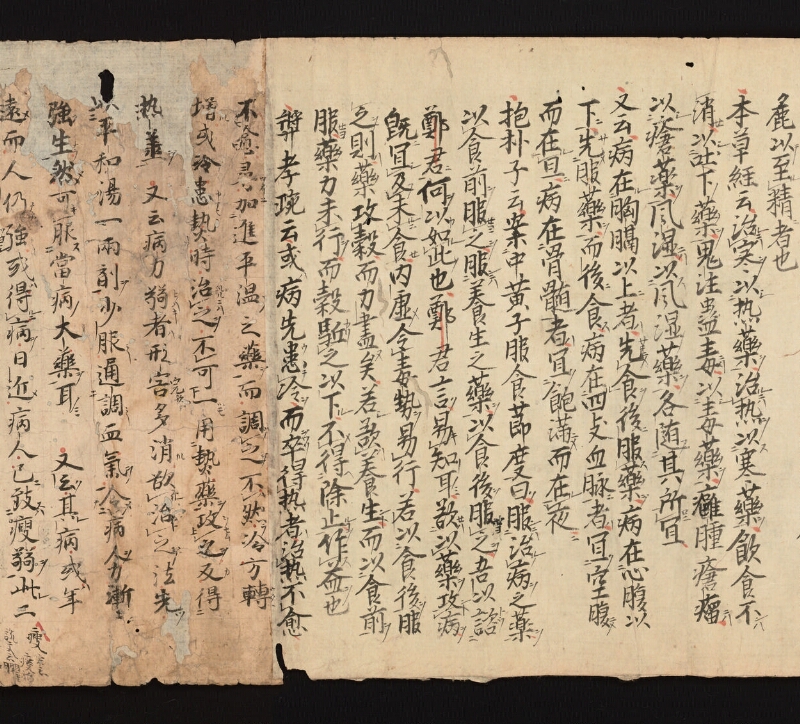
翻刻
麁以 ̄テ至 ̄ル_レ精 ̄ニ者也
本草経云治 ̄ルニハ_レ寒 ̄ヲ以 ̄シ_二熱₋薬 ̄ヲ_一治 ̄ルニハ_レ熱 ̄ヲ以 ̄ス_二寒₋薬 ̄ヲ_一飲食不 ̄ンハ
_レ消 ̄せ以 ̄シ_二吐₋下 ̄ノ薬 ̄ヲ_一鬼₋注蠱毒 ̄ニハ以 ̄シ_二毒薬 ̄ヲ_一癰₋腫瘡₋瘤 ̄ニハ
以 ̄シ_二瘡₋薬 ̄ヲ_一風₋湿 ̄ニハ以 ̄ス_二風₋湿 ̄ノ薬 ̄ヲ_一各随 ̄フ_二其 ̄ノ所 ̄ロニ_一レ宜
又云病在 ̄ル_二胸₋隔以上 ̄ニ者 ̄ハ先(サキニメ)_レ食 ̄ヲ後 ̄ニ服 ̄ス_レ薬 ̄ヲ病在_二心₋腹以
下 ̄ニ_一先(サ メ)_二服薬 ̄ヲ_一而後 ̄ニ食 ̄ス病在 ̄ル_二 四支血脈 ̄ニ_一者 ̄ハ宜 ̄ク_二空₋腹 ̄ニメ
而在 ̄ル_一レ旦 ̄ニ病在_二骨髄_一者 ̄ハ宜 ̄ク_二飽₋満 ̄ニメ而在 ̄ル_一レ夜 ̄ニ
抱朴子云案_二 中黄子服食節度_一曰 ̄ク服 ̄ンニハ_二治 ̄ルノ_レ病 ̄ヲ之薬 ̄ヲ_一
以_レ食前 ̄ヲ服 ̄セヨ_レ之 ̄ヲ服 ̄ンニハ_二養生之薬 ̄ヲ_一以_レ食後 ̄ヲ服 ̄セヨ_レ之 ̄ヲ吾以 諮(トウ)_二
鄭君 ̄ニ_一何 ̄ヲ以 ̄カ如 ̄ル_レ此 ̄ノ也鄭君言 ̄ク易 ̄キ_レ知 ̄リ耳(ノミ)欲 ̄セハ_二以_レ薬 ̄ヲ攻 ̄ント_一レ病 ̄ヲ
既 ̄ニ宜 ̄シ_レ及 ̄フ_レ未 ̄ルニ_レ食 ̄せ内虚 ̄メ令_レ毒₋勢 ̄ヲ易_レ行若以_二食後 ̄ヲ_一服
_レ之 ̄ヲ則 ̄ハ薬攻_レ殻而力尽 ̄ヌ矣若 ̄シ欲 ̄ハ_レ養₋生 ̄ント而以_二食前 ̄ヲ_一
服 ̄セヨ薬力未_レ行 ̄ヲ而殻 駆(カリ)_レ之以下 ̄ル不 ̄メ_レ得 ̄ヘ_二除₋止 ̄ルヿヲ_一作 ̄ス_レ益 ̄ヲ也
奨孝琬#1云或 ̄ハ病先 患(ウチ)_レ冷 ̄ヲ而 卒(ヲワリ)得_レ熱者 ̄ハ治_レ熱不_レ愈
《振り仮名:不 ̄ハ愈||ヒ ヒ》尋(ツイテ)加_二進平温 ̄ノ之薬 ̄ヲ_一而調 ̄フ_レ之 ̄ヲ不 ̄ハ_レ然 ̄ラ冷方 転(ウクヽ)
増 ̄ス或冷 患(ヤマヒ)熱時治 ̄スルニハ_レ之 ̄ヲ不_レ可_下 一 ̄ツモ用_二熱₋薬 ̄ヲ_一攻(ヲサム)_上レ之 ̄ヲ反 ̄カ得_二
熱₋承 ̄ヲ_一 又云病力 弱(ヨハキ)者 ̄ハ形₋害[完欤]多消 ̄ス欲 ̄スル_レ治 ̄ト_レ之 ̄ヲ法先 ̄ツ
以_二平₋和₋湯一両剤 ̄ヲ_一少服 ̄シ通_二₋調 ̄シ血気 ̄ヲ_一《振り仮名:令| メ|チ》_二レ病人 ̄ヲ力漸々
強 ̄ク生 ̄ナラ_一然 ̄メ可 ̄キ_レ服 ̄ス_二当₋病 ̄ノ大₋薬 ̄ヲ_一耳(ノミ) 又云 ̄ク其 ̄レ病或 ̄ハ年
遠 ̄メ而人 仍(ナホ)《振り仮名:強 ̄シ||ツヨシ》或 ̄ハ得 ̄ルニ_レ病 ̄ヲ日近 ̄メ病₋人己 ̄ニ致 ̄スハ_二痩₋弱 ̄ヲ_一此 ̄レ二
【欄外下部】
痩 宋云
廃損
説文云曜
也所祐反
現代語訳
## 【服薬節度 第三・続き】
(前ページより続き:「精麁相代」——)粗(そ・粗いもの)より以て精(せい・精細なもの)に至るものである。
---
『本草経(ほんぞうきょう)』に云う——寒(かん・寒の病)を治するには熱薬(ねつやく・温める薬)を以てし、熱(ねつ・熱の病)を治するには寒薬(かんやく・冷ます薬)を以てする。飲食が消化されない時は吐下(とげ・吐かせ下す)の薬を以てし、鬼注・蠱毒(きちゅう・こどく・邪気や毒による病)には毒薬(どくやく)を以てし、癰腫・瘡瘤(ようしゅ・そうりゅう・腫れ物やできもの)には瘡薬(そうやく・外傷・腫物に用いる薬)を以てし、風湿(ふうしつ)には風湿の薬を以てする。おのおのその宜(よろし)きところに随(したが)う。
また云う——病が胸膈(きょうかく)以上にある者は、先に食して後に薬を服する。病が心腹(しんぷく)以下にある場合は、先に薬を服して後に食する。病が四支(しし・四肢)・血脈にある者は、空腹(くうふく)にして旦(あした・朝)に服するのがよい。病が骨髄(こつずい)にある者は、飽満(ほうまん・腹いっぱいに食べた状態)にして夜に服するのがよい。
---
『抱朴子(ほうぼくし)』に云う——『中黄子服食節度(ちゅうこうしふくしょくせつど)』を案(あん・調べたところ)に曰く、「病を治する薬を服む場合は、食前にこれを服せよ。養生の薬を服む場合は、食後にこれを服せよ。」私はこれを鄭君(ていくん)に諮(と)うた。何ゆえにかくのごとくであるのか、と。鄭君は言った——「知り易いことのみである。薬を以て病を攻めようとする場合は、まさに未だ食せざる(空腹の)うちに及ぶのがよい。腹の内が虚(きょ)であることで、毒勢(どくせい・薬の力)が行き渡りやすくなるのである。もし食後に服した場合、薬は穀(こく・食べ物)を攻めて力が尽きてしまう。もし養生しようと欲して食前に服した場合、薬の力がまだ働かないうちに穀がこれを駆(か)り下ろし、止まることができず、益(えき)をなすことができないのである。」
---
蒋孝琬(しょうこうえん)に云う——あるいは病人がはじめ冷(れい)を患い、のちに熱を得た場合、熱を治しても癒えない時は、引き続いて平温(へいおん・穏やかに温める)の薬を加え進めてこれを調(ととの)えるがよい。そうしなければ、冷(れい)の方がかえって増すことになる。あるいは冷の患(やまい)に熱が出ている時にこれを治するには、一つも熱薬を用いて之を攻めることはできない。かえって熱承(ねつしょう・熱が引き続くこと)を得ることになる。
また云う——病力の弱い者は形(からだ)が損害を受けることが多く消耗している。これを治しようとする法(ほう・方法)は、まず平和湯(へいわとう・穏やかな処方)を一、二剤(ざい)少し服させ、血気(けっき)を通調(つうちょう・通じ整える)させ、病人の力が次第に強く生き生きとするようにしてから、その後に当病(とうびょう・その病に対応した)の大薬(だいやく・強い薬)を服すべきのみである。
また云う——その病が、あるいは年遠く(長患いであっても)なお人が強健である場合、あるいは病を得てから日が近く(日が浅く)、すでに病人が痩弱(そうじゃく・やせ衰えること)を致している場合、この二つ……
---
【欄外注記】
「痩」について——宋(そう・宋代の書)に云う:廃損(はいそん)。
『説文(せつもん)』に云う:曜(よう)なり。所祐(しょゆう)の反(はん・反切)。
英語訳
## [Section Three: The Proper Measure of Taking Medicine, Continued]
[Continuing from the previous page: "…the refined and the coarse replacing one another step by step…"] — proceeding from the coarse to arrive at the refined.
---
### The *Honzō-kyō* (本草経, *Classic of Materia Medica* / *Shennong Bencao Jing*) states:
To treat cold (*kan*, cold-type conditions), use hot medicines (*netsuyaku*, warming preparations). To treat heat (*netsu*, heat-type conditions), use cold medicines (*kan'yaku*, cooling preparations). When food and drink are not being digested, use medicines for inducing vomiting and purging (*toge-no-kusuri*). For *kichū* (鬼注, spirit-possession-type illness with chronic infiltrating pathology) and *kodoku* (蠱毒, gu-toxin, illness caused by venomous creatures or sorcery), use toxic medicines (*dokuyaku*). For *yōshu* (癰腫, abscesses and swellings) and *sōryū* (瘡瘤, sores and lumps), use wound and sore medicines (*sōyaku*). For *fūshitsu* (風湿, wind-damp conditions), use wind-damp medicines. Each should follow what is appropriate to its own condition.
It also states: When the illness is located above the chest and diaphragm (*kyōkaku*), first eat and then take medicine afterwards. When the illness is located below the heart and abdomen (*shinpuku*), first take medicine and then eat afterwards. When the illness is located in the four limbs (*shishi*) and blood vessels (*ketsumyaku*), it is appropriate to take medicine on an empty stomach in the morning (*ashita*, dawn). When the illness is located in the bone marrow (*kotsuzui*), it is appropriate to take medicine on a full stomach at night.
---
### The *Hōbokushi* (抱朴子, *Master Who Embraces Simplicity*) states:
Having examined the *Chūkōshi Fukushoku Setsudo* (中黄子服食節度, *The Dietary and Medicinal Regimen of Master Zhonghuang*), it states: "When taking medicines to treat illness, take them before meals. When taking medicines for the cultivation of life (*yōjō*, nourishing life), take them after meals." I put this question to Lord Zheng (*Tei-kun*, 鄭君): "What is the reason for this?" Lord Zheng replied: "It is simple to understand. When one wishes to use medicine to attack an illness, it is appropriate to take it while one has not yet eaten, when the interior is empty (*kyo*, vacuous), so that the potency of the medicine (*dokusei*, the force of the medicinal agent) may easily move throughout [the body]. If one takes it after eating, the medicine will attack the food [in the stomach] and exhaust its power before reaching the illness. On the other hand, if one wishes to cultivate life and takes [the nourishing medicine] before eating, the power of the medicine has not yet begun to work when the food drives it downward, making it impossible for [the medicine] to remain and settle, and it will thus be unable to produce any benefit."
---
### Jiang Xiaoyuan (蒋孝琬, *Shō Kōen*) states:
In some cases, a patient who first suffers from cold (*rei*, cold-type condition) and subsequently develops heat — if treating the heat does not bring about recovery, one should then proceed to add and administer medicines of a mild and warming (*heion*, balanced and warming) nature to regulate the condition. If this is not done, the cold condition will instead increase further. Alternatively, when one who suffers from a cold condition (*rei no yamai*) develops heat, in treating it one must not use even a single hot medicine (*netsuyaku*) to attack it, as this will on the contrary result in a continuation or intensification of the heat (*netsushō*, heat sequelae).
It also states: Those whose strength against illness is weak have suffered considerable physical harm and are greatly depleted. The proper method (*hō*, technique/approach) for treating them is first to have them take a small dose or two of a mild and balanced decoction (*heiwatō*, a gentle, harmonising preparation), in order to unblock and harmonise the blood and *qi* (*kekki*), gradually allowing the patient's strength to become stronger and more vital. Only after that should one administer the principal, full-strength medicine (*daiyaku*, major medicine) appropriate to the patient's specific illness.
It also states: Some patients may have been ill for many years and yet remain physically strong; others may have only recently fallen ill and yet have already been reduced to a state of emaciation and weakness (*sōjaku*, thinness and frailty). In these two cases…
[The text continues on the following page.]
---
**[Marginal notes at the bottom of the page:]**
Regarding the character *sō* (痩, "emaciation"): The *Song* [edition or commentary] states: *haison* (廃損, deterioration and damage/loss).
The *Setsumon* (説文, *Shuowen Jiezi*, the Han dynasty Chinese character dictionary) states: [The character means something akin to] *yō* (曜). The *fanqie* (反切, phonological spelling) reading is *shō-yū-han* (所祐反, reconstructed pronunciation using the *fanqie* method: initial from 所, final and tone from 祐).