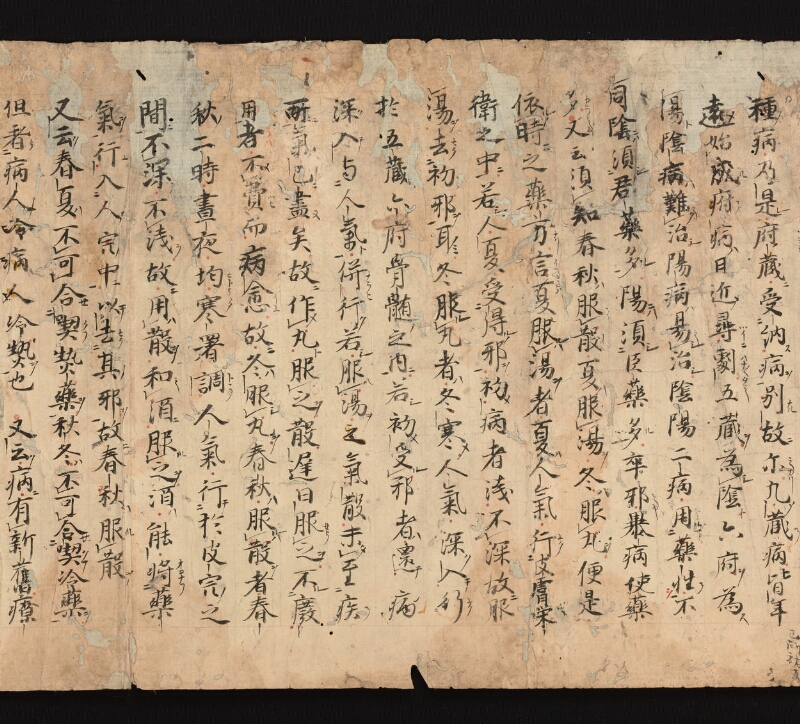
翻刻
種病乃是 ̄レ府₋蔵 ̄ニ受₋_二納 ̄ス病 ̄ヲ_一別 ̄ナル故 ̄ニ尓(シカリ)凡 ̄ソ蔵 ̄ノ病皆年
遠 ̄メ始成 ̄ル府 ̄ノ病 ̄ハ日近 ̄メ尋(ツイ) ̄ニ劇(ハナ〱タシ)五蔵 ̄ヲ為 ̄シ_レ陰 ̄ト六府 ̄ヲ為 ̄ス
_レ陽 ̄ト陰₋病 ̄ハ難 ̄シ_レ治 ̄シ陽₋病 ̄ハ易 ̄シ_レ治 ̄シ陰₋陽二₋病用 ̄ナリ_二薬₋《振り仮名:性| ノ| ヲ》_一不
_レ同陰 ̄ニハ須 ̄シ_二君₋薬多 ̄ル_一陽 ̄ニハ須 ̄シ_二臣₋薬多 ̄ル_一卒₋邪(シヤ)暴₋病使₋薬
多 ̄カラシム又云須_レ知春秋 ̄ハ服 ̄シ_レ散夏 ̄ハ服_レ湯 ̄ヲ冬 ̄ハ服_レ丸 ̄ヲ便是
依 ̄ルノ_レ時 ̄ニ之薬₋方 ̄ナリ言(イフコヽロハ)夏服 ̄ルハ_レ湯 ̄ヲ者夏 ̄ハ人₋気 行(ユク)_二皮₋膚栄
衛之中 ̄ニ_一若 ̄シ人夏受_二₋得 ̄ルノ邪 ̄ヲ_一初 ̄メ病者浅不_レ深故 ̄ニ服
_レ湯 ̄ヲ去(サク)_二初邪 ̄ヲ_一耳(ノミ)冬服 ̄ル_レ丸者 ̄ハ冬寒 ̄メ人₋気深 ̄ク入 ̄テ行(ユク)_二
於五₋蔵六₋府骨₋髄 ̄ノ之内 ̄ニ_一若 ̄シ初 ̄メ受 ̄ル_レ邪者 ̄ハ還 ̄テ病
深 ̄ク入 ̄テ与_二 人₋気 ̄ト_一併(ナラヒ)行 ̄ク若 ̄シ服 ̄ハ_レ湯 ̄ヲ之気散未 ̄タ_レ至_二疾 ̄ノ
所 ̄ニ_一気己 ̄ニ尽 ̄ヌ矣故 ̄ニ作 ̄メ_レ丸 ̄ト服_レ之 ̄ヲ散遅日服 ̄セリ_レ之 ̄ヲ不 ̄ル_二廃
用_一者 ̄ノハ不 ̄メ_レ費(ツヒ)而病 愈(イユ)故 ̄ニ冬 ̄ハ服 ̄シ_レ丸 ̄ヲ春秋 ̄ハ服 ̄ルハ_レ散 ̄ヲ者春₋
秋 ̄ノ二₋時昼₋夜 均(ヒトシク)寒₋署【暑】調(トヽノ)人₋気行 ̄テ_二於皮₋宍 ̄ノ之
間 ̄ニ_一不_レ深不_レ浅 ̄ラ故 ̄ニ用 ̄ハ_レ散 ̄ヲ和 ̄シ_レ酒 ̄ニ服 ̄ス_レ之 ̄ヲ酒 ̄ハ能 将(オコナフ)_二薬₋
気 ̄ヲ_一行(ユ)入_二 人 ̄ノ宍 ̄ノ中 ̄ニ_一以 ̄テ去(サク)_二其 ̄ノ邪 ̄ヲ_一故 ̄ニ春秋 ̄ハ服 ̄ス_レ散 ̄ヲ
又云 ̄ク春₋夏 ̄ハ不_レ可_レ合 ̄せ_二喫(ケフ)熱₋薬 ̄ヲ_一秋₋冬 ̄ハ不_レ可_レ合 ̄せ_二喫(ケフ)冷₋薬 ̄ヲ_一
但 看 ̄ヨル_二病人 ̄ノ冷病人冷熱 ̄ヲ_一也 又云 ̄ク病 ̄ニ有_レ新₋旧療₋
現代語訳
## 【服薬節度 第三・続き】
(前ページより続き)これら二種の病は、すなわち府(ふ)・蔵(ぞう)がそれぞれ異なる形で病を受け納めることによるものであり、それゆえにかくのごとくである。およそ蔵(ぞう・五臓)の病はいずれも年遠く(長い時間をかけて)して初めて成り、府(ふ・六腑)の病は日近く(日が浅くして)してたちまち激しくなる。五蔵を陰(いん)とし、六府を陽(よう)とする。陰病(いんびょう)は治しがたく、陽病(ようびょう)は治しやすい。陰・陽二つの病に用いる薬の性(せい・性質)は同じではない。陰には君薬(くんやく)の多いものを要し、陽には臣薬(しんやく)の多いものを要する。卒邪(そつじゃ・突然の邪気による)暴病(ぼうびょう・急性の病)には、薬を多く用いさせよ。
また云う——春秋(しゅんじゅう・春と秋)は散(さん・散剤)を服し、夏は湯(とう・湯剤)を服し、冬は丸(がん・丸剤)を服すべきことを知らねばならない。これはすなわち時節に依った薬方(やくほう)である。
その意味するところは——夏に湯を服するのは、夏は人の気(き)が皮膚・栄衛(えいえ・栄気と衛気)の中を行(ゆ)くからである。もし人が夏に邪(じゃ)を受けた場合、初めの病は浅く深くならない。それゆえ湯を服して初邪(しょじゃ・はじめの邪気)を去るにとどめるだけでよい。
冬に丸を服するのは、冬は寒く、人の気が深く入って五蔵・六府・骨髄の内を行くからである。もし初めて邪を受けた場合、病もまた深く入って人の気とともに行く。もし湯を服すれば、その気が散じてしまい、病の所(ところ・患部)に至らないうちに気がすでに尽きてしまう。それゆえ丸を作り、これを服する。散剤はゆっくりと日をかけてこれを服する。用を廃せずして(無駄にすることなく)費やすことなく病が癒えるので、冬は丸を服する。
春秋に散を服するのは、春と秋の二つの時節は昼夜ともに等しく寒暑が調(ととの)い、人の気が皮膚と肌肉(きにく)の間を行き、深くもなく浅くもないからである。それゆえ散を用い、酒に和して服する。酒はよく薬気(やっき)を将(おこな)い、人の肌肉の中に行き入らせ、以てその邪(じゃ)を去る。それゆえ春秋は散を服する。
また云う——春・夏は熱薬(ねつやく)を合わせ喫(の)んではならない。秋・冬は冷薬(れいやく)を合わせ喫(の)んではならない。ただし病人の冷・熱の状態を見てよく判断すべきである。
また云う——病には新旧(しんきゅう)があり、療(りょう・治療)……
(以下、次ページへ続く)
英語訳
## [Section Three: The Proper Measure of Taking Medicine, Continued]
[Continuing from the previous page:] These two types of illness arise because the *fu* (腑, bowels/yang viscera) and the *zō* (蔵/臓, yin viscera) each receive and hold illness in different ways, and it is for this reason that things are thus. In general, illnesses of the *zō* (five yin viscera) all take many years to develop fully, while illnesses of the *fu* (six yang bowels) worsen acutely within a short number of days. The Five Viscera (*go-zō*, 五蔵) are regarded as *yin* (陰), and the Six Bowels (*roku-fu*, 六府) are regarded as *yang* (陽). *Yin*-type illnesses (*inbyō*) are difficult to treat; *yang*-type illnesses (*yōbyō*) are easy to treat. The medicinal properties required for the two types of illness — *yin* and *yang* — are not the same. For *yin* conditions, medicines with a preponderance of the "sovereign" drug (*kun'yaku*, 君薬, the principal medicinal ingredient) are required. For *yang* conditions, medicines with a preponderance of the "minister" drug (*shin'yaku*, 臣薬, the supporting medicinal ingredient) are required. For sudden invasions of pathogenic *qi* (*sotsuja*, 卒邪) causing violent acute illness (*bōbyō*, 暴病), make [the patient] use large quantities of medicine.
It also states: One must know that in spring and autumn, one should take powders (*san*, 散, loose medicinal powders); in summer, one should take decoctions (*tō*, 湯, medicinal liquids boiled from raw ingredients); and in winter, one should take pills (*gan*, 丸, formed medicinal preparations). This is precisely the method of medicine (*yakuhō*, medicinal formula/approach) that follows the seasons.
The meaning of this is as follows:
The reason for taking **decoctions in summer** is that in summer, the human *qi* (vital energy) flows through the skin, the *eiei* (栄衛, *yíng-wèi*, the營氣 "constructive qi" and 衛氣 "defensive qi"). If a person receives a pathogenic influence (*ja*, 邪, evil qi) in summer, the initial illness is shallow and does not go deep. Therefore, it is sufficient simply to take a decoction to expel the initial pathogenic influence.
The reason for taking **pills in winter** is that in winter, the cold causes human *qi* to enter deeply and move through the interior of the five viscera, six bowels, and bone marrow. If a pathogenic influence is received at the start, the illness also enters deeply and moves together with the human *qi*. If one were to take a decoction, its *qi* would disperse, and before reaching the location of the illness, the *qi* would already be exhausted. Therefore, one makes pills and takes them. Powders (*san*) are taken slowly over several days. Since this avoids waste and brings about a cure without unnecessary expenditure, pills are taken in winter.
The reason for taking **powders in spring and autumn** is that during these two seasons, the balance of cold and warmth is equal between day and night, the human *qi* flows between the skin and flesh (*kiku*, flesh and muscle), neither going deep nor remaining shallow. Therefore, powders are used, mixed with wine (*sake*) and taken. Wine is able to carry the medicinal *qi* (*yakki*) along and convey it into the flesh of the person, thereby expelling the pathogenic influence. It is for this reason that powders are taken in spring and autumn.
It also states: In spring and summer, one must not take hot medicines (*netsuyaku*) together [with food or other medicines]. In autumn and winter, one must not take cold medicines (*reiyaku*) together. However, one should carefully observe and assess the cold or heat condition of the individual patient.
It also states: Illnesses have [the distinction of] the new and the old (*shinkyū*), and treatment (*ryō*)…
[The text continues on the following page.]