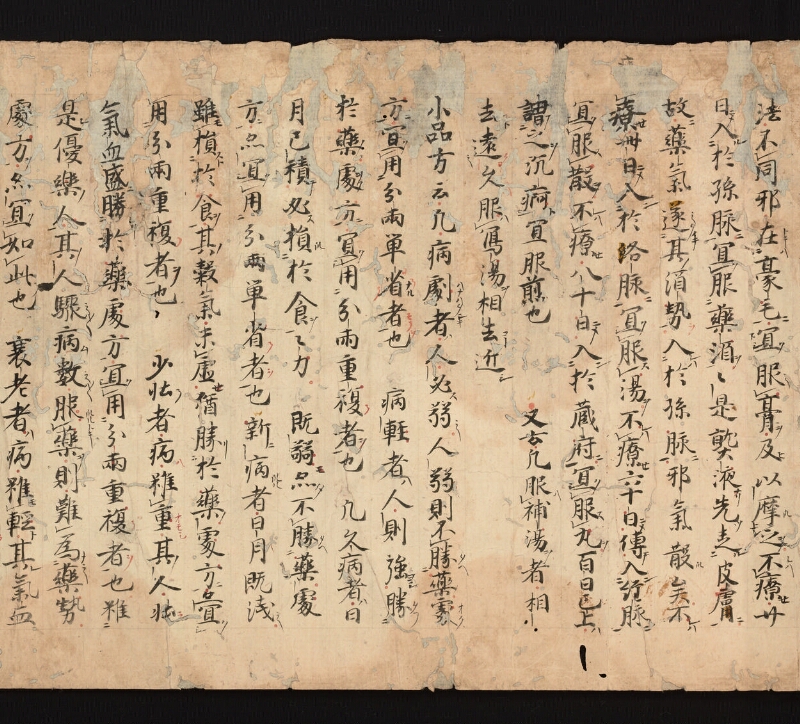
翻刻
法不_レ同邪在 ̄トキハ_二豪₋毛 ̄ニ_一《振り仮名:宜| ク| シ》_下服 ̄シ_レ膏 ̄ヲ及 ̄ヒ以摩 ̄ス_上レ之 ̄ヲ不 ̄レハ_レ療 ̄せ廿
日 ̄ニメ入 ̄ル_二於孫脈 ̄ニ_一宜 ̄ク_レ服_二薬₋酒 ̄ヲ_一々是熟₋液 ̄ナリ先 ̄ツ走 ̄ル_二皮₋膚 ̄ニ_一
故 ̄ニ薬₋気 逐(シタイテ)_二其 ̄ノ酒₋勢 ̄ヲ_一入 ̄レハ_二於孫脈 ̄ニ_一邪₋気散 ̄ス矣不 ̄レハ
_レ療 ̄せ卌₋日 ̄ニメ入 ̄ン_二於絡₋脈 ̄ニ_一《振り仮名:宜| ク| シ》_レ服 ̄ス_レ湯 ̄ヲ不 ̄レハ_レ療 ̄せ六十日 ̄ニメ伝 ̄テ入 ̄ン_二経₋脈 ̄ニ_一
《振り仮名:宜| ク| シ》_レ服 ̄ス_レ散 ̄ヲ不 ̄レハ_レ療 ̄せ八十日 ̄ニメ入 ̄ン_二於蔵₋府 ̄ニ_一《振り仮名:宜| ク| シ》_レ服 ̄ス_レ丸 ̄ヲ百日已₋上 ̄ハ
謂 ̄フ_二之 ̄ヲ沈₋痾#1 ̄ト_一宜服煎也 又云凡服 ̄ハ_レ補₋湯 ̄ヲ者相₋
去 ̄コト《振り仮名:遠| ク| シ》久服 ̄ハ_レ写₋湯 ̄ヲ相去 ̄コト近 ̄シ
小品方云凡病 劇(ハナハタシキ)者 ̄ハ人必 ̄ス弱 ̄シ人弱則不_レ勝 ̄タヘ_二薬 処(オク)
方 ̄ニ_一宜 ̄ク_レ用_二分両単省 ̄ナル者(モノヲ)_一也 病軽者 ̄ハ人則強 ̄ヨシ勝 ̄タフ_二
於薬 処(オク)方 ̄ニ_一《振り仮名:宜| ク| シ》_レ用_二分両重複 ̄ノ者 ̄ヲ_一也 凡久₋病者 ̄ハ日
月已積 ̄テ必 ̄ス損 ̄ス_二於食 ̄ヲ_一々力 既弱亦 ̄タ不_レ勝 ̄タヘ_二薬 処
方 ̄ニ_一亦《振り仮名:宜| ク| シ》_レ用_二分両単省 ̄ノ者 ̄ヲ_一也新 ̄ニ病 ̄スル者日₋月既浅 ̄シ
雖 ̄モ_レ損 ̄スト_二於食 ̄ヲ_一其 ̄ノ穀₋気未_レ虚 ̄せ猶勝 ̄リ_二於薬 ̄ノ処方 ̄ニ_一亦《振り仮名:宜| ク| シ》
_レ用_二分両重複 ̄ノ者 ̄ヲ_一也 少壮 ̄ノ者病 ̄ハ雑_レ重(オモシ)其 ̄ノ人壮 ̄ニ
気血盛 ̄ニ勝 ̄レリ_二於薬処方_一《振り仮名:宜| ク| シ》_レ用_二分両重複 ̄ノ者 ̄ヲ_一也雖_二
是 ̄レ優₋楽 ̄ノ人_一其 ̄ノ人驟(シハ〱)病 ̄ム数(シハ〱)服 ̄スルトキ_レ薬 ̄ヲ則難_レ為(ナシ)_二薬勢
処方 ̄ヲ_一亦《振り仮名:宜| ク| シ》_レ如_レ此 ̄ノ也 衰₋老者 ̄ハ病雖 ̄モ_レ軽 ̄ト其 ̄レ気₋血
現代語訳
## 【服薬節度 第三・続き】
(前ページより続き:)法は同じではない。邪が豪毛(毛穴・皮毛)にある時は、膏(こう・軟膏)を服し、およびこれを摩(ま・塗布して擦り込む)するのが宜しい。療(治療)しなければ、二十日にして孫脈(そんみゃく)に入る。薬酒を服するのが宜しい。薬酒はこれ熟液(じゅくえき・よく熟した液体)であり、まず皮膚を走る。ゆえに薬気はその酒の勢いに随って孫脈に入れば、邪気は散ずるのである。療しなければ、四十日にして絡脈(らくみゃく)に入ろうとする。湯を服するのが宜しい。療しなければ、六十日にして経脈(けいみゃく)に伝わり入ろうとする。散を服するのが宜しい。療しなければ、八十日にして蔵府(臓腑)に入ろうとする。丸を服するのが宜しい。百日以上(経過したもの)を、これを沈痾(ちんあ・慢性の重篤な病)と謂う。煎(せん・煎じ薬)を服するのが宜しい。
また云う——およそ補湯(ほとう・補う性質の煎じ薬)を服するのは、(服用の間隔を)相去ること遠く(間隔を長く開けて)久しく服するのが良く、瀉湯(しゃとう・瀉下・排出させる性質の煎じ薬)を服するのは、相去ること近く(間隔を短くして服用する)のが良い。
『小品方(しょうひんほう)』に云う——およそ病が劇しい(重篤な)者は、人は必ず弱っている。人が弱ければ、すなわち薬を処方するのに(その強さに)堪えられない。分両(ぶんりょう・薬の分量)が単省(たんしょう・少なく簡素なもの)であるものを用いるのが宜しい。病が軽い者は、人は則ち強く、処方した薬に堪えられる。分両が重複(じゅうふく・多く重ねたもの)であるものを用いるのが宜しい。
およそ久病(きゅうびょう・長患い)の者は、日月(にちげつ・年月)が既に積もって、必ず食(飲食・食欲)を損ない、食の力が既に弱く、また薬の処方に堪えられない。また分両が単省なるものを用いるのが宜しい。
新たに病む者は、日月が既に浅く(発病からの日が短く)、食を損ずるといえども、その穀気(こくき・飲食物より得た気)はいまだ虚せず、なお薬の処方に(の強さに)勝(たえ)られる。また分両が重複なるものを用いるのが宜しい。
少壮(しょうそう・若くて壮健)な者の病は、重(おも)きに雑(まじ)わるといえども、その人は壮んにして気血が盛んであり、薬の処方に勝(まさ)れる。分両が重複なるものを用いるのが宜しい。これ優楽(ゆうらく・豊かで安楽な)の人であっても、その人がしばしば病み、しばしば薬を服する時は、則ち薬勢の処方をなし難い。また此の如くするのが宜しい。
衰老(すいろう・老いて衰えた)の者は、病は軽いといえども、その気血……
(次ページへ続く)
英語訳
## [Section Three: The Proper Measure of Taking Medicine, Continued]
[Continuing from the previous page:] …the methods of treatment are not the same. When the pathogenic influence (*ja*, 邪) is still in the *háomáo* (豪毛, the body hair and pores / the most superficial level of the body), it is appropriate to take an ointment (*kō*, 膏) and also to rub (*ma*, 摩) it onto [the affected area]. If one does not treat it, within twenty days it will enter the *grandson vessels* (*son-myaku*, 孫脈). It is appropriate to take medicinal wine (*yakushu*, 薬酒). Medicinal wine is a well-ripened liquid (*jukueki*, 熟液); it first flows swiftly through the skin. Therefore, when the medicinal *qi* follows the momentum of the wine and enters the *grandson vessels*, the pathogenic *qi* is dispersed.
If one does not treat it, within forty days it will enter the *network vessels* (*raku-myaku*, 絡脈). It is appropriate to take a decoction (*tō*, 湯). If one does not treat it, within sixty days it will transmit and enter the *channel vessels* (*kei-myaku*, 経脈). It is appropriate to take a powdered medicine (*san*, 散). If one does not treat it, within eighty days it will enter the viscera and bowels (*zō-fu*, 蔵府). It is appropriate to take pills (*gan*, 丸). [A condition that has persisted for] one hundred days or more is called a *deep-seated chronic illness* (*chin-a*, 沈痾). It is appropriate to take a *decocted preparation* (*sen*, 煎).
It also states: In general, when taking *supplementing decoctions* (*ho-tō*, 補湯), one should take them over a long interval — taking them over a prolonged period with wide intervals between doses. When taking *draining decoctions* (*sha-tō*, 写湯), the interval should be short [i.e., doses taken in closer succession].
The *Shōhin-hō* (*Xiǎopǐn Fāng*, 小品方) states: In general, when a person's illness is severe, the person is necessarily weakened. If the person is weakened, they cannot then endure a [heavy] medicinal prescription. It is appropriate to use [formulas in which] the quantities (*bun-ryō*, 分両) are simple and reduced (*tan-shō*, 単省).
When the illness is mild, the person is then strong and can endure the medicinal prescription. It is appropriate to use [formulas in which] the quantities are heavy and compounded (*jū-fuku*, 重複).
In general, those with a prolonged illness (*kyū-byō*, 久病) have accumulated many months and years [of sickness], and have necessarily suffered loss of appetite; the strength derived from food is already weakened, and they too cannot endure a heavy medicinal prescription. It is also appropriate to use [formulas in which] the quantities are simple and reduced.
Those who have fallen newly ill have been ill for only a short time; even though their food intake may have suffered, the *grain qi* (*koku-ki*, 穀気 — the vital energy derived from food and drink) has not yet become depleted, and they can still endure a [heavier] medicinal prescription. It is also appropriate to use [formulas in which] the quantities are heavy and compounded.
For those who are young and vigorous (*shō-sō*, 少壮), even when the illness is serious, since the person is in their prime and their *qi* and blood are abundant, they can endure a heavy medicinal prescription. It is appropriate to use [formulas in which] the quantities are heavy and compounded. Even if a person is one of ease and comfort (*yū-raku*, 優楽 — one living an affluent and leisurely life), if that person falls ill frequently and takes medicine frequently, then it becomes difficult to establish the potency of a medicinal prescription [because the body becomes accustomed to medicine]. In such cases too, it is appropriate to proceed in this manner [i.e., with simpler, reduced quantities].
Those who are aged and declining (*sui-rō*, 衰老): even if the illness is mild, their *qi* and blood…
[The text continues on the following page.]