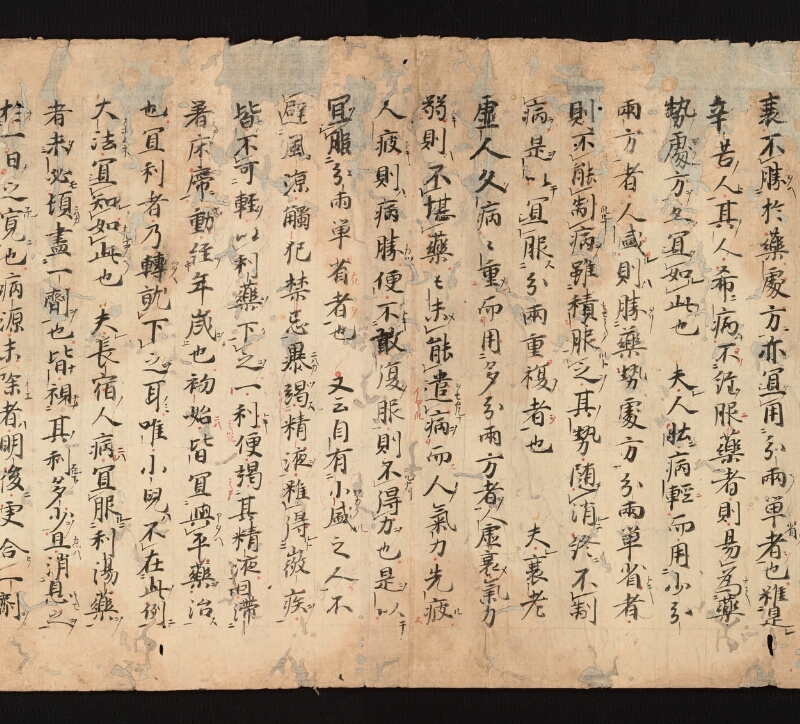
翻刻
衰不_レ勝 ̄タヘ_二於薬処方 ̄ニ_一亦《振り仮名:宜| ク| シ》_レ用_二分₋両 ̄ノ単[省 ̄ノ]者 ̄ヲ_一也雖_二是 ̄レ
辛₋苦 ̄ノ人 ̄ト_一其 ̄ノ人希 ̄ニ病 ̄ム不_二経服薬_一者則易_レ為(ナシ)_二薬
勢 ̄ノ処(ヲク)方 ̄ヲ_一亦 ̄タ《振り仮名:宜| ク| シ》_レ如 ̄ル_レ此 ̄ノ也 夫 ̄レ人壮 ̄ニ病軽而用_二少₋分₋
両₋方_一者人盛 ̄ル則 ̄ハ勝 ̄タリ_二薬勢処方_一分₋両単₋省 ̄トキ者
則不_レ能_レ制 ̄スルヿ_レ病 ̄ヲ雖_二積(ヒサシク)服 ̄スト_一レ之 ̄ヲ其 ̄ノ勢随 ̄テ_レ消 ̄ルニ終 ̄ニ不_レ制
_レ病 ̄ヲ是 ̄ヲ以 ̄テ《振り仮名:宜| | シ》_レ服 ̄ス_二分両重複 ̄ノ者 ̄ヲ_一也 夫 ̄レ衰老
虚₋人久 ̄ク病々重 ̄メ而用_二多₋分₋両方者 ̄ヲ_一 人虚衰 ̄メ気力
弱 ̄キ則 ̄ハ不_レ堪_レ薬々未 ̄メ_レ能_レ《振り仮名:遣|ヲサムルヿ|イヤス》_レ病 ̄ヲ而人 ̄ノ気力先疲 ̄ル
人疲 ̄トキ則 ̄ハ病 勝(カツ)便不 ̄トキ_二敢復 ̄タ服_一則不 ̄ルナリ_レ得_レ力 ̄ヲ也是 ̄ヲ以 ̄テ
《振り仮名:宜| ク| シ》_レ服_二分₋両単₋省 ̄ナル者 ̄ヲ_一也 又云自有_二小(ワカク)盛 ̄ル之人_一不
_レ避_二風₋涼触₋犯禁₋忌_一暴(ニハカ)竭(ツ) ̄ス_二精₋液 ̄ヲ_一雖_レ得 ̄ルト_二微₋疾 ̄ヲ_一
皆 ̄ナ不_レ可_二軽 ̄ク以_レ利₋薬 ̄ヲ下(ク)_一レ之 ̄ヲ《振り仮名:利| トキ|シスル》便《振り仮名:竭| | シテ》_二其精₋液_一因_下滞_二₋
着 ̄シテ床席 ̄ニ_一動経 ̄フ_中年歳 ̄ヲ_上也初₋始 ̄ニハ皆宜_二与(アタヘ)_レ平薬 ̄ヲ治 ̄ス_一
也宜利者乃 転(ウタヽ)就_レ 下_レ之 ̄ヲ耳(ノミ)唯小₋児 ̄ハ不_レ在_二此 ̄ノ例 ̄ニ_一
大法(ヲホムネ)《振り仮名:宜| | シ》_レ知 ̄ル_レ如 ̄ナルヿヲ_レ此 ̄ノ_レ也 夫 ̄レ長₋宿 ̄ノ人病 ̄ニハ宜_レ服 ̄ルニ_二利₋湯₋薬 ̄ヲ_一
者未 ̄タ_三必 ̄モ頓(ニハカ)尽_二 一₋剤 ̄ヲ_一也皆 ̄ナ視 ̄テ_二其 ̄ノ利 ̄スルヿノ多₋少 ̄ヲ_一且(カツハ)消_二₋息 ̄シテ之 ̄ヲ_一
於(オ)_二 一日 ̄ノ之 寛(ユル) ̄ニ_一也病₋源《振り仮名:未|| シ》除(イエ)者 ̄ハ明₋後 ̄ニ更合 ̄リ_レ 一₋剤 ̄ヲ
現代語訳
## 【服薬節度 第三・続き】
(前ページより続き:)……(気血が)衰えて薬の処方に堪えられない。また分両が単省なるものを用いるのが宜しい。
辛苦(しんく・労苦の多い)の人であっても、その人がまれにしか病まず、薬を服したことがない者は、則ち薬勢の処方をなしやすい。また此の如くするのが宜しい。
そもそも人が壮健で病が軽いのに、分両の少ない方(処方)を用いるとはどういうことか——人が盛んであれば則ち薬勢の処方に勝(まさ)り、分両が単省である時は、則ち病を制することができない。久しく之を服するといえども、その(薬の)勢いは(体の力に)随って消え、終に病を制することができない。これをもって、分両が重複なるものを服するのが宜しいのである。
そもそも衰老し虚した人が、久しく病み病が重くて、分両の多い方(処方)を用いるとはどういうことか——人が虚衰し気力が弱い時は、則ち薬に堪えられず、薬はいまだ病を遣(いや)すことができないうちに、人の気力が先に疲れてしまう。人が疲れる時は則ち病が勝(か)ち、(その状態が続いて)敢えてまた服することができなくなれば、則ち力を得られないのである。これをもって、分両が単省なるものを服するのが宜しいのである。
また云う——自ら若くて盛んな人であっても、風涼(ふうりょう・風や冷え)を避けず、禁忌を触れ犯し、にわかに精液(せいえき・精気・生命の根本となる液)を竭(つ)くしてしまうことがある。微疾(びしつ・軽い病)を得るといえども、皆、軽々しく利薬(りやく・下剤・峻薬)をもってこれを下すべきではない。利(り・下す・利下)すれば、則ちその精液を竭くしてしまい、因って床席(しょうせき・寝床)に滞着(たいちゃく・ついて離れられなく)し、動もすれば年歳(ねんさい・年月)を経てしまうのである。初始(はじめ)には皆、平薬(へいやく・穏やかな薬)を与えて治するのが宜しい。利するのが宜しいと判断された者には、すなわち転じて(徐々に)これを下すのみ。ただし、小児はこの例に在らず。
大法(おおむね)、此の如き(こと)を知るのが宜しいのである。
そもそも長宿(ちょうしゅく・長患い)の人の病に、利湯薬(りとうやく・下剤の性質を持つ煎じ薬)を服するのが宜しいとされる場合でも、必ずしもにわかに一剤(いちざい・ひとまとまりの薬)を尽くすべきではない。皆、その利(下り具合)の多少を視て、かつはこれを消息(しょうそく・加減・様子を見ながら調節)し、一日の寛(ゆる・ゆとり)のうちに(按配すべき)である。病源がいまだ除(い)えない者は、翌日また一剤を合(あわ)せるべきである。
(次ページへ続く)
英語訳
## [Section Three: The Proper Measure of Taking Medicine, Continued]
[Continuing from the previous page:] …[their *qi* and blood] are declining and [they] cannot endure a heavy medicinal prescription. It is also appropriate to use [formulas in which] the quantities are simple and reduced.
Even if a person is one of hardship and toil (*shin-ku*, 辛苦), if that person rarely falls ill and has never been accustomed to taking medicine, then it is easy to establish a prescription of medicinal potency. In such cases too, it is appropriate to proceed in this manner.
Now, as for using a formula of small quantities when a person is vigorous and the illness is mild — if the person is strong, they will exceed the potency of the prescription; and when the quantities are simple and reduced, [the medicine] will then be unable to control the illness. Even if one takes it for a long time, its potency dissipates in proportion to [the body's strength], and in the end the illness cannot be controlled. It is for this reason that it is appropriate to take [a formula in which] the quantities are heavy and compounded.
Now, as for using a formula of large quantities when an aged and declining, depleted person has been ill for a long time and the illness has become serious — if the person is depleted and declining, and their *qi* and strength are weak, they cannot then endure the medicine. Before the medicine has been able to cure (*iyasu*, 遣) the illness, the person's *qi* and strength are exhausted first. When the person is exhausted, the illness prevails; and when the person then cannot bring themselves to take [the medicine] again, they will find no benefit from it. It is for this reason that it is appropriate to take [a formula in which] the quantities are simple and reduced.
It also states: There are those who are young and vigorous yet do not avoid wind and cold (*fū-ryō*, 風涼), transgress against prohibitions and taboos (*kin-ki*, 禁忌), and suddenly exhaust their vital essence (*sei-eki*, 精液 — the fundamental life-sustaining fluid). Even if they contract only a minor ailment (*bi-shitsu*, 微疾), in all such cases one must not lightly administer a drastic purgative (*ri-yaku*, 利薬) to purge them. If one purges [such a person], it will exhaust their vital essence, and as a result they will become bedridden (*shō-seki*, 床席 — confined to their sleeping mat), often for years on end. At the outset, it is in all cases appropriate to give them a mild, moderate medicine (*hei-yaku*, 平薬) and treat them accordingly. Only for those for whom purgation is deemed appropriate should one gradually proceed to purge them. Children, however, are exempt from this principle.
As a general rule (*ō-mune*, 大法), it is appropriate to understand things in the manner described here.
Now, even in cases where it is deemed appropriate for a person with a long-standing chronic illness (*chō-shuku*, 長宿) to take a decocted purgative medicine (*ri-tō-yaku*, 利湯薬), one must not necessarily exhaust an entire course of medicine (*ichi-zai*, 一剤) all at once. In all cases, one should observe the degree of purgation — whether much or little — and at the same time regulate and manage accordingly (*shō-soku*, 消息), within the latitude (*yuru*, 寛) of a single day. For those in whom the root source of the illness (*byō-gen*, 病源) has not yet been eliminated, the following day one should prepare another course of medicine.
[The text continues on the following page.]