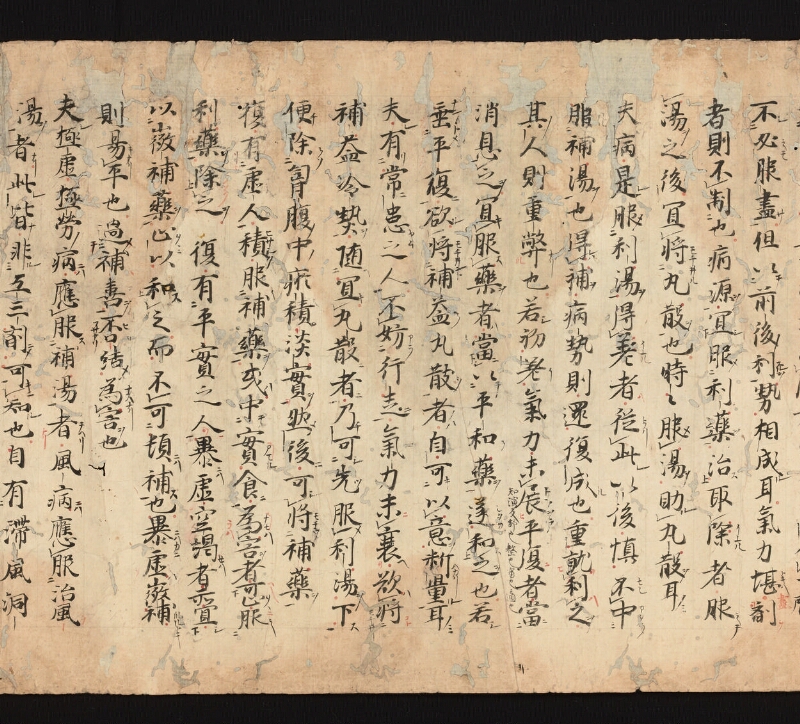
翻刻
不 ̄シ_二必 ̄シモ服尽 ̄サ_一但以 ̄テ_二前₋後 ̄ノ利 ̄スルヲ_一勢相成 ̄ル耳気力堪 ̄トキハ[尽 ̄ニ]剤 ̄ヲ
者則不_レ制_二也病源 ̄ヲ_一宜 ̄シ_下服 ̄メ_二利₋薬 ̄ヲ_一治 ̄ス_上取_レ除(イユル)者服 ̄シテ
_レ湯 ̄ヲ之後宜_レ将(モチヰル)_二丸散 ̄ヲ_一也時々服 ̄メ_レ湯 ̄ヲ助 ̄ル_レ丸₋散 ̄ヲ耳(ノミ)
夫病是 ̄レ服 ̄メ_二利₋湯 ̄ヲ_一得_レ差(イユル)【瘥】者 従(ヨリ)_レ此 ̄レ以₋後慎不(サレ)_レ 中(アタラ)_三
服 ̄スル_二補₋湯 ̄ヲ_一也得 ̄レハ_レ補 ̄ヲ病₋勢則還復成 ̄ル也重就_レ利 ̄ハ_レ之 ̄ヲ
其 ̄ノ人則重₋《振り仮名:弊|ナリ| ス》也若 ̄シ初 差(イ)気力未_レ《振り仮名:展|トソヲラ|知演反 ̄ヒ舒也整也審也適也》平復 ̄ニ者当 ̄ニ_二
消息_レ之 ̄ヲ宜 ̄キ_レ服 ̄ス_レ薬 ̄ヲ者 ̄ハ《振り仮名:当|ニ|シ》_下以 ̄テ_二平₋和 ̄ノ薬 ̄ヲ_一遂 ̄シタカ和 ̄ス_上レ之 ̄ヲ也若 ̄シ
垂 ̄ナントメ_二平復 ̄ニ_一欲 ̄ル_レ将(モチヰント)_二補₋益 ̄ノ丸散 ̄ヲ_一者 ̄ノハ自可 ̄キ_二以_レ意 ̄ヲ料量(ハカリ) ̄ル_一耳(ノミ)
夫 ̄レ有 ̄リ_二常 ̄ニ患 ̄ヤム之人_一不_レ妨 ̄アラ_二行₋走 ̄ニ_一気力未 ̄ニ_レ衰 ̄ヘ欲 ̄ハ_レ《振り仮名:将| コト|モチヰ》_二
補₋益冷₋熱 ̄ヲ_一随 ̄ヘ_二宜 ̄キ_レ丸₋散 ̄ニ者 ̄ニ_一乃 ̄チ可 ̄シ_二先 ̄ツ服 ̄メ_レ利₋湯 ̄ヲ下 ̄ス_一
便 ̄チ除(ノソ)_二胸腹 ̄ノ中 ̄ノ瘀₋積#1淡₋実 ̄ヲ_一然 ̄メ後 ̄ニ可 ̄シ_レ将(モチウ)_二補₋薬 ̄ヲ_一
復有_二虚₋人_一積(ヒサシク)服 ̄シ_二補₋薬 ̄ヲ_一或 ̄ハ中 ̄テ_二実(アタル)食 ̄ニ_一《振り仮名:為|ナスハ|ラハ》_レ害 ̄ヲ者可(ヘシ)_下正(タヽニ)服 ̄シ_二
利₋薬 ̄ヲ_一除_上レ之 ̄ヲ復有_二平実之人_一暴 ̄ニハ虚₋空₋竭 ̄セハ者示宜 ̄シ_下
以_二微補₋薬 ̄ヲ_一正(タヽニ)以和 ̄ス_上レ之而不_レ可_二頓 ̄ニハ補 ̄ス_一也 暴(ニハカニ)虚 ̄ハ微補 ̄スルトキ
則易 ̄キナリ_レ平也《振り仮名:過|メ|テ》_二補₋善 ̄ヲ_一《振り仮名:否|ヒ|フサカリ》結 ̄メ為(ナスナリ)_レ害 ̄ヲ也
夫 ̄レ極₋虚極₋労 ̄ノ病 ̄ニハ応_レ服 ̄ス_二補₋湯_一《振り仮名:者|テヘリ|ナリ》 風₋病 ̄ニハ応_レ服_二治風₋
湯 ̄ヲ_一者 ̄ナリ此 ̄レ皆 ̄ナ非 ̄ル_二 五₋三₋剤 ̄ニメ可 ̄キニ_一レ知 ̄ル也自有_二滞₋風洞₋
現代語訳
## 【服薬節度 第三・続き】
(前ページより続き:)必ずしも(一剤を)服して尽くしきる必要はなく、ただ前後にわたって(薬が)利(下)する勢いが相互に成り立てばよいのである。気力が(薬に)堪えうる時に(一)剤を尽くせば、則ち病源を制することができない。利薬を服して治するのが宜しいとされる場合、(病を)除(い)やすには、湯(煎じ薬)を服した後、丸散(がんさん・丸薬と散薬)を用いるのが宜しい。時々湯を服して丸散を助けるのみとするのである。
そもそも、利湯(下剤の煎じ薬)を服して差(い)えた(癒えた)者は、これ以後、慎んで補湯(ほとう・補養の煎じ薬)を服することを(みだりに)行うべきではない。補(ほ・補養)を得れば病勢は則ち(再び)成り戻ってしまうのである。(しかし)これを重ねて利(下)そうとすれば、その人はますます重く弊(やれ・疲弊)してしまう。もし初めて差(い)えて気力がいまだ平復(へいふく・もとの状態に回復)していない者は、これを消息(しょうそく・様子を見ながら加減)して、薬を服するのが宜しい者には、平和の薬(おだやかで無理のない薬)をもって、ゆるやかにこれを和(やわ)らがせるべきである。(もし)平復に近づこうとして、補益の丸散(補養・益気の丸薬・散薬)を用いようとする者は、自ら意をもって料量(はかりはかる・思慮・判断)するのみでよい。
そもそも、常に患う(慢性的に患っている)人で、行き来(行動・歩き回ること)に支障がなく、気力もいまだ衰えていないが、補益・冷熱(体を補い、冷え・熱を調整する)の丸散を用いようとする者には、先ず利湯(下剤の煎じ薬)を服して(腸を)下し、すなわち胸腹の中の瘀積(おしゃく・気血や飲食の滞り・積もった瘀血)・痰実(たんじつ・痰・食積の実(じつ)邪)を除き、然る後に補薬(ほやく)を用いるのが宜しい。
また、虚した人で久しく補薬を服してきた者、あるいは実食(じっしょく・過食・食積)に当たって(中って)害をなしている者は、正(ただ)に利薬を服してこれを除くべきである。
また、平実(へいじつ・ふだんは充実している)の人が、にわかに虚・空竭(くうけつ・虚脱・精気が空になった状態)した場合は、微補薬(びほやく・ごく緩やかな補養の薬)をもって正(ただ)にこれを和させるべきであって、頓(にわかに・いっきに)補してはならない。(このように)にわかな虚には微補するときは、則ち(もとに)平らかになりやすい。補・善(ほぜん・補いすぎること)が過ぎれば、否結(ひけつ・気が塞がり結ぶこと)してしまい、害をなしてしまうのである。
そもそも、極虚・極労(ごくきょ・ごくろう・はなはだしく虚し疲弊した)の病には、補湯(ほとう)を服するのがよいと言われており、風病(ふうびょう・風邪(ふうじゃ)による病)には治風湯(ちふうとう・風を治する煎じ薬)を服するのがよいと言われている。これらはいずれも五剤・三剤(数回の服用)で(その効能を)知ることができるものではない。(次に)自ずと滞風(たいふう)・洞(とう)……
(次ページへ続く)
英語訳
## [Section Three: The Proper Measure of Taking Medicine, Continued]
[Continuing from the previous page:] It is not necessarily required to take [a course of medicine] in its entirety; one need only ensure that the purging effect achieves its result over the successive doses. If, when one's *qi* and strength are sufficient to endure it, one exhausts the full course [too rapidly], then one will be unable to control the root source of the illness. In cases where it is appropriate to take a purgative medicine (*ri-yaku*, 利薬) and treat [the illness], to bring about a cure (*iyuru*, 除) one should, after taking the decoction (*tō*, 湯), proceed to use pills and powders (*gan-san*, 丸散). One should then take the decoction only occasionally, to assist the pills and powders.
Now, one who has recovered (*iyuru*, 差) by taking a purgative decoction (*ri-tō*, 利湯) should, from this point forward, be careful not to take a restorative decoction (*ho-tō*, 補湯) indiscriminately. If one receives the restorative [medicine], the force of the illness will then return and re-establish itself. Yet if one attempts to purge again, that person will become all the more severely weakened (*heishi*, 弊). If a person has just recovered and their *qi* and strength have not yet returned to their former state (*hei-fuku*, 平復), one should regulate and manage accordingly (*shō-soku*, 消息), and for those for whom taking medicine is appropriate, one should gently harmonize them with a mild, moderate medicine (*hei-wa no kusuri*, 平和の薬), following along at their own pace. As for one who is approaching full recovery and wishes to use restorative and tonifying pills or powders (*ho-eki no gan-san*, 補益の丸散), they may judge this for themselves according to their own judgment (*ryōryō*, 料量).
Now, a person who suffers from a chronic ailment, who is not hindered in their daily movements, and whose *qi* and strength have not yet declined, but who wishes to use pills or powders that supplement and benefit and regulate cold and heat — for such a person, it is appropriate to first take a purgative decoction (*ri-tō*, 利湯) to purge [the bowels], thereby removing the stagnant accumulations (*o-shaku*, 瘀積 — accumulated stagnant blood and blocked *qi*) and the phlegm-excess (*tan-jitsu*, 痰実 — phlegm and food accumulation as an excess pathogen) from within the chest and abdomen, and only thereafter to use a restorative medicine (*ho-yaku*, 補薬).
There are also those who are depleted (*kyo*, 虚) and have been taking restorative medicines for a long time, or who have been harmed by an excess of food (*jisshoku*, 実食 — overeating or food accumulation). For such persons, one should simply take a purgative medicine (*ri-yaku*, 利薬) and eliminate [the problem].
There are also those who are ordinarily robust and full (*hei-jitsu*, 平実) but who have suddenly become depleted and exhausted (*kū-ketsu*, 空竭 — suddenly drained of vital energy). For such persons, one should simply harmonize them with a mild restorative medicine (*bi-ho-yaku*, 微補薬 — a gentle tonic), and one must not supplement them suddenly (*ton*, 頓) all at once. When sudden depletion is treated with gentle supplementation, it is easy to return to a balanced state. If supplementation and nourishment are taken to excess, they will result in *hi-ketsu* (否結 — obstruction and constriction of *qi*), causing harm.
Now, it is said that for diseases of extreme depletion and extreme exhaustion (*goku-kyo*, 極虚; *goku-rō*, 極労), it is appropriate to take a restorative decoction (*ho-tō*, 補湯); and it is said that for wind ailments (*fū-byō*, 風病 — illness caused by the pathogenic wind), it is appropriate to take a wind-dispelling decoction (*chi-fū-tō*, 治風湯). Neither of these can be fully understood from merely three or five courses of treatment. [The text continues with a discussion of] *tai-fū* (滞風 — lingering wind) and *dō* (洞)…
[The text continues on the following page.]