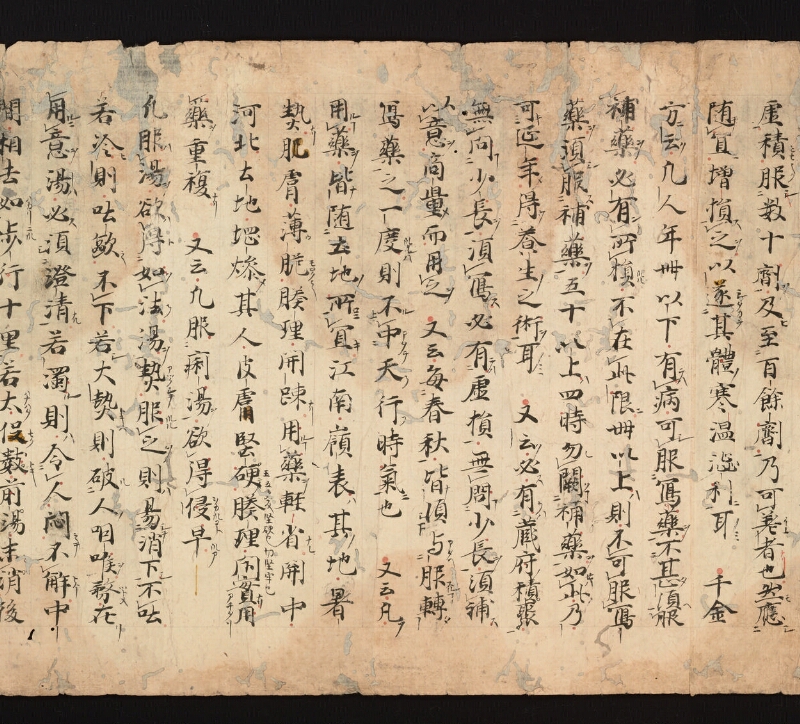
翻刻
虚_一積(ヒサシク)服 ̄シ_二数十剤 ̄ヲ_一及 ̄ヒ至_二百₋余₋剤_一乃可_レ差(イエ)者 也(ナリ)然 ̄モ応 ̄シ_二
随 ̄テ_レ宜 ̄ニ増₋損 ̄ス_一レ之 ̄ヲ以 遂(シタカウ)_二其体 ̄ノ寒₋温湿利 ̄ニ_一耳(ノミ) 千金
方 ̄ニ云 ̄ク凡人年卌以下有 ̄ラハ_レ病可 ̄シ_レ服_二寫₋薬 ̄ヲ_一不_二甚 ̄タ須 ̄ヘ_一レ服
補₋薬 ̄ヲ必有_レ所_レ損 ̄スル不_レ在_レ此限 ̄ニ卌以上 ̄ハ則不_レ可_レ服_レ寫₋
薬 ̄ヲ須 ̄シ_レ服 ̄ス_二補₋薬 ̄ヲ_一 五十以上 ̄ハ四時勿 ̄レ闕 ̄リヿ_二補₋薬 ̄ヲ_一如 ̄セハ此乃
可 ̄キ_三延₋年 ̄メ得 ̄ウ_二養生 ̄ノ之術 ̄ヲ_一耳(ノミ) 又云 ̄ク必 ̄ス有 ̄ラハ_二蔵₋府 ̄シ積₋聚_一
無_レ問 ̄フ_二少₋長 ̄ヲ_一須_レ寫 ̄ス必有 ̄ラハ_二虚損_一無_レ問 ̄フ_二少長 ̄ヲ_一須_レ補 ̄ス
以_レ意 ̄ヲ商₋量 ̄メ而用_レ之 ̄ヲ 又云毎_二春秋_一皆 ̄ナ《振り仮名:須||シ》_下与(アタヘ)_二₋服 ̄スルヿ転 ̄タ
寫₋薬_一之一₋度 ̄スルハ則不 ̄ル_上レ 中(アタラ)_二 天 ̄ノ行 ̄フ時₋気 ̄ニ_一也 又云凡 ̄ソ
用 ̄ルヿ_レ薬 ̄ヲ皆 ̄ナ随_二土₋地 ̄ノ所 ̄ロニ_一レ宜 ̄キ江南嶺₋表 ̄ハ其 ̄ノ地暑₋
熱 ̄ナリ肌膚薄 ̄ウ脆(モロクシ)勝₋理開₋疎 ̄ナリ用 ̄ルヿ_レ薬 ̄ヲ軽₋省 ̄ナレ関中
河北土₋地堽₋燥 ̄メ其人皮₋膚堅₋《振り仮名: 硬 |玉 五更反堅硬也切堅牢也》 ̄ニメ勝₋理閇実《振り仮名:実用|ナリ|アテタリ》
_レ薬 ̄ヲ重₋複 ̄ナリ 又云凡服_二痢₋湯 ̄ヲ_一欲_レ得_レ侵(ヲカスコト) 早(スコ)#1
凡服 ̄ハ_レ湯 ̄ヲ欲 ̄ハ_レ得 ̄ト_二如 ̄ク_レ法 ̄ノ湯 ̄ヲ_一熱(アツクシテ)服 ̄スル_レ之 ̄ヲ則 ̄ハ易 ̄シテ_二消₋下 ̄シ_一不_レ吐
若冷 ̄ヒ則吐₋欧 ̄シ不_レ 下若 ̄シ大熱 ̄トキハ則破 ̄ル_二 人 ̄ノ咽₋喉 ̄ヲ_一務(ツトメ)在 ̄リ
_レ用 ̄ルニ_レ意 ̄ヲ湯 ̄ハ必 ̄ス《振り仮名:須||シ》_二澄₋清 ̄ナル_一若濁 ̄ル則 ̄ハ令_二レ 人悶 ̄シテ不_一レ解(トケ)中
間相去 如(ハカリニス)歩₋行十里若 太(ハナハタ)促(サク)数 ̄トキ#2前₋湯末_レ消後
現代語訳
## 【服薬節度 第三・続き】
(前ページより続き:)……〔滞風・洞〕虚〔の人で〕、久しく数十剤を服し、百余剤に至って、初めて差(い)えることができる者もある。しかしながら、宜しきに随ってこれを増損(ふやしへらし・加減)し、その体の寒温・湿利(かんおん・しつり・寒熱や湿り気・下利の状態)に従うのみである。
『千金方』に云う:およそ人、年四十以下にして病があれば、瀉薬(しゃやく・腸を下す薬)を服すべきであり、あまり補薬(ほやく・補養の薬)を服する必要はない。ただし必ず損なっている(損傷・虚損している)ところがあれば、この限りではない。四十以上の者は、則ち瀉薬を服してはならず、補薬を服するのが宜しい。五十以上の者は、四時(しじ・四季を通じて)補薬を欠かすことのないようにせよ。このようにすれば、延年(えんねん・長寿)を得て養生の術を得ることができるのみである。
また云う:必ず臓腑(ぞうふ)に積聚(しゃくじゅ・気・血・飲食の積もり滞ったもの)があれば、少長(年齢の若老)を問わず、必ず瀉(くだ)すべきである。必ず虚損(きょそん・虚し損なわれた状態)があれば、少長を問わず、必ず補すべきである。意をもって商量(しょうりょう・よく考え量り)して、これを用いよ。
また云う:毎(つね)に春・秋には、皆(みな)転(ころ)びて瀉薬を与え服させることを一度(いちど)するのが宜しい。そうすれば、天の行う時気(じき・季節の気・流行り病の気)に当たらないのである。
また云う:およそ薬を用いることは、皆(すべて)土地の宜しきところに随うべきである。江南・嶺表(れいひょう・嶺南・南方の地)は、その地が暑熱であり、肌膚(きふ・皮膚)は薄く脆(もろ)く、腠理(そうり・皮膚の文理・毛穴)は開疎(かいそ・ゆるく開いている)である。薬を用いることは軽省(けいせい・軽めに少なく)にせよ。関中・河北は、土地が堽燥(こうそう・高く乾燥している)であり、その人の皮膚は堅硬(けんこう・かたく堅い)であり、腠理は閉じて実(じつ・充実・密)である。薬を用いることは重複(じゅうふく・重ねて多く)にせよ。
また云う:およそ下痢(くだし)の湯(痢湯・下剤の煎じ薬)を服するには、(薬が)早く(早めに)(腸に)侵(おか)すようにしたい。……〔#1〕
およそ湯を服するには、法(のり・規則)のとおりの湯のように(熱さを保って)熱くしてこれを服するのが望ましい。(そうすれば)則ち消下(しょうか・消化して下ること)しやすく、吐かない。もし冷えていれば則ち嘔吐して下らない。もし大熱(だいねつ・非常に熱すぎる)な時は、則ち人の咽喉(いんこう・のど)を破(やぶ・傷つける)ってしまう。努めて意(こころ)を用いることにある。湯は必ず澄清(ちょうせい・澄み清らか)でなければならない。もし濁れば、則ち人を悶(もだえ)させて解(と)けない(症状が解消されない)。
(服用の)間隔は、歩行十里(じっり)ほどの(時間)の分量にせよ。もし甚だ促(せま)く数(しばしば)な時は……〔#2〕前の湯がいまだ消えぬうちに後……
(次ページへ続く)
英語訳
## [Section Three: The Proper Measure of Taking Medicine, Continued]
[Continuing from the previous page:] …[Those with lingering wind (*tai-fū*, 滞風) and hollow depletion (*dō-kyo*, 洞虚)] who have long taken scores of courses of medicine, or who require up to a hundred or more courses before they can recover — this is indeed how it must be. Nevertheless, one should increase or decrease [the medicine] as is appropriate (*zōson*, 増損), adjusting to the cold, warmth, dampness, and purgative condition (*kan-on shitsu-ri*, 寒温湿利) of that person's constitution.
The *Qianjin Fang* (千金方, *Prescriptions Worth a Thousand Gold*) states: In general, people who are forty years of age or below and who have illness should take purgative medicines (*sha-yaku*, 瀉薬); there is no great need for them to take restorative medicines (*ho-yaku*, 補薬). However, if there is definitely a place of injury or depletion, this rule does not apply. Those who are forty and above should not take purgative medicines; it is appropriate that they take restorative medicines. Those who are fifty and above should not go without restorative medicines throughout the four seasons. By following this practice, one may extend one's years and attain the arts of nourishing life (*yōjō no jutsu*, 養生の術).
It also states: If there are definitely accumulations and gatherings (*shakujū*, 積聚 — accumulations of *qi*, blood, and food in the viscera) in the organs, one must purge them regardless of whether one is young or old. If there is definitely deficiency and damage (*kyo-son*, 虚損), one must supplement regardless of whether one is young or old. Deliberate and reflect carefully (*shōryō*, 商量), and then use [the medicines] accordingly.
It also states: In both spring and autumn every year, it is appropriate to administer and take a purgative medicine just once each time, turning as occasion demands. By doing so, one will not be struck by the seasonal epidemic *qi* (*ji-ki*, 時気) that Heaven visits upon the world.
It also states: In general, when using medicines, one should always follow what is appropriate to the local land and soil. In the Jiangnan (江南) region and the area beyond the mountain ridges (*Reihyō*, 嶺表 — the far south), the land is hot and sweltering; the skin (*kifu*, 肌膚) is thin and delicate, and the pores and interstices of the skin (*sōri*, 腠理) are open and loose. Therefore, medicines used there should be light and sparing (*kei-sei*, 軽省). In Guanzhong (関中) and Hebei (河北), the land is elevated and dry (*kō-sō*, 堽燥); the people's skin is hard and firm (*ken-kō*, 堅硬), and the pores and interstices are closed and dense. Therefore, medicines used there should be heavy and plentiful (*jūfuku*, 重複 — applied in repeated, substantial doses).
It also states: When taking a purgative decoction (*ri-tō*, 痢湯), one wishes the medicine to penetrate quickly [into the gut]… [#1]
In general, when taking a decoction, one wishes to take it hot — as hot as a properly prepared decoction — and drink it down. Then it will easily be dissolved and descend (*shōka*, 消下), and one will not vomit. If it is cold, one will vomit and it will not descend. However, if it is excessively hot, it will damage one's throat (*inkou*, 咽喉). One must take care and apply one's attention to this matter. A decoction must be clear and settled (*chō-sei*, 澄清). If it is turbid, it will cause the person to feel stifled and the condition will not resolve (*tokenu*, 解けない).
The interval between doses should be approximately the time it takes to walk ten *ri* (十里). If the interval is extremely short and doses are taken in rapid succession [#2], the previous decoction will not yet have been digested before the next…
[The text continues on the following page.]