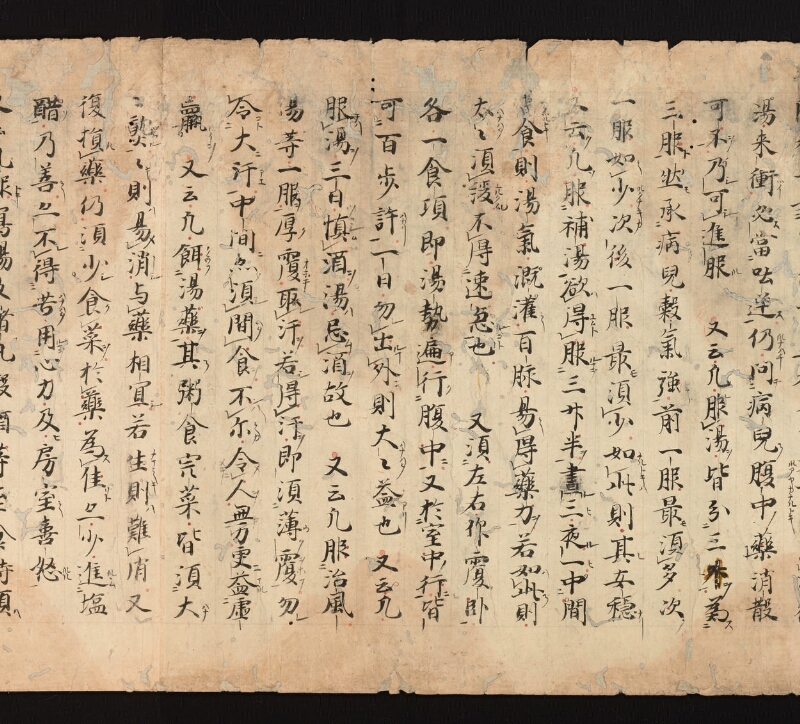
翻刻
湯来 衝(ツイ)必 ̄ス当_二吐₋逆 ̄ス_一仍(スナハチ)問 ̄テ_二病₋児 ̄ノ腹中(スコヤカナルトキ) ̄ノ薬消₋散
可不 ̄ヲ_一乃(イ) ̄シ可 ̄シ_レ進服 ̄ス 又云凡服_レ湯 ̄ヲ皆分_二 三升 ̄ヲ_一為 ̄ス_二
三₋服 ̄ト_一然 ̄モ承_二病児穀₋気強_一前一₋服最 ̄モ須_レ多次 ̄ノ
一服如 ̄シ_レ少(スクナキカ)次後一₋服最 ̄モ須_レ少如(ナルトキハ)_レ此則其 ̄レ安₋穏 ̄ナリ
又云 ̄ク凡 ̄ソ服_二補₋薬_一欲 ̄ハ_レ得(エムト)_レ服 ̄ルヿヲ_二 三升半 ̄ヲ_一昼 ̄ル三 ̄ヒ夜 ̄ル一 ̄ヒ中_二間
隔食(ヘタツルトキ)_一則湯₋気漑₋灌 ̄シ百₋脈易 ̄シ_レ得_レ薬₋力 ̄ヲ_一若如 ̄ハ此 ̄ノ則
太々(ハナハタ)須_レ緩(ユルクス)不_得_二速急 ̄ルコト_一也 又須_二左₋右仰₋覆₋臥_一
各一₋食₋項即湯₋勢 遍(ア)行 ̄ク_二腹₋中 ̄ニ_一又於_二室中 ̄ノ行 ̄ニ_一皆
可_二百歩 許(ハカリ)_一 一₋日勿 ̄レ_レ出 ̄ルヿ_レ外 ̄ニ則大々(ハナハタ)益 ̄アリ也 又云凡
服 ̄テハ_レ湯 ̄ヲ三₋日 慎(ツヽシム)_レ酒 ̄ヲ湯 ̄ハ忌 ̄ム_レ酒 ̄ヲ故也 又云凡服_二治₋風₋
湯等一服 ̄ヲ_一厚 ̄ク覆(オホテ)取 ̄レ_レ汗 ̄ヲ若 ̄シ得_レ汗 ̄ヲ即須_二薄(ウ) ̄ク覆(ヲホフ)_一勿 ̄レ
_レ令 ̄コト_二大 ̄ニ汗(アエ)_一 中間 ̄ニ亦 ̄タ須_レ間(ヘタ)_レ食 ̄ヲ不 ̄ンハ_レ尓(シカ)《振り仮名:令|メ|メテ》_二レ 人 ̄ヲ無力更 ̄ニ益(マス)_二虚₋
羸(ルイヲ)_一 又云凡 餌(クラウ)_二湯薬 ̄ヲ_一其 ̄ノ粥₋食完₋菜皆須_二大(ハナ)
々 熟(ツカル)_一《振り仮名:々| キ》則 ̄ハ易 ̄メ_レ消 ̄シ与_レ薬相₋宜 ̄シ若生(ナマシキ)則 ̄ハ難_レ消又
復損 ̄ス_レ薬仍須_二少 ̄シ食 ̄ク_一レ菜 ̄ヲ於_レ薬為 ̄ス_レ佳 ̄リト亦少 進(スヽム)_二塩
酢(ソ)_一乃善 ̄シ亦不 ̄レ_レ得_三苦(ハナハタ)用 ̄ルヲ_二心力及 ̄ヒ房₋室 ̄シ喜₋怒 ̄スル_一
又云凡服 ̄トキ_二寫₋湯及諸₋丸₋散酒等_一至_二食時_一湏 ̄ハ
現代語訳
## 【服薬節度 第三・続き】
(前ページより続き:)……後の湯が来て衝(つ)き当たれば、必ず吐逆(とぎゃく・嘔吐)してしまう。そこで(服用の前に)病人の腹中(ふくちゅう)の薬が消散(しょうさん・消化・吸収)しているかどうかを問うて、消散しているのであれば、進服(しんぷく・服用を進める)してよい。
また云う:およそ湯を服するには、皆(みな)三升(さんしょう)を三服(さんぷく)に分ける。しかしながら、病人の穀気(こくき・食欲・胃の強さ)の強弱に応じて、最初の一服は最も多くするのが宜しく、次の一服はそれより少なくし、その次の後の一服は最も少なくするのが宜しい。このようにすれば、(病人は)安穏(あんのん・穏やかで安らか)である。
また云う:およそ補薬(ほやく)を服するには、三升半(さんしょうはん)を服するのが望ましく、昼に三回、夜に一回、食事の間(あいだ)に隔(へだ)てて(時間をおいて)服すれば、湯気(とうき・薬の気)が百脈(ひゃくみゃく・全身の脈・血脈)に漑灌(がいかん・潤い流れわたり)し、薬力(やくりょく・薬の効力)を得やすくなる。もしこのようにするならば、甚だ緩やか(ゆるやか)にしなければならず、速急(そっきゅう・急ぎ速やかなこと)にしてはならない。
また(服薬後は)左右(さゆう)に仰臥(ぎょうが・仰向けに寝る)・覆臥(ふくが・うつ伏せに寝る)してそれぞれ一食項(いっしょくこう・食事一回分ほどの時間)ほどの間そうすれば、湯勢(とうせい・薬の力・薬の勢い)が腹中(ふくちゅう)に遍く行きわたる。また室中(しつちゅう・部屋の中)を歩き回ることも皆(みな)百歩(ひゃっぽ)ほど可(よ)い。一日(いちにち)は外に出ないようにせよ。そうすれば甚だ益(えき・効果)がある。
また云う:およそ湯を服してから三日は酒を慎むべきである。湯(の薬)は酒を忌む(きむ・嫌う)ゆえである。
また云う:およそ治風(じふう・風病を治す)の湯等を一服するときは、厚く覆(おお)いて汗を取(と)るようにせよ。もし汗が出たならば、即ち薄く覆(おお)うようにし、大いに汗を(かき)すぎないようにせよ。その間にも食事を挟む(ヘタツル)ようにしなければならない。そうしなければ、人を無力(むりょく・力がなくなる)にさせ、さらに虚羸(きょるい・虚して痩せ衰えること)を増(ま)してしまう。
また云う:およそ湯薬(とうやく・煎じ薬)を服するとき(に食べる)粥食(しゅくしょく・おかゆ・食事)や完菜(かんさい・野菜・おかず)は、皆(みな)甚だよく熟(う)れて(熟して・十分に火が通って)いる必要がある。そうすれば消化しやすく、薬と相宜(あいぎ・相性がよく・適合して)しい。もし生(なまし)ければ、則ち消化しにくく、また薬の効力をも損なってしまう。それゆえ菜(さい・おかず・野菜)は少し食べる程度にとどめ、薬(の効果)を佳(よ)しとせよ。また塩や酢(す)を少し進(す)めるのもよい。また甚だ心力(しんりょく・心身の力・精神的な労力)を用いること、および房室(ぼうしつ・性行為)、喜怒(きど・激しい感情の起伏)をしてはならない。
また云う:およそ瀉湯(しゃとう・下剤の煎じ薬)および諸丸散(しょがんさん・各種の丸薬・散薬)・酒等を服するとき、食事の時に至っては、須(すべから)く……
(次ページへ続く)
英語訳
## [Section Three: The Proper Measure of Taking Medicine, Continued]
[Continuing from the previous page:] …When the next dose of decoction arrives and collides [with the previous undigested one], vomiting and retching (*tōgyaku*, 吐逆) will invariably occur. Therefore, [before proceeding], one should inquire whether the medicine in the patient's abdomen has been dissolved and dispersed (*shōsan*, 消散). Only when it has been dispersed is it permissible to advance to the next dose (*shinpuku*, 進服).
It also states: In general, when taking a decoction, divide three *shō* (升) into three doses. However, taking into account the strength of the patient's grain energy (*kokki*, 穀気 — the digestive strength and appetite), the first dose should be the largest, the second dose should be somewhat less, and the third and final dose should be the smallest. Following this practice, the patient will remain at ease and undisturbed (*an'non*, 安穏).
It also states: In general, when taking restorative medicines (*ho-yaku*, 補薬), it is desirable to take three and a half *shō* in total — three times during the day and once at night — spacing the doses between meals. By doing so, the energy (*ki*, 気) of the decoction will pour and flow throughout the hundred vessels (*hyakumyaku*, 百脈 — all the blood vessels and channels of the body), and the medicinal efficacy (*yakuryoku*, 薬力) will be more readily absorbed. If one follows this practice, one must proceed very gradually (*yuruyaka*, 緩); one must not be hasty (*sokkyū*, 速急).
Furthermore, [after taking the medicine], one should lie on one's left and right sides, both face up (*gyōga*, 仰臥) and face down (*fukuga*, 覆臥), for a period of roughly one mealtime (*isshōkō*, 一食項) in each position. By doing so, the power of the decoction (*tōsei*, 湯勢) will spread throughout the abdomen. Additionally, walking around inside the room for approximately one hundred steps (*hyappo*, 百歩) is also appropriate. For one full day, do not go outside. By following this practice, there will be great benefit.
It also states: In general, after taking a decoction, one should abstain from alcohol for three days. This is because decoctions are incompatible with alcohol (*imu*, 忌む).
It also states: In general, when taking a decoction for treating wind ailments (*ji-fū*, 治風) and similar conditions, cover oneself thickly (*atsuku ōote*) and induce perspiration. If perspiration is obtained, immediately reduce the covering to a thinner layer and take care not to sweat excessively. During this period, one must also be sure to take food in between. If one fails to do so, the person will be left without strength, and their vacuity and emaciation (*kyo-rui*, 虚羸) will be further increased.
It also states: In general, the porridge and food (*shukushoku*, 粥食) and vegetable side dishes (*kansai*, 完菜) consumed while taking a medicinal decoction must all be very thoroughly cooked and well done. When they are so, they will be easy to digest and will accord well with the medicine (*ai-gi*, 相宜). If they are raw or undercooked, they will be difficult to digest and will, moreover, damage the efficacy of the medicine. Therefore, one should eat only a small amount of side dishes, and let the medicine take precedence. Also, taking a little salt and vinegar (*su*, 酢) is good. Furthermore, one must not exert great mental effort or physical force (*shinryoku*, 心力), nor engage in sexual relations (*bōshitsu*, 房室), nor give way to elation or anger (*ki-do*, 喜怒).
It also states: In general, when taking a purgative decoction (*sha-tō*, 瀉湯) or various pills, powders, medicinal wines (*gan-san-shu*, 丸散酒), and similar preparations, when mealtime arrives, one must…
[The text continues on the following page.]