翻刻
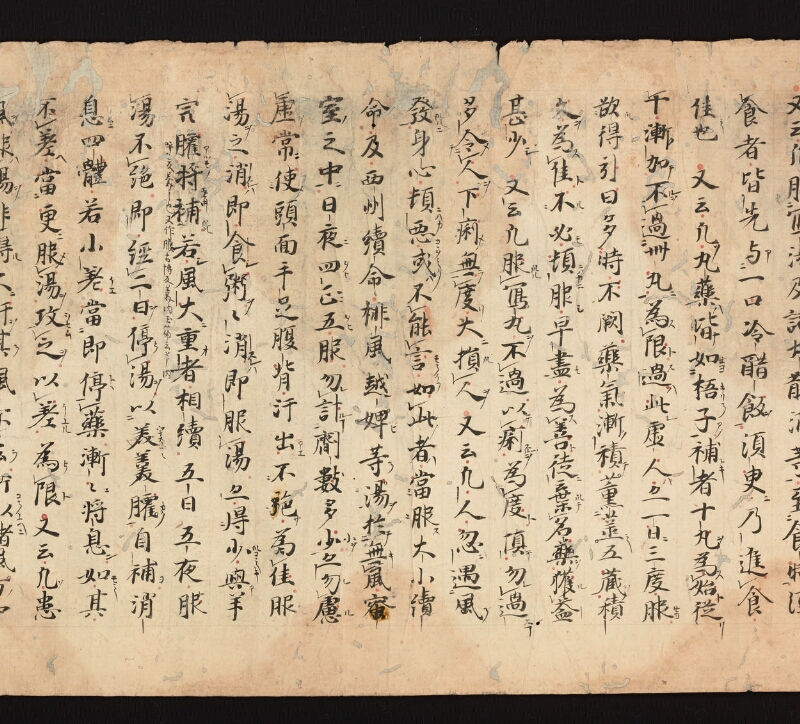
_レ食者皆先与(ア)_二 一口冷₋酢₋飯 ̄ヲ_一須₋更 ̄ニ乃進_レ食
佳 ̄シ也 又云凡 ̄ソ丸₋薬 ̄ハ皆 ̄ナ如 ̄セヨ_二梧子(キリノコ) ̄ノ_一補 ̄トキ者十₋丸 ̄ヲ為 ̄ス_レ始 ̄ト従 ̄リ
_レ 十漸加 ̄テ不 ̄ルヲ_レ過_二卌丸 ̄ニ_一為 ̄ス_レ限 ̄トス過 ̄ハ此 ̄レ虚人 ̄ハ亦一₋日 ̄ニ三₋度服 ̄セヨ
欲 ̄ス_二得引日多時不_一闕薬₋気漸 ̄ク積 ̄テ燻_二₋蒸 ̄シ五蔵 ̄ヲ_一積
久 ̄ヲ為 ̄ス_レ佳 ̄ト不 ̄ル_二必 ̄モ頓(ニハカニ)服 ̄シ早尽 ̄サ_一為 ̄ス_レ善 ̄ト徒 ̄ニ棄(ステ)_レ名₋薬 ̄ヲ獲 ̄ル_レ益
甚少 ̄シ 又云凡服 ̄スル_レ寫₋丸 ̄ヲ不_レ過以 ̄テ_レ痢 ̄スルヲ為_レ度 ̄ト慎 ̄テ勿 ̄レ_レ過 ̄スヿ
多《振り仮名:令|メ|テ》_二レ 人 ̄ヲ下₋痢 ̄メ無 ̄ラ_一レ度 ̄リ大 ̄ニ損 ̄ス_レ 人 ̄ヲ又云凡人忽 ̄ニ遇_二風 ̄ノ
発 ̄スルニ_一身₋心 頓(ニハカ)悪(コヽタシク)或 ̄ハ不_レ能_レ言(モノイフ)如_レ此 ̄ノ者 ̄ハ当_三服 ̄ス_二大₋小続₋
命及西₋州続₋命桃₋風越₋婢(ヒ)等 ̄ノ湯 ̄ヲ_一於 ̄テ_二無 ̄キ_レ風蜜₋
室 ̄ノ之中 ̄ニ_一日₋夜 ̄ニ四 ̄タヒ正 ̄ニ五 ̄タヒ服勿 ̄レ_レ計 ̄ルヿ_一剤₋数多少_一[小ヲ]亦勿 ̄レ_レ慮 ̄ル
_レ虚 ̄ヲ常 ̄ニ使 ̄メ_三頭₋面手₋足腹₋背汗出 ̄アエ不_二絶 ̄サ_一為_レ佳服
_レ湯 ̄ヲ之消 ̄スレハ即食 ̄シ_レ粥 ̄ヲ々消 ̄スレハ即服_レ湯亦得_二少(スコシキ)与(ア)羊
完《振り仮名:臛|アツモノ|呼□反羔美し也又作雘古博反羹肉玉篇云羊肉》#1将 ̄モチヰ補 ̄スル_一若 ̄シ風大 ̄ニ重(オ)者相続五₋日五₋夜服
_レ湯不_レ絶即経_レ 二日 ̄ヲ停 ̄リ_レ湯 ̄ヲ以_二美(ヒ)[宇本正也]羹₋臛(カク)#1_一自補消₋
息 ̄ムニ四₋体若小 差(イエ)当_二即 停(トヽ)_一レ薬漸々 ̄ニ将₋息 ̄ン如 ̄モシ其
不_レ差 ̄ヘ当_二更 ̄ニ服 ̄メ_レ湯 ̄ヲ攻(ヲサム)_一レ之 ̄ヲ以_レ差(イユル)為 ̄リ_レ限 ̄ト又云凡 ̄ソ患
風 ̄ヲ服 ̄ハ_レ湯 ̄ヲ非_レ得 ̄ル_二大 ̄ニ汗 ̄ヲ_一其 ̄ノ風不_レ去 ̄ラ所以(コノユヘニ)諸₋風方中_レ
現代語訳
## 【服薬節度 第三・続き】
(前ページより続き:)……食(しょく・食事)をとる者は皆、まず一口の冷たい酢飯(すめし)を与えてから、改めて食事を進めるのが佳(よ)い。
また云う:およそ丸薬(がんやく)は皆、梧子(ごし・アオギリの実)ほどの大きさにするのがよい。補薬(ほやく)の場合は十丸(じゅうがん)から始め、徐々に増やしていき、四十丸(しじゅうがん)を超えないことを限度とせよ。この限度を超えてはならない。虚弱な人はまた一日に三度服用するがよい。日を重ねて長い期間、薬を欠かすことなく服することを望む。そうすれば、薬の気が徐々に積もり、五臓(ごぞう)を燻蒸(くんじょう・蒸してなじませること)し、長い時間をかけることを佳(よ)しとする。必ずしも急いで服み早く使い尽くすことを善しとするものではない。(急いで服めば)いたずらに名薬(めいやく)を捨てるようなものであり、得られる益は甚だ少ない。
また云う:およそ瀉丸(しゃがん・下剤の丸薬)を服するには、下痢(げり)が起こることをもって限度(ど・節度)とし、過ぎることを慎み、人を際限なく下痢させることのないようにせよ。(過度の下痢は)甚だ人を損(そこな)うのである。
また云う:およそ(ある)人が突然(とつぜん)風の発作(ほっさ)に遭い、身心(しんしん・体と心)が頓(とみ)に酷(ひど)く悪くなり、あるいは言葉を発することができなくなるような場合、このような者は、大続命湯・小続命湯(だい・しょうぞくめいとう)および西州続命湯(さいしゅうぞくめいとう)・桃風湯(とうふうとう)・越婢湯(えっぴとう)等の湯(とう)を服すべきである。風のない密閉された部屋(むろ)の中で、昼夜に四度、正しくは五度服用し、(服用する)剤(ざい)の数の多少を気にすることなく、また虚(きょ・虚弱)を(過度に)慮(おもんぱか)ることもなく、常に頭・顔・手足・腹・背に汗が出て絶えない状態にしておくのが佳(よ)い。湯が消化(しょうか)されれば(消えれば)すぐに粥(かゆ)を食し、粥が消化されればすぐに湯を服するようにせよ。また、少量の羊の臛(かく・肉の熱い吸い物・羹・あつもの)を与えて補うことも良い。もし風が甚だ重(おも)い者は、五日五夜(いつかいつよ)続けて湯を服し絶やすことなく(服し続けることが良い)。すなわち二日を経て湯を停(とど)め、美(おい)しい羹臛(こうかく・肉の吸い物)をもって自ら補い(養生し)、四体(したい・四肢・手足)を消息(しょうそく・休養)させよ。もし少し差(い)えた(病が癒えてきた)ならば、すぐに薬を停(と)めて徐々に将息(しょうそく・静養・養生)するのが良い。もしそれでも差えなければ、再び湯を服して之(これ)を攻(おさ)め、差えることをもって限度とせよ。
また云う:およそ風(ふう)を患(わずら)い湯を服するには、大いに汗(あせ)を得ることができなければ、その風は去(さ)らない。このゆえに、諸(もろもろ)の風(ふう)の方(ほう・処方)の中において……
(次ページへ続く)
英語訳
## [Section Three: The Proper Measure of Taking Medicine, Continued]
[Continuing from the previous page:] …for those who are to eat, one should first give a single mouthful of cold vinegared rice (*su-meshi*, 酢飯), and only after that proceed with the meal. This is the best practice.
It also states: In general, all pill medicines (*gan-yaku*, 丸薬) should be made to the size of *goshi* (梧子 — the seeds of the Chinese parasol tree, *Firmiana simplex*). For restorative medicines (*ho-yaku*, 補薬), begin with ten pills and gradually increase the number, taking care never to exceed forty pills — this is the absolute limit. Those who are physically weak should take the medicine three times a day. The goal is to continue taking the medicine over many successive days without interruption. By doing so, the medicinal *qi* will gradually accumulate and fumigate and permeate (*kun-jō*, 燻蒸) the five viscera (*go-zō*, 五蔵). Taking the medicine over a long period is the ideal; it is not good practice to rush through and exhaust one's supply of medicine quickly. To do so is merely to squander precious medicines, and the benefit one receives will be extremely little.
It also states: In general, when taking purgative pills (*sha-gan*, 瀉丸 — pills to induce bowel movements), one should take the occurrence of diarrhea (*geri*, 痢) as the measure and limit, being careful not to exceed it. One must not cause the person to suffer endless, uncontrolled diarrhea. To do so causes great harm to the person.
It also states: In general, when a person suddenly encounters an outbreak of wind (*fū*, 風 — a category of illness involving neurological or paralytic symptoms akin to what we might call stroke or acute neurological episodes), and their body and mind suddenly deteriorate severely — perhaps even to the point of being unable to speak — such a person should be given one of the following decoctions: *Dai-zoku-mei-tō* (大続命湯, Major Life-Continuing Decoction), *Shō-zoku-mei-tō* (小続命湯, Minor Life-Continuing Decoction), *Saishū-zoku-mei-tō* (西州続命湯, Saizhou Life-Continuing Decoction), *Tō-fū-tō* (桃風湯, Peach-Wind Decoction), *Eppi-tō* (越婢湯, Maidservant-Surpassing Decoction), and similar formulas. These should be administered within a wind-free, sealed room (*mitsu-shitsu*, 密室), four times — or ideally five times — throughout the day and night, without counting the number of doses or worrying excessively about the patient's underlying deficiency (*kyo*, 虚). The ideal is to maintain a state in which sweat flows continuously from the head, face, hands and feet, abdomen, and back without ceasing. Whenever the decoction is digested and absorbed, one should immediately eat some gruel (*kayu*, 粥); whenever the gruel is digested, one should immediately take the decoction again. It is also acceptable to give a small amount of lamb broth (*kaku*, 臛 — a hot meat soup or broth) as a supplement. If the wind disorder is extremely severe, one should continue taking the decoction without interruption for five days and five nights. After that, stop the decoction for two days and use a nourishing meat broth (*kō-kaku*, 羹臛) to restore the body, allowing the four limbs (*shi-tai*, 四体) to rest and recover (*shōsoku*, 消息). If the condition has somewhat improved (*ie*, 差), one should immediately stop the medicine and gradually convalesce (*shōsoku*, 将息). If the condition has not improved, one should resume taking the decoction and continue to combat the illness (*osa-mu*, 攻), taking recovery (*iyuru*, 差) as the limit [at which to stop].
It also states: In general, when treating wind disorders (*fū*, 風) with decoctions, if one cannot achieve profuse sweating (*tai-kan*, 大汗), the wind will not depart. This is why, among the various prescriptions for wind…
[The text continues on the following page.]