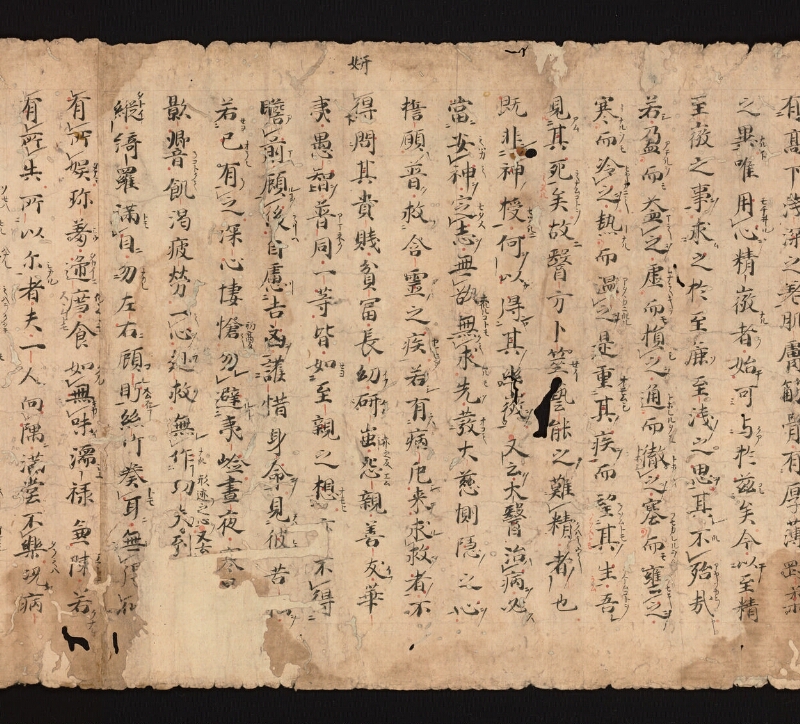
翻刻
有_二髙-下浅-深之 差(シナ)_一《振り仮名:肌-膚|キ居幾反フ》筋(キン)-骨 ̄ニ有_二厚-薄剛-柔
之異 ̄ナルコト_一唯 用(モチヰル)_レ心 ̄ニ精-微 ̄ナル者 ̄ノ始 ̄テ可_三与(クミ)_二於 茲(コレ)_一矣以 ̄テ_二至-精
至-微之事 ̄ヲ_一求 ̄ム_二之於至-麁(ソ)至-浅 ̄ノ之思 ̄ヲ_一其 ̄レ不(ス)_レ殆(アヤフカラ)哉(ヤ)
若 ̄シ盈(ミチルヲ)而 ̄モ益(マシ)_レ之 ̄ヲ虚(ムナシキヲ)而 ̄モ慎 ̄ミ_レ之 ̄ヲ通(トホレルヲ)而 ̄モ《振り仮名:徹|トホ□□|トホシ》_レ之 ̄ヲ塞(フサカレルヲ)而 ̄モ壅(フサキ)_レ之 ̄ヲ
寒(─) ̄ナルヲ而 ̄モ冷(ヒヤカニシ)_レ之 ̄ヲ熱(─) ̄ナル而 温(アタヽカニスル)_レ之 ̄ヲ是 重(オモムミ)_二其 ̄ノ疾 ̄ヲ_一而《振り仮名:望|ノソムトモ|ノソメトモ》其 ̄ノ《振り仮名:生|イケムコト|ラム》_一吾 ̄レ
《振り仮名:見|ミム| ル》_二其《振り仮名:死|シナムコトヲ|シヌル》_一矣故 ̄ニ医-方卜- 筮(セイ)芸-能 之(ノ)難_二レ精(クハシウシ)_一者 ̄ノ₋也
既非 ̄ンハ_二神 ̄ノ授(サツクルニ)_一何 ̄ヲ₋以 ̄カ得 ̄ンヤ_二其 ̄ノ幽-微 ̄ヲ_一又₋云 ̄ク大-医治 ̄ハ_レ病 ̄ヲ必 ̄ス
当 ̄ニ_二安(シツ)_レ神(カミ) ̄ヲ定(サタメ)_レ志 ̄ヲ無_レ欲(ホスルコトモ)無 ̄クシ_一レ求(ムルモ)先 ̄ツ発(オコシ)_二大-慈惻-隠 ̄ノ之心 ̄ヲ_一
誓-願 ̄ハ普 ̄ク救 ̄フ_二含-霊 ̄ノ之 疾(ヤマヒヲ)_一若 ̄シ有 ̄ラハ_二病-厄 ̄シ来 ̄テ求 ̄ル_レ救 ̄ヲ者 ̄ノ_一不_四#1
_レ得_下問_二#1其貴-賤貧-富長-幼(イフ)研(ケム)#2-蚩(赤之反)怨(エム)-親善-友(イフ)華-
夷愚-智 ̄ヲ_上普(アマネク)₋同一-等皆 如(セヨ)_二至-親之 想(オモヒ)_一亦不_レ得_二
瞻(ミ)_レ前(マヘ)顧 ̄ルヿヲ_一レ後(シリヘ)自慮 ̄リ_二吉-凶 ̄ヲ_一護_二-惜身-命 ̄ヲ_一見 ̄テハ_二彼 ̄レノ苦-悩 ̄ヲ
若 ̄セヨ_二己(オノレ)有 ̄ノ一_レ之深-心悽-愴(初高反シ)勿 ̄レ_レ避 ̄ルヿ_二夷-嶮昼夜寒暑
影-響 ̄ノコトクシ飢-渇疲-労一 ̄シ_レ心 ̄ヲ赴(フ)-救(ク)無 ̄レ_レ作(ナス) ̄ヿ_二《振り仮名:功-夫|形迹 ̄ノ之心 ̄ノ_一》◦(又云)到 ̄ニ□□
縦(タトイ)₋綺-羅満 ̄トモ_レ目 ̄ニ勿(ナカレ)_二左-右 ̄ニ顧(コ) ̄レ-䀎(メム) ̄スルヿ_一糸-竹奏 ̄トモ_レ耳 ̄ニ無六_レ得五_レ似_四
_レ有三_レ所二_レ娯(タノシ)_一珍-羞(シウ)逢(タカイニ)₋《振り仮名:席|スヽム|スヽムトモ》食如 ̄クナレ_三レ無 ̄キカ_二レ味 ̄イ_一濡 ̄シユ-様兼 陳(ノフトモ)若 ̄クナレ
_レ有_レ所_レ失所_二₋以尓 ̄ミナル_一者夫一-人向_レ隅 ̄ニ満堂不_レ楽(タノシハ)况 ̄ヤ病-
現代語訳
## 【現代語訳】
(前ページより続く)肌膚・筋骨には高下・浅深の差があり、厚薄・剛柔の異なりがある。ただ心を用いること精微なる者のみが、はじめてこれ(医術)に参与することができるのである。至精至微の事柄を、至麁(きわめて粗雑)・至浅(きわめて浅薄)な思慮によって求めようとすれば、それは危うからずやと言えようか。
もし満ちているのにさらにこれに益し、虚しいのに慎みてこれを控え、通じているのにさらに徹(とお)し、塞がっているのにさらに塞ぎ、寒なるのに冷やかにし、熱なるのに温めるならば、これはその疾病を重くするものであって、その者が生きることを望んだとしても、私はその死を見ることになるであろう。それゆえ、医方・卜筮・芸能の中でも、精通することの難しいものである。
もし神が授けてくださるのでなければ、どうしてその幽微を得ることができようか。
また云く:「大医(優れた医者)が病を治するには、必ず神を安じ志を定め、欲することも求めることもなく、まず大慈惻隠の心を起こし、広く含霊(生きとし生けるものすべて)の疾を救わんと誓い願うべきである。もし病厄(病の苦しみ)があって救いを求めて来る者があれば、その貴賤・貧富・長幼・賢愚(研蚩)・怨親・善友・華夷・愚智を問うことなく、あまねく等しく皆を至親(もっとも親しき者)と思うがごとくせよ。
また、前を見て後ろを顧みることなく、自ら吉凶を慮り、わが身命を護り惜しむことをしてはならない。彼の苦悩を見ては、まるで己にその苦しみがあるかのように深く心を痛め、夷嶮(平地も険しき道も)を避けることなく、昼夜・寒暑を問わず、影の響くがごとく(すみやかに)、飢え渇き疲れ労れても、一心に赴き救い、功夫(てがら・形跡)を求める心を起こすことなかれ。
また云く:(診察の場に)到りて……たとえ綺羅(美しい衣服や飾り)が目に満ちても、左右を顧み眺めることなかれ。糸竹(弦楽器・管楽器の音)が耳に奏でられても、楽しむところあるがごとくふるまってはならない。珍羞(珍しいご馳走)が互いに席を勧めて食するときも、まるで味がないかのようにせよ。濡様(種々の料理・饗応)がともに陳べられても、失うところあるがごとくせよ。
そもそも一人が隅に向かって悲しんでいれば、満堂の人もみな楽しまないと言われる。ましてや病……(次ページへ続く)」
英語訳
## [Continuing from the previous page]
In the skin and muscles and bones, there are differences of high and low, shallow and deep, and variations of thick and thin, hard and soft. Only one who applies the mind with utmost precision and subtlety can begin to participate in [the art of medicine]. If one attempts to understand matters of the utmost precision and subtlety through thought that is exceedingly coarse and exceedingly shallow, is that not perilous indeed?
If one adds to what is already full, restrains what is already empty, drives through what is already flowing, blocks up what is already obstructed, cools what is already cold, and warms what is already hot—this is to aggravate the illness, and even if one hopes that the patient will live, I foresee only their death. Thus, among [all arts including] medicine, divination, and the various arts and skills, [medicine] is the most difficult in which to attain mastery.
If it is not divinely bestowed, how can one attain its subtle and profound depths?
The text further states: "When a great physician treats illness, he must always calm his spirit, settle his will, harbor neither desire nor personal ambition, and first give rise to a heart of great compassion and empathy, vowing to relieve the sufferings of all living beings far and wide. If there is one who comes afflicted with illness seeking relief, one must not ask about their rank or station, wealth or poverty, age, wisdom or foolishness, whether they are an enemy or a friend, an intimate or a stranger, a fellow countryman or a foreigner, clever or dull—but regard them all equally and universally, as if they were one's own dearest kin.
Moreover, one must not look ahead while glancing behind, calculating one's own fortune or misfortune, or guarding and treasuring one's own life and safety. Upon seeing the suffering of another, one should feel deep anguish in one's heart as if the affliction were one's own. One must not avoid rough or dangerous terrain, and regardless of day or night, cold or heat, like a shadow responding instantly to a form, even when hungry, thirsty, weary, and exhausted, one must go wholeheartedly to the rescue, and must not act with any thought of making a show of one's merit or deeds.
The text further states: Upon arriving [at a patient's home]…even if beautiful silks and finery fill the eyes, do not look left and right to admire them. Even if the sounds of strings and woodwinds are played for the ears, do not behave as though you are there to enjoy yourself. Even when rare and exquisite delicacies are offered and pressed upon you at table, eat as though they were tasteless. Even when a lavish array of fine foods and drink is spread before you, behave as though something were amiss [and you cannot partake freely].
It is said that when even one person sits weeping in a corner, an entire hall full of people cannot be merry. How much more so when a patient [is suffering]…" [continues on next page]