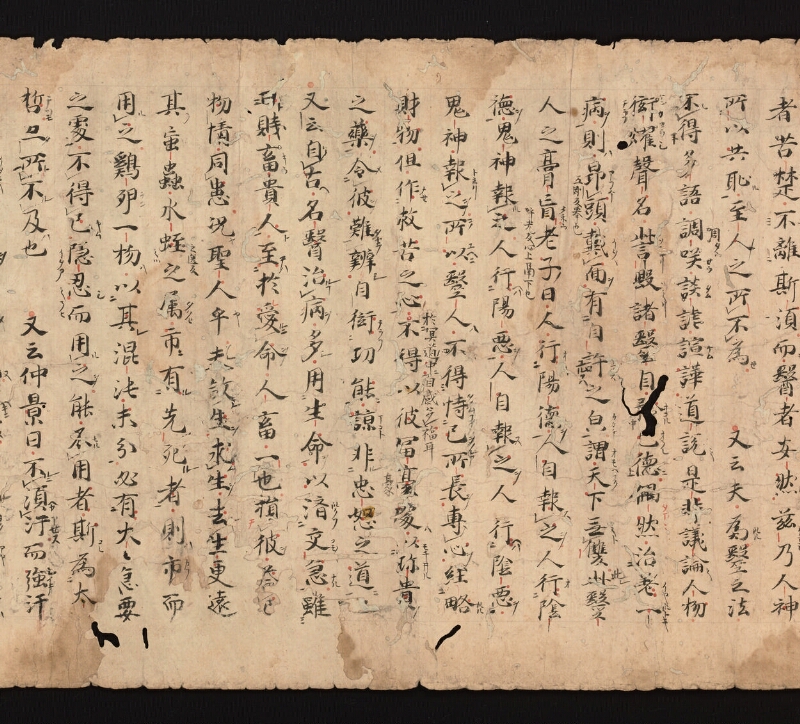
翻刻
者苦₋楚(ソ) ̄セハ 不(スレ)_三離(ハナレ)_二斯(シハラク)₋湏 ̄ヲモ_一而 ̄モ医₋者安₋然 ̄シ茲乃(イマシ)人₋神
所_二₋以共恥 ̄ル_一主₋人 ̄ノ之所_レ不_レ為 ̄せ 又云夫為 ̄スル医之法
不(レ)_レ得_下多語 調(啁タウ)₋咲(せウ)談(タム)₋謔 諠(ケム)₋譁道₋説 ̄シ是₋非議₋論 ̄シ人₋物
《振り仮名:衒|ケン|テラウ》 ̄カ₋耀(ヨウ) ̄シ声₋名 訾(ソシリ)₋毀(ソシリ)諸医目 矜(ホコル)_中己(オノレ)徳 ̄ニ_上《振り仮名:偶₋然|タマ〱》治 ̄シ_二差一(イヤストキ)₋
病_一則 ̄ハ《振り仮名:昂_レ頭|アフケ|五剛反挙也》戴(イタヽ)_レ而 ̄ヲ有_二自₋《振り仮名:許|ユルス|ユルス》#1之 皃(カタチ)_一謂天(オモヘラク)₋下無 ̄シト_レ双 此(此レ)医₋
人之膏₋《振り仮名:肓|クキウ|呼光反心上鬲下也》#2老子 ̄ノ曰人 行 ̄オ_二陽₋徳 ̄ヲ_一自報 ̄ス_レ之 ̄ヲ人 行 ̄オ_二陰₋
徳 ̄ヲ_一鬼₋神報 ̄ス_レ之人行 ̄ヘハ_二陽悪 ̄ヲ_一 人自報 ̄ス_レ之 ̄ヲ人行 ̄ヘハ_二陰₋悪 ̄ヲ
鬼₋神 報 ̄トヘリ_レ之 ̄ヲ所(コノ)₋以(ユヘニ)医人 ̄ハ不_四得_三恃(タノムコト)_二己(ヲノレノ)所₋長 ̄ヲ_一専心 ̄ヲ経_二略 ̄スル
財₋物_一但 作(シメセ)_二救苦之心_一《振り仮名:不得以彼富₋豪|於_二冥道 ̄ノ中 ̄ニ自感多_レ福耳》処 ̄ハ以(モチヰル)_二珍₋貴 ̄ノ
之薬 ̄ヲ_一令(シメ)_レ二彼 ̄ヲ難 ̄タカラ_レ一弁 ̄シ自 衒(テラフ)_二功能 ̄ニ_一諒(マコト)非 ̄ル_二忠₋恕之道 ̄ニ_一也
又云自_レ古 ̄ヘ名₋医治 ̄ルコト_レ病 ̄ヲ多 ̄シ用_二生₋命 ̄ヲ_一以 済(スクフ)_二交(コモ〱)急 ̄ナル_一雖_三
曰_二賤₋畜(キウ)貴人 ̄ト_一至 ̄テハ_二於愛 ̄ルニ_レ命 ̄ヲ人₋畜一也損 ̄テ【左ルビ】_レ彼 ̄ヲ益_レ己
物情同_レ患况 ̄ヤ聖₋人 乎(ヤ) 夫(ソレ)𭣰#3 ̄シ_レ生 ̄ヲ求 ̄ム_レ生 ̄ヲ去 ̄ヤ_レ生更遠
其 ̄ノ䖟₋蟲水₋《振り仮名:蛭|之逸反|シツ》之 属(タクヒ)市 ̄ニ有 ̄ル_二先 ̄ツ死 ̄ル者_一則 ̄ハ市(カフ)而
用 ̄ル_レ之鶏₋卵(ラン)一₋物 ̄ハ以_二其 ̄レ混₋沌未分_一必有_二大₋々急要
之処_一不_レ得_レ已(ヤム)《振り仮名:隠₋忍 ̄シ||イタミ シノヒ》用 ̄ル_レ之 ̄ヲ能不 ̄サル_レ用者斯 ̄コレ為_二太
哲(テツ) ̄モ只 ̄タ所 ̄ト_レ一不 ̄ル_レ及 ̄ハ也 又云仲景曰不 ̄レニ_レ湏 ̄ヘカ_レ汗(アセス)而 強(シイテ)汗
現代語訳
【現代語訳(続き)】
…病む者が苦しんでいれば、しばらくの間もその場を離れてはならないのに、医者が安然としている(平然としている)—これは人の神(人としての良心・道義心)が共に恥じるところであり、(人の上に立つ)主人たる者がすべきでないことである。
また云う。そもそも医を為す法として、多くを語り、喋々と笑い、談笑したり、やかましく騒いで是非を道説し、人物を議論し、声名を衒い輝かせ、諸医を誹り毀り、己の徳をほこってはならない。たまたま一つの病を治し差した(癒やした)時には、頭を高く上げ、自らを許す(自賛する)顔つきをして、天下に双ぶものなしと思っている—これは医人の膏肓(不治の病巣)である。
老子が曰く、「人が陽徳(表に現れた善行)を行えば、人(世間)が自らそれに報いる。人が陰徳(表に現れない善行)を行えば、鬼神がそれに報いる。人が陽悪(表に現れた悪行)を行えば、人が自らそれに報いる。人が陰悪(隠れた悪行)を行えば、鬼神がそれに報いる」と言っている。このゆえに医人は、自分の長所を頼みとして、専ら財物を経略(取得)することに心を傾けてはならない。ただ苦しみを救う心を起こすべきである(そうすれば)、冥道の中において自ずから多くの福を感得することができる。(患者が)富豪であることをもって、珍貴な薬を用いて彼に弁じ難く(入手しがたく)させ、自ら(その)功能を衒うは、誠に忠恕の道ではない。
また云う。古来、名医が病を治療するにあたっては、生き物の命を多く用いて緊急の(患者を)救ってきた。畜類は賤しく人間は貴いと言えども、命を愛でるに至っては人も畜も同じである。彼(生き物)を損じて己を益するは、物の情として共に憂えるところであり、況んや聖人においてをや。そもそも、生を殺して生を求めるは、生を去ってさらにその生から遠ざかるものである。その虻虫・水蛭の類は、市においてまず死んでいる者があれば、それを買って用いよ。鶏卵の一物は、その混沌として未だ分かれていない(生命として完成していない)ことをもって、必ず大きな急要の処(緊急の場面)に用いることがあり、已むを得ない時は、痛みを忍んでこれを用いよ。用いることができない者は、これはあまりにも賢すぎる(潔癖すぎる)のであって、ただ(現実に)及ばないだけである。
また云う。仲景が曰く、「汗(を発)すべきでない(のに)、強いて汗を発せ(させ)……」
英語訳
**[Translation of the current page, continuing Chapter 1: General Principles of Treating Disease]**
…If a patient is suffering in pain, [a physician] must not leave their side even for a brief moment—yet if a physician remains at ease and unmoved, this is something of which both human conscience and the gods are ashamed, and something that no one in a position of responsibility should do.
It is also said: As a principle of practicing medicine, one must not speak excessively, chatter and laugh, engage in idle banter and jesting, make a clamorous din, pronounce judgments on right and wrong, pass judgment on others, flaunt one's own reputation and glory, slander and disparage other physicians, or boast of one's own virtue. When one happens to have cured a single illness, one must not hold one's head high with a self-congratulatory expression, thinking there is no one in the world to match oneself—this is the "gu-huang" [incurable affliction] of the physician.
Laozi said: "If a person performs visible virtuous deeds (*yáng dé*), others will naturally reward them. If a person performs hidden virtuous deeds (*yīn dé*), the spirits and gods will reward them. If a person commits visible wicked acts (*yáng è*), others will naturally repay them [with retribution]. If a person commits hidden wicked acts (*yīn è*), the spirits and gods will repay them." For this reason, a physician must not rely on his own strengths and talents and devote his mind entirely to acquiring wealth. He should only arouse the heart to relieve suffering—[by doing so,] he will naturally accumulate great blessings in the unseen realm. To use rare and precious medicines on a wealthy patient so as to make it difficult for them to procure [such medicines] elsewhere, and thereby to show off one's own skill and ability, is truly not the way of loyalty and empathy (*zhōng shù*).
It is also said: Since ancient times, famous physicians treating illness have often made use of living creatures' lives to rescue those in urgent need. Although it is said that animals are base and humans are noble, when it comes to cherishing life, humans and animals are alike. To harm another [living creature] for one's own benefit is something that all sentient beings share in lamenting—how much more so for a sage! In general, to kill life in order to seek life is to depart from life and move ever further away from it. As for creatures such as horseflies (*meng chong*) and leeches (*shui zhi*), if there are any at the market that have already died [naturally], buy those and use them. As for the single substance of a hen's egg—because it is in a state of undifferentiated chaos (*hundun*), not yet separated [into a fully formed life], it will inevitably be needed in cases of great and urgent necessity; when there is no other choice, bear the pain [of using it] and employ it. One who is entirely unable to use it is being excessively scrupulous—he simply falls short of [what the situation requires].
It is also said: Zhongjing said: "When sweating is not necessary, to forcibly induce sweating…"