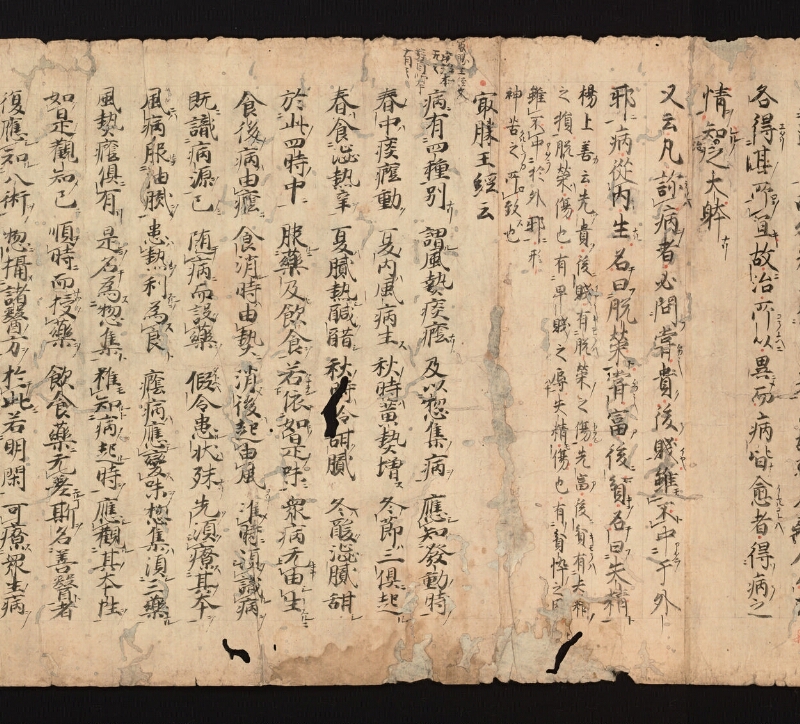
翻刻
各 得(エタリ)_二其 ̄ノ所 ̄ロヲ_レ一宜 ̄キ故 ̄ニ治 所以(コノユヘニ)異 ̄ニシテ而病皆 愈者(イユルモノハ)得 ̄リ_二病 ̄ノ之
情 ̄ヲ_一知 ̄レルノ_レ治 ̄ヲ大₋体 ̄ナリ
又云凡 診(ミルハ)_レ病 ̄ヲ者必問 ̄フ_二嘗(ムカシ)貴 ̄ク後 ̄ノ賤(イヤ)_一雖 ̄モ_レ不 ̄ト_レ 中(アタラ)_二于外₋
邪 ̄ニ_一病従_レ内生 ̄ナル名 ̄テ曰 ̄フ_二脱₋栄 ̄ト_一嘗(ムカシ)富 ̄ミ後 ̄ニ貧 ̄キヲ名 ̄テ曰 ̄フ_二失精 ̄ト_一
楊上善 ̄カ云先 ̄ツ貴 ̄ク後 ̄ニ賤(イヤシキモノハ)有_二脱₋栄 ̄ノ之傷(ヤフレ)_一先富 ̄ミ後 ̄ニ貧 ̄キモノハ有_二失精 ̄ノ
之損_一脱₋栄 ̄ハ傷也有_二卑₋賤之《振り仮名:辱||ハチ》_一失₋精 ̄モ傷也有 ̄リ_二貧₋忰 ̄ノ之□
雖_レ不_レ 中(アタラ)_二於外邪 ̄ニ_一形
神苦(クルシフカ)之所 ̄ロ_レ致 ̄ス也
最勝王経云
【欄外上部】
最勝王経文
宇治本
无之
医師本
有之
病 ̄ニ有_二 四₋種_一別 ̄ナリ 謂 ̄ル風熱痰癊 ̄ナリ 及以_二惣集 ̄ノ病 ̄ヲ_一 応 ̄シ_レ知_二発動 ̄ノ時 ̄ノ_一
春 ̄ノ中 ̄ハ痰癊動 ̄ク 夏 ̄ノ内 ̄ハ風₋病生 ̄ス 秋 ̄ノ時 ̄ハ黄熱増 ̄ス 冬 ̄ノ節 ̄ハ三俱 ̄ニ起 ̄ル
春 ̄ハ食_二渋熱辛 ̄ヲ_一 夏 ̄ハ膩熱 ̄シ醎 ̄ク醋 ̄シ 秋 ̄ノ時 ̄ハ冷甜 ̄ク膩 冬 ̄ハ酸 ̄ク渋膩甜 ̄シ
於_二此 ̄ノ四₋時 ̄ノ中 ̄ニ_一服 ̄ルニ_二薬及 ̄ヒ飲₋食 ̄ヲ_一若 ̄クナラン_下依 ̄テ_二如 ̄キノ_レ是 ̄ノ味 ̄ニ_一衆₋病无 ̄キヤ_上レ由 ̄シ_レ生 ̄スルニ
食₋後 ̄ノ病 ̄ハ由_レ癊 ̄ニ食消 ̄ル時 ̄ハ由_レ熱 ̄ニ 消 ̄メ後 ̄ハ起_レ由_レ風 ̄ヨリ 准 ̄メ_レ時 ̄ニ《振り仮名:須 ̄ク||シ》_レ識 ̄ル_レ病 ̄ヲ
既 ̄ニ識_二病₋源 ̄ノ_一已(ノミ)随 ̄テ_レ病 ̄ニ而設 ̄ク_レ薬 ̄ヲ 仮(タトヘハ)令患 ̄ル状 ̄ハ殊 ̄ナリ 先 ̄ツ《振り仮名:湏 ̄ク||シ》_レ療 ̄ス_二其 ̄ノ本 ̄ヲ_一
風 ̄ニハ病服 ̄セヨ_二油膩 ̄ヲ_一患 ̄ハ_レ熱 ̄ヲ利 ̄スルヲ為 ̄ス_レ良 ̄ト 癊病 ̄ハ応 ̄シ_レ変 ̄ス_レ味 ̄ヲ惣₋集 ̄ハ須 ̄シ_二 三薬 ̄ナル_一
風熱癊俱 ̄ニ有 ̄リ 是 ̄ヲ名 ̄テ為 ̄ス_二惣₋集 ̄ト_一 雖 ̄モ_レ知 ̄ルト_二病 ̄ノ起 ̄ル時 ̄ヲ_一応 ̄シ_レ観 ̄ル_二其 ̄ノ本₋性 ̄ヲ_一
如 ̄ク_レ是 ̄ノ観₋知 ̄メ己 ̄ニ 順 ̄テ_レ時 ̄ニ而 授(サツク)_レ薬 ̄ヲ飲₋食薬 ̄ニ无_レ差 ̄ニルヿ斯 ̄ヲ名_二善医 ̄ト_一者
復応 ̄シ_レ知 ̄ル_二 八₋術 ̄ヲ_一 惣 ̄ニ構 ̄メ_二諸医 ̄ノ方 ̄ヲ_一 於 ̄テ_レ此 ̄ニ若_二明閑_一 可_レ療 ̄ス_二衆生 ̄ノ病 ̄ヲ_一
現代語訳
【前頁からの続き—『大素経』より】
それぞれがその宜しきところを得ているがゆえに、治療法は異なっていても病がみな癒えるのは、病の情(実情・本態)を得て治療の大体(根本)を知っているからである。
また(『大素経』に)云う。およそ病を診るには、必ずかつて貴く後に賤しくなったかどうかを問わなければならない。たとえ外邪に中(あた)らなくても、病が内から生じることがある。これを名づけて「脱栄(だつえい)」という。かつて富み後に貧しくなったものを名づけて「失精(しっせい)」という。
楊上善(ようじょうぜん)がいう。先に貴く後に賤しくなった者には脱栄の傷(損傷)があり、先に富み後に貧しくなった者には失精の損(損傷)がある。脱栄は(精神的な)傷であり、卑賤の辱めを受けることにある。失精もまた(精神的な)傷であり、貧忰(貧苦・困窮)の〔辱め〕がある。たとえ外邪に中らなくても、形(肉体)と神(精神)がともに苦しむことによって引き起こされるものである。
---
【『最勝王経(さいしょうおうきょう)』より】
〔欄外上部注記〕:「最勝王経文は、宇治本にはなく、医師本にはあり」
病には四種の別がある。すなわち風・熱・痰癊(たんいん)であり、また惣集(そうじゅう)の病(これら全てが集まった病)である。(治療に際しては)発動の時(発病の時期)を知るべきである。
春の中は痰癊が動く。 夏の内は風病が生ずる。 秋の時は黄熱が増す。 冬の節は三つ(風・熱・痰癊)が倶に起こる。
春は渋・熱・辛のものを食べよ。 夏は膩(脂っこい)・熱・醎(鹹、塩辛い)・醋(酢っぱい)〔を避けよ〕。 秋の時は冷・甜(甘い)・膩(脂っこい)〔がよい〕。 冬は酸(すっぱい)・渋・膩・甜がよい。
この四時(四季)の中において薬を服し、また飲食をするにあたり、もしこのような(各季節に合った)味に従うならば、衆病(もろもろの病気)が生ずる由(よし)なき(理由がない)ことになろう。
食後の病は癊(いん)に由り、食が消える時は熱に由り、消えた後に起こるのは風に由る。時に准(なぞら)えて病を識(し)らねばならない。
既に病源(病の根源)を識ったならば、ただちに病に随って薬を設ける(処方する)。たとえ患う状(症状)が殊(異な)っていても、まず必ずその本(根本)を療すべきである。
風の病には油膩(あぶらっこいもの)を服せよ。熱を患うには利(下利・通下)をもって良とする。癊病は応(まさ)に味を変ずべきである。惣集(そうじゅう)の病には、三薬(風・熱・癊の三つに対応する薬)が必要である。
風・熱・癊が倶に有るのを、これを名づけて「惣集」という。病の起こる時を知っていても、応(まさ)にその本性(体質・根本の性質)を観るべきである。
このように観知(観察して知る)し終わったならば、時に順って薬を授(さず)け、飲食と薬に差(あやまり)なければ、これを「善医(良い医者)」と名づける者である。
さらに応(まさ)に八術(はちじゅつ)を知るべきである。諸医の方(処方・治療法)を総じて構え(習得し)、これにおいて明閑(よく通じている)ならば、衆生の病を療することができる。
英語訳
**[Continuation from the *Taisu Jing* (Grand Basis Classic)]**
Because each [method] has obtained what is appropriate to it, the reason why diseases are all cured even though the treatments differ is that one has grasped the true nature (*qíng*) of the disease and knows the fundamental principle (*dàtǐ*) of treatment.
It is further said [in the *Taisu Jing*]: When examining a disease, one must always ask whether the patient was formerly noble and has since become humble. Even if one has not been struck by external pathogenic influences (*wài xié*), disease may arise from within. This is called "loss of glory" (*tuō róng* 脱栄). One who was formerly wealthy and has since become poor is called one who has suffered "loss of essence" (*shī jīng* 失精).
Yang Shangshan (*Yáng Shàngshàn*) says: One who was first noble and later became humble suffers the injury of *tuō róng* (loss of glory); one who was first wealthy and later became poor suffers the loss of *shī jīng* (loss of essence). *Tuō róng* is an injury [to the spirit], [arising from] the humiliation of lowly and base [circumstances]. *Shī jīng* is likewise an injury [to the spirit, arising from] the [hardship and disgrace] of poverty and deprivation. Even if one has not been struck by external pathogenic influences, [these conditions] are brought about by the suffering of both the body (*xíng*) and the spirit (*shén*).
---
**[From the *Suvarṇaprabhāsa Sūtra* (金光明最勝王経, *Saikōōkyō*)]**
*[Marginal note at top:] "The passage from the Suvarṇaprabhāsa Sūtra is absent in the Uji manuscript but present in the physician's manuscript."*
Disease is divided into four kinds: wind (*fū/fēng*), heat (*rè*), phlegm-rheum (*tán yǐn* 痰癊), and the combined (aggregate) disease (*sōng jí* 惣集), in which all of the above are gathered together. One should know the time [of the season] at which [each type] is activated.
In the middle of spring, phlegm-rheum (*tán yǐn*) stirs. In the midst of summer, wind disease arises. In autumn, yellow heat (*huáng rè*) increases. In winter, all three arise together.
In spring, eat [foods that are] astringent, warming, and pungent. In summer, [avoid] oily, hot, salty, and sour [foods]. In autumn, [eat] cool, sweet, and oily [foods]. In winter, [eat foods that are] sour, astringent, oily, and sweet.
If, in taking medicines and in eating and drinking throughout these four seasons, one follows the flavors [appropriate to] each season as described above, there will be no cause (*yóu*) for the various diseases to arise.
Post-meal diseases are caused by rheum (*yǐn* 癊); diseases arising when food is being digested are caused by heat; diseases arising after [food] has been digested are caused by wind. One must identify the disease in accordance with the [appropriate] time.
Once the source of the disease (*bìng yuán*) has been identified, one should then set forth (*shè*) the medicine in accordance with the disease. Even if the presenting symptoms are varied and unusual, one must first treat the root (*běn*) [of the condition].
For wind disease, take oily and fatty [foods/medicines]. For heat disease, promoting [downward] flow (*lì* 利) is considered the best [treatment]. For rheum disease (*yǐn bìng*), one should change the flavors [of diet and medicine]. For combined (*sōng jí*) disease, the three [types of] medicines are necessary.
When wind, heat, and rheum are all present together, this is called "combined [disease]" (*sōng jí* 惣集). Even if one knows the time at which the disease arose, one should still observe the patient's fundamental nature (*běn xìng*)—that is, their underlying constitution.
Once one has thus observed and understood [all these things], administer medicine in accordance with the [proper] season. If there is no error in [the prescribing of] food, drink, and medicine, such a person is called a "skilled physician" (*shàn yī* 善医).
Furthermore, one should know the eight arts (*bā shù* 八術). By comprehensively mastering the prescriptions and methods of all [traditions of] medicine, if one is thoroughly versed in these [arts], one will be able to treat the diseases of all sentient beings (*zhòng shēng*).