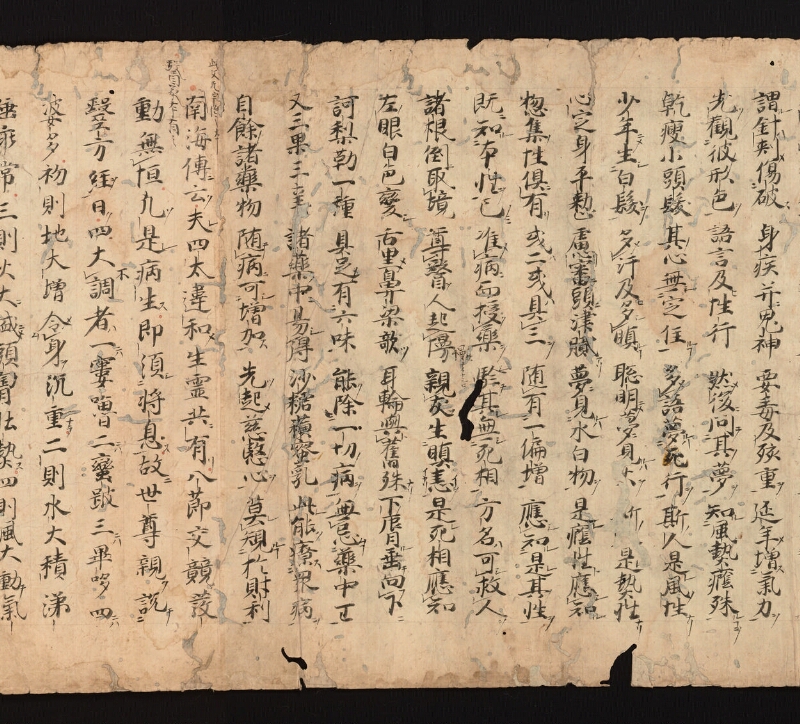
翻刻
謂 ̄ル針 ̄ハ刺 ̄メ傷_二₋破 ̄ス 身疾并 ̄ニ鬼₋神 要毒及残重 ̄ヲ_一 延₋年 ̄メ増 ̄ス_二気力 ̄ヲ_一
先 ̄ツ観_二彼 ̄ノ形₋色 ̄ヲ_一 語₋言及 ̄ヒ性₋行 然 ̄メ後 ̄ニ問 ̄テ_二其 ̄ノ夢 ̄ヲ_一 知 ̄ル_二風熱癊殊 ̄ルヿヲ_一
乾₋痩小頭₋髪 其 ̄ノ心無 ̄シ_二定住 ̄ルヿ_一 多 ̄メ_レ語夢 ̄ルハ_二死行 ̄ヲ_一 斯 ̄ノ人是 ̄レ風 ̄ノ性 ̄ナリ
少₋年 ̄ニメ生 ̄シ_二白₋髪 ̄ヲ_一 多 ̄メ_レ汗及 ̄ヒ多 ̄シ_レ瞋 ̄ルヿ 聡₋明 ̄ニメ夢 ̄ニ見 ̄ルハ□【火ヵ】 □□【斯人ヵ】是 ̄レ熱₋性 ̄ナリ
心定身平懃 慮 ̄リ審頭 ̄ニ津₋膩 ̄アリ 夢 ̄ニ見 ̄ルハ_二水白物 ̄ヲ_一 是 ̄レ癊₋性 ̄ト応 ̄シ_レ知 ̄ル
惣集 ̄ノ性俱 ̄ニ有 ̄リ 或 ̄ハ二或 ̄ハ具_レ 三 ̄ヲ 随_レ有_二 一₋偏₋増_一 応 ̄シ_レ知 ̄ル_二是 ̄レ其 ̄ノ性 ̄ヲ_一
既 ̄ニ知 ̄ル_二本性 ̄ヲ_一己 ̄ノミ 准 ̄メ_レ病 ̄ニ而授 ̄ク_レ楽 ̄ヲ 験(シテ)其 ̄レ無 ̄シ_二死₋相_一 方名 ̄ハ可 ̄シ_レ救_レ 人 ̄ヲ
諸₋根倒 ̄ニ取_レ境 尊_レ医 ̄ヲ人起_レ愣《割書:慢欤ナイカシロ|》 親_レ交 ̄ヲ生_二瞋 《振り仮名:恚|イ|イカリ》 ̄ヲ_一 是 ̄レ死₋相応_レ知
左 ̄ノ眼白₋色変 ̄シ 舌黒 ̄メ鼻梁欹 ̄ツ 耳輪与 ̄ト_レ旧殊 ̄ナリ 下 ̄ノ唇 ̄ル垂 ̄テ向 ̄フ_レ 下 ̄ニ
訶₋梨勒一₋種 具₋足 ̄メ有_二 六₋味_一 能 ̄ク除_三 一切 ̄ノ病 ̄ヲ無_レ忌 ̄ムヿ_二薬₋中王_一
又三果三辛 諸薬 ̄ノ中 ̄ニ易 ̄シ_レ得 沙₋糖蘓蜜乳 此 ̄レ能 ̄ク療 ̄ス_二衆病 ̄ヲ_一
自₋余 ̄ノ諸₋薬₋物 随 ̄テ_レ病 ̄ニ可 ̄シ_二増₋加 ̄ス_一 先 ̄ツ起 ̄メ_二慈愍心 ̄ヲ_一 莫 ̄レ_レ規 ̄ルヿ_二於財₋利_一
《割書:此文无宇治之本|医家本有之》南海伝 ̄ニ云 ̄ク夫 ̄レ四₋太違和 ̄メ生₋霊共 ̄ニ有 ̄リ八₋節交競発
動無_レ恒凡 ̄ソ是 ̄レ病生 ̄ス即湏 ̄シ_二将₋息 ̄ス_一故 ̄ニ世₋尊親 ̄ク説 ̄テ_二
医方経 ̄ヲ_一曰 ̄ク四大_レ不調者 ̄ハ一 ̄ニハ窶嚕二 ̄ニハ蠻跛三 ̄ニハ畢哆四 ̄ニハ
婆多初則地大増《振り仮名:令|| ム》 ̄メ身 ̄ヲ沈₋重 ̄ナラ二則水大積涕₋
唾乖_レ常三則火大 ̄ニ盛 ̄ニメ頭胸壮₋熱 ̄ス四則風大動 ̄テ気₋
現代語訳
【『最勝王経』より続き — 八術の内容】
(八術と)は(次のことを)いう:針は、身体の疾病、ならびに鬼神(による病)、毒・重篤な病を刺し破り(取り除き)、年を延ばし気力を増す(ためのものである)。
まずその(患者の)顔色・形を観察し、言葉づかいおよび性質・行状(をみる)。然る後に、その夢を問い、風・熱・癊(の性質が)それぞれ異なることを知る(のである)。
(身体が)乾き痩せ、頭髪(が少なく)、その心に定まった(落ち着いた)ところがなく、言葉が多く、(夢に)死や(死者の)行く先を夢みる、この人は風の性(体質)である。
若い年齢で白髪が生じ、汗が多く、また怒りっぽいことが多く、聡明で、夢に(火〔ヵ〕)を見る、〔この人〕は熱の性(体質)である。
心が落ち着き、体が平静で勤勉、思慮深く審(つぶさ)に考え、頭に(油)脂(膩)がある、夢に水や白いものを見る、これは癊の性(体質)と知るべきである。
惣集(そうじゅう)の性(体質)は(風・熱・癊を)俱(とも)に有り、あるいは二つ、あるいは三つすべてを具えている。一つが偏(かたよ)って増している(ものが)あれば、それに随って、これがその(患者の)性(体質)であると知るべきである。
すでに本性(体質)を知り終えたならば、病に准じて薬を授ける(処方する)。それによって(患者に)死相がないことを(確かめ)検(たし)かめ、(その)方名(処方)でもって人を救うことができるのである。
諸根(感覚器官)が顛倒して境(対象)を取り(誤った知覚をなし)、医師を尊ばず(軽んじ)、(その)人(=患者)が怠慢(なまけ)を起こし、親しき交わり(のある者)に怒り・瞋恚(いかり)を生じさせる、これは死相であると知るべきである。
左の眼の白目の色が変わり、舌が黒ずみ、鼻筋(鼻梁)が傾き、耳の輪郭(耳輪)がいつもと異なり、下唇が垂れ下を向いている(これもまた死相である)。
訶梨勒(かりろく)の一種(それだけ)で、六つの味(六味)をすべて具え、よく一切の病を除き、薬の中の王として(他の薬を)忌むこと(禁忌)がない。
また三果(さんか)・三辛(さんしん)は、諸薬の中で(最も)得やすく、砂糖・蘇(バター)・蜜(はちみつ)・乳(ちち)は、よく衆病(もろもろの病)を療する。
その他のもろもろの薬物は、病に随って増し加えるべきである。まず慈愍(じみん)の心を起こし、財利(金銭の利益)を求めることなかれ。
〔割注:「この文は宇治の本(写本)にはなく、医家本(医師の写本)にはある」〕
【『南海伝』(義浄撰)より】
『南海伝』に云う:そもそも四大(地・水・火・風)が(調和を)違えることは、生霊(いきとし生けるもの)に共通して(起こり)あり、八節(はっせつ、一年の八つの節目)にそれぞれ競って(動き)発動し、常(つね)というものがない。およそこれが病の生じる(原因であり)、(病が生じたならば)即ち(身を)将息(ようじょう、養生・休息)させなければならない。ゆえに世尊(仏)みずから医方経(いほうきょう)を説かれ、(次のように)曰われた:
「四大の不調なる者は、一つには窶嚕(くろ)、二つには蠻跛(まんば)、三つには畢哆(ひった)、四つには婆多(ばた)である。(まず)初めは地大が増して身を沈重(おもだる)くさせる。二つめは水大が積もり、涕唾(てだ、鼻水・つば)が(常)とは違(わる)。三つめは火大が盛んで頭と胸が壮熱(ひどく熱)する。四つめは風大が動いて気が——(以下次頁に続く)」
英語訳
**[Continuing from the *Suvarṇaprabhāsa Sūtra* — Contents of the Eight Arts]**
[The Eight Arts] refers to the following: Acupuncture (*hari*) pierces and breaks apart — diseases of the body, as well as those caused by demons and spirits, poisons, and grave and serious illnesses — and prolongs life while increasing vital energy (*qi*).
First, observe the patient's complexion and physical form, their manner of speech, and their character and conduct. Thereafter, ask about their dreams, and come to know the distinct differences [in their condition] with respect to wind, heat, and phlegm-humor (*tan'on*).
[One who is] dry and emaciated, with sparse hair, whose mind has no settled place of rest, who speaks much, and who dreams of death and the path of the dead — this person is of the wind constitution (*fū no shō*).
[One who] develops white hair at a young age, sweats profusely, is frequently prone to anger, is bright and intelligent, and dreams of [fire (?) ...] — [this person] is of the heat constitution (*netsu no shō*).
[One whose] mind is settled and body calm and diligent, who reflects carefully and thoughtfully, who has an oily moistness (*tsuyu-abura*) on the head, and who dreams of water and white things — this should be known as the phlegm-humor constitution (*on no shō*).
The combined constitution (*sōjū no shō*) possesses [wind, heat, and phlegm-humor] together — either two of them or all three. According as one [element] is predominant and increased, one should know that this is the patient's constitution.
Once the fundamental constitution has been understood, administer medicine in accordance with the disease. Having verified thereby that [the patient] shows no signs of death (*shi-sō*), it is with [such a] prescription that one can save a person.
[When] the sense faculties (*shogen*) are confused and [the patient] perceives things incorrectly, does not respect the physician, becomes sluggish and negligent, and gives rise to anger and wrath (*瞋恚, shinni*) toward those close to them — these are signs of death and should be recognized as such.
[Also signs of death are when:] the white of the left eye changes color, the tongue darkens, the bridge of the nose tilts to one side, the contour of the ear differs from its former appearance, and the lower lip droops and turns downward.
The *Terminalia chebula* (*kariroku* / 訶梨勒), a single species [of fruit], fully possesses the six flavors (*rokumi*), is capable of eliminating all diseases, and as the king among medicines, has no incompatibilities (*kini*) with other medicines.
Furthermore, the Three Fruits (*sanka*) and Three Pungents (*sanshin*) are the easiest to obtain among all medicines; and sugar (*satō*), clarified butter (*so*), honey (*mitsu*), and milk (*chichi*) — these can treat the many diseases.
For all other medicines, one should add or increase them according to the disease. First arouse a mind of compassionate mercy (*jimin no kokoro*), and do not seek gain in wealth and profit.
*[Interlinear note: "This passage is absent in the Uji manuscript; it is present in the physician's manuscript."]*
---
**[From the *Nankai-den* (南海伝), compiled by Yijing (義浄)]**
The *Nankai-den* says: As for the Four Great Elements (*shidai* — earth, water, fire, and wind) falling into disharmony, this is something all living beings (*shōrei*) share in common. At the Eight Seasonal Nodes (*hassetsu*) throughout the year, [the elements] compete and become activated, with no constancy. It is precisely this that gives rise to illness, and when illness arises, one must immediately engage in nurturing and rest (*yōjō / shōsoku*). Therefore, the World-Honored One (the Buddha) himself expounded the *Ihō-kyō* (Medical Methods Scripture), saying:
"As for the four types of disharmony of the Four Great Elements: the first is *kuro* (窶嚕); the second is *manba* (蠻跛); the third is *hitta* (畢哆); the fourth is *bata* (婆多). The first: when the earth element (*chidai*) is increased, the body becomes heavy and sluggish. The second: when the water element (*suidai*) accumulates, nasal discharge and saliva deviate from their normal [state]. The third: when the fire element (*kadai*) is in excess, the head and chest become intensely hot. The fourth: when the wind element (*fūdai*) stirs, the vital energy (*ki*) — " [*continued on the following page*]