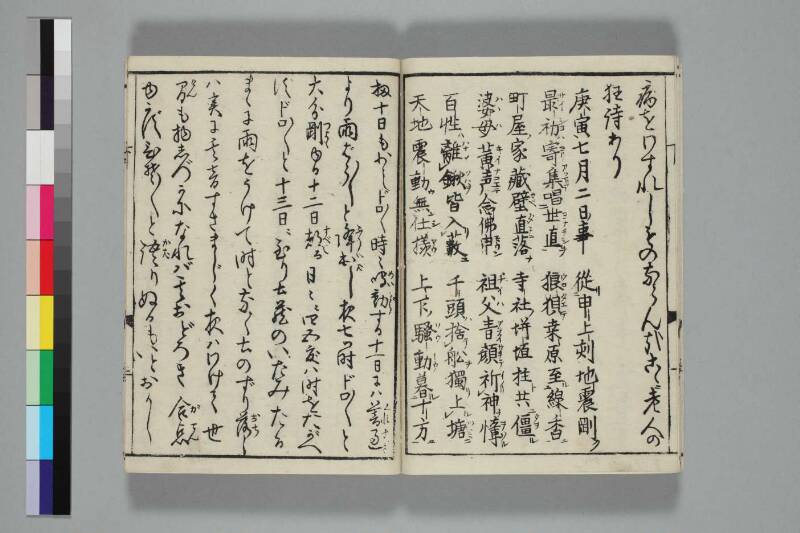
翻刻
病をわすれしものならん哉こゝに老人の
狂詩あり
庚寅七月二日 ̄ノ事 従 ̄リ_二申_ー上_ー刻_一 地ー震剛 ̄ク
最(サイ)初(ショ) ̄ハ寄(ヨ) ̄リ集(アツマリ) ̄テ唱_二世(ヨナ)ー直(ヲシ) ̄ヲ_一 狼(ウロ)ー狽(タエ) ̄テ桑ー原至 ̄ル_二線ー香 ̄ニ_一
町ー屋 ̄ノ家蔵|壁(カベ)直(タヽチ) ̄ニ落 ̄チ 寺ー社 ̄ノ塀ー垣柱 ̄ト共 ̄ニ彊(タヲ) ̄ル
婆(ハゝ)ー母(ハ)黄(キイ) ̄ナー声(コエ) ̄テ念ー仏|申(モウシ) 祖(ヂイ)父(ハ)青(アヲ) ̄イ顔(カヲ) ̄テ祈(イノリ)_レ神 ̄ヲ懼(ヲソル)
百ー性 ̄ハ離(ハナ) ̄レ_レ鍬(クハ) ̄ヲ皆入 ̄リ_レ藪 ̄ニ 千ー頭 ̄ハ捨 ̄テ_レ船 ̄ヲ独 ̄リ上 ̄ル_レ塘(ツヽミ) ̄ニ
天ー地震ー動 ̄ウ無 ̄シ_二仕(シ)様(ヤウ)_一 上ー下 ̄ノ騒(ソウ)ー動(トウ)暮 ̄ル_二 十ー方 ̄ニ_一
扨十日も少しドロ〳〵時々 鳴(メイ)動(ドウ)する十一日には暮(くれ)過(すぎ)
より雨ばら〳〵と降(ふり)出(いだ)し夜七ツ時ドロ〳〵と
大分 剛(つよく)ゆる十二日 都而(すべて)日々ニ四五度は時をたがへ
ずドロ〳〵と十三日に至り土蔵のいたみたる
まゝに雨をうけて時となく土のずり落(おち)し
は実に其音すさまじく夜はわけて世
間(けん)も物しづかになれば其おどろき合(が)点(てん)
ゆかずひそ〳〵と語(かた)りぬるもいとおかし
現代語訳
病を忘れたものであろうか。ここに老人の狂詩がある。
**庚寅七月二日の事、申の上刻より地震激しく**
最初は寄り集まって世直しを唱え、うろたえて「桑原、桑原」と言いながら線香に至る
町屋の家蔵の壁はたちまち落ち、寺社の塀垣は柱とともに倒れる
婆ちゃんは黄色い声で念仏を申し、祖父ちゃんは青い顔で神に祈り恐れる
百姓は鍬を放り出してみな藪に逃げ込み、船頭は船を捨てて独り堤に上がる
天地は震え動き、どうしようもない 上下の騒動は十方に暮れていく
---
さて、十日もしばらくはドロドロと時々鳴動する。十一日には日暮れを過ぎてから雨がぱらぱらと降り出し、夜七つ時(午前0時頃)にドロドロとかなり強く揺れる。十二日、全て毎日四、五度は時を違えずドロドロと揺れる。十三日に至っては、土蔵の傷んだままのところに雨を受けて、時となく土がずり落ちるのは、実にその音が凄まじく、夜は特に世間も物静かになるので、その驚きは合点がいかず、ひそひそと語り合うのもまことにおかしい(おそろしい)ことだ。
英語訳
Perhaps it was one who had forgotten their illness in the shock of it all. Here is a comic Chinese-style poem (kyōshi) composed by an elderly person.
**On the 2nd day of the 7th month of Kōin [1830], from the upper hour of the Monkey [around 4–5 PM], the earthquake struck violently:**
At first people gathered together crying out for the world to be set right; bewildered, they muttered "Kuwabara, kuwabara" and reached for incense sticks,
The walls of townhouse storehouses fell at once; the fences and walls of temples and shrines collapsed together with their pillars,
Grandmothers in shrill voices called out the nenbutsu prayer; grandfathers with pale faces prayed to the gods in fear,
Farmers threw down their hoes and all fled into the thickets; boatmen abandoned their boats and climbed alone up onto the embankments,
Heaven and earth shook and trembled — there was nothing to be done; the commotion of high and low spread in all directions as evening fell.
---
Now, for about ten days thereafter, there were rumbling tremors from time to time. On the 11th day, after dusk, rain began to fall in scattered drops, and around the seventh hour of the night (around midnight), the ground rumbled again with considerable force. On the 12th day, in all, four or five times daily without fail there were rumbling tremors. By the 13th day, the already-damaged earthen storehouses, having been rained upon, shed their soil at all hours with a truly terrible sound. At night especially, as the world grew quiet and still, the shock of these sounds was inexplicable — and the way people whispered to one another about it was quite something indeed.