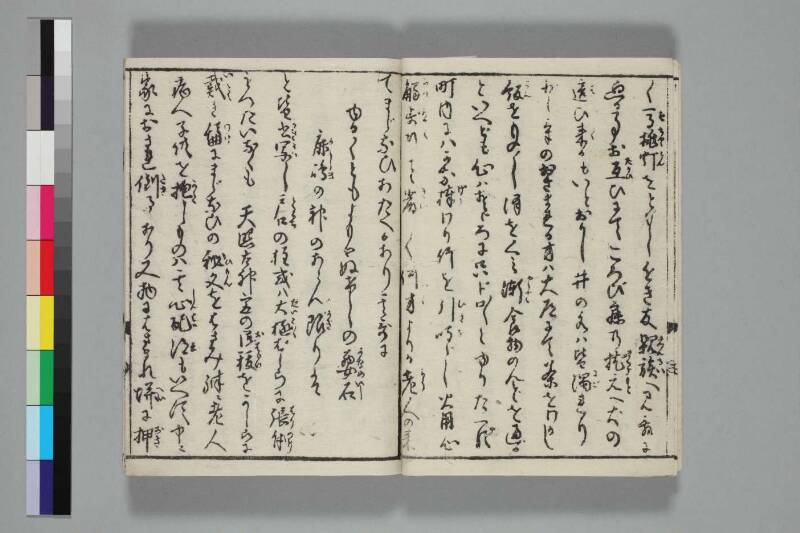
翻刻
く馬(は)挑(ちやう)灯(ちん)をともし近き友(親類|しんるい)へ見舞に
廻る事お互(たかひ)ひにてころび寝の枕(まくら)元(もと)へ犬の
這(は)ひ来(く)るもいとおかし井の水は皆 濁(にご)れり
少し気のおさまれる方は大道にて茶をわかし
飯(はん)をものし酒をくみ漸(やうやく)食物のんどを通る
といへども心はおどろに只ドロ〳〵とゆりたへづ
町内にはかな棒(ばう)けり行を引鳴らし火用心
触歩行(ふれあるく)を厳(きび)しく何方よりか老(らう)人の来
てまじなひあたへるあり其歌に
ゆるくともよもやぬけしの要石(かなめいし)
鹿島(かしま)の神のあらん限(かぎ)りは
と皆 書写(かきうつ)し戸口(とくち)の柱或は大極(たいこく)ばしらに張付(はりつけ)
もつたいなくも 天照大神宮の御祓(おはらい)いをかしらに
戴(いたゝ)き髷(わけ)にまじなひの秘文(ひもん)をはさみ殊に老人
病人子供を抱(かた)しものは其 心配得(しんはいゑ)もいへす中に
家におされ倒(たを)るゝあり又物にはさまれ塀(へい)に押(おさ)
現代語訳
馬挑灯(はちょうちん)を灯して、近くの友人(親類)へ見舞いに回ることもお互いのことであった。ころび寝の枕元へ犬が這い寄ってくるのもまた趣深いことである。井戸の水はすべて濁っていた。少し気持ちの落ち着いた人たちは、大通りで茶を沸かし、食事をし、酒を酌み交わして、ようやく食べ物をのどに通すことができた。といっても、心は乱れたまま、ただドロドロとゆれが絶えることがなかった。町内では拍子木を打ち鳴らしながら火の用心を触れ回ることを厳しく行い、どこからともなく老人が来ては、まじないを授けてくれることもあった。その歌に、
ゆるくとも よもやぬけじの 要石
鹿島の神の あらん限りは
とあり、皆これを書き写して、戸口の柱、あるいは大黒柱に張り付けた。もったいなくも、天照大神宮の御祓いを頭に戴き、髷(まげ)にまじないの秘文をはさんだ。特に、老人・病人・子供を抱えている者は、その心配は言いようがないほどであった。その中には、家の下敷きになって倒れる者もあり、また物に挟まれ、塀に押し……(次ページへ続く)
英語訳
People lit their horse lanterns (bachōchin) and went around to visit nearby friends and relatives to check on their wellbeing — a mutual concern shared by all. It was a peculiarly touching sight to see dogs crawling up to the pillows of those sleeping on the ground. The water in all the wells had turned muddy. Those who had regained a little composure boiled tea in the main road, prepared food, and shared cups of sake, managing at last to get some sustenance down their throats. Even so, their hearts remained unsettled, as the ground continued to rumble and shake without end.
Throughout the neighborhoods, people strictly patrolled the streets, striking clappers to warn of fire hazards. From somewhere or other, an elderly person came and bestowed protective charms upon the people. The charm verse read:
"Though it shakes, surely it will not slip free — the pivot stone,
so long as the god of Kashima endures."
Everyone copied this down and pasted it on the pillars at their doorways or on the central pillar (daikoku-bashira) of their homes. With great reverence, people placed the sacred amulets of the Grand Shrine of Amaterasu upon their heads, and tucked protective secret writings (himon) into their topknots. Those who had elderly people, sick persons, or small children in their care were especially overcome with worry beyond all description. Among them, some were crushed and brought down under collapsed houses, while others were trapped between objects or pressed against walls... (continues on the next page)