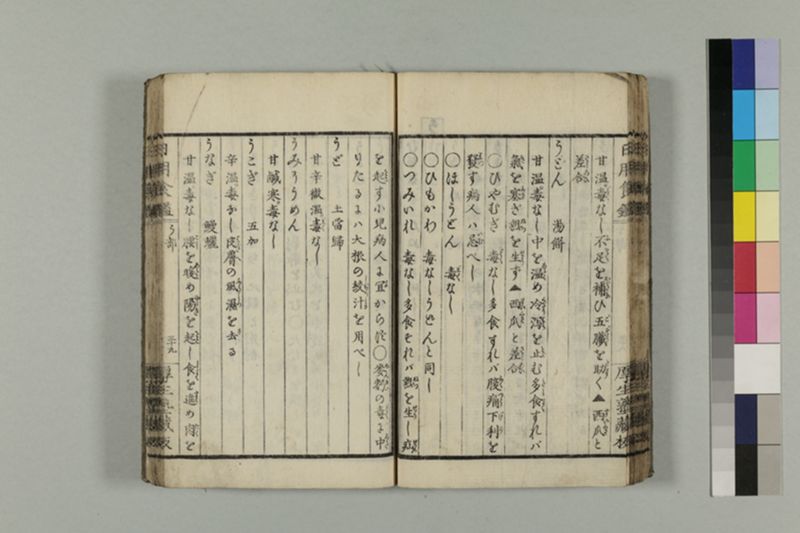
翻刻
【右丁】
甘温。毒(どく)なし不足(ふそく)を補(おぎな)ひ五臓(ごぞう)を助(たす)く▲西瓜(すいくわ)と
差合(さしあい)
うどん 湯餅
甘温。毒なし中を温(あたゝ)め冷瀉(くだりはら)を止(とゞ)む多食(たしよく)すれば
気(き)を塞(ふさ)ぎ熱(ねつ)を生(せう)ず▲西瓜(すいくわ)と差合(さしあい)
○ひやむぎ 毒(どく)なし多食すれば腹痛(ふくつう)下利(げり)を
発(はつ)す病人は忌(いむ)べし
○ほしうどん 毒(どく)なし
○ひもかわ 毒なしうどんと同し
○つみいれ 毒なし多食すれば熱(ねつ)を生(せう)し疝(せん)
【左丁】
を起(をこ)す小児病人に宜(よ)からず○麦麺(めんるい)の毒(どく)に中(あた)
りたるには大根の絞汁(しぼりしる)を用べし
うど 土当帰
甘辛微温。毒(どく)なし
うみにうめん
甘鹹寒。毒なし
うこぎ 五加
辛温。毒なし皮膚(はだへ)の風湿(ふうしつ)を去(さ)る
うなぎ 鰻鱺
甘温。毒なし腰(こし)を暖(あたゝ)め陽(やうき)を起(をこ)し食(しよく)を進(すゝ)め肉(にく)を
現代語訳
【右丁】
甘温。毒なし。不足を補い五臓を助ける。▲西瓜と食い合わせ注意
うどん 湯餅
甘温。毒なし。体の中を温め、冷えによる下痢を止める。多食すれば気を塞ぎ熱を生じる。▲西瓜と食い合わせ注意
○ひやむぎ 毒なし。多食すれば腹痛・下痢を起こす。病人は避けるべし
○ほしうどん 毒なし
○ひもかわ 毒なし。うどんと同じ
○つみいれ 毒なし。多食すれば熱を生じ、疝気
【左丁】
を起こす。小児・病人によくない。○麦麺類の毒に中毒したときは大根の絞り汁を用いるべし
うど 土当帰
甘辛微温。毒なし
うみにうめん
甘鹹寒。毒なし
うこぎ 五加
辛温。毒なし。皮膚の風湿を去る
うなぎ 鰻鱺
甘温。毒なし。腰を暖め、陽気を起こし、食欲を進め、肉を
英語訳
【Right page】
Sweet and warm. Non-toxic. Supplements deficiencies and assists the five organs. ▲Incompatible with watermelon
Udon (wheat noodles) Tang bing
Sweet and warm. Non-toxic. Warms the interior and stops cold-type diarrhea. Excessive consumption blocks qi and generates heat. ▲Incompatible with watermelon
○Hiyamugi (thin wheat noodles) Non-toxic. Excessive consumption causes abdominal pain and diarrhea. Sick people should avoid
○Hoshiudon (dried udon) Non-toxic
○Himokawa (flat wheat noodles) Non-toxic. Same as udon
○Tsumiire (hand-torn noodles) Non-toxic. Excessive consumption generates heat and causes hernia
【Left page】
disorders. Not suitable for children and sick people. ○For poisoning from wheat noodles, use squeezed daikon radish juice
Udo (Japanese spikenard) Tu dang gui
Sweet, pungent, and slightly warm. Non-toxic
Umi ni umen (sea wheat noodles)
Sweet, salty, and cold. Non-toxic
Ukogi (five-leaf aralia) Wu jia
Pungent and warm. Non-toxic. Removes wind-dampness from the skin
Unagi (eel) Man li
Sweet and warm. Non-toxic. Warms the lower back, stimulates yang qi, promotes appetite, and strengthens flesh