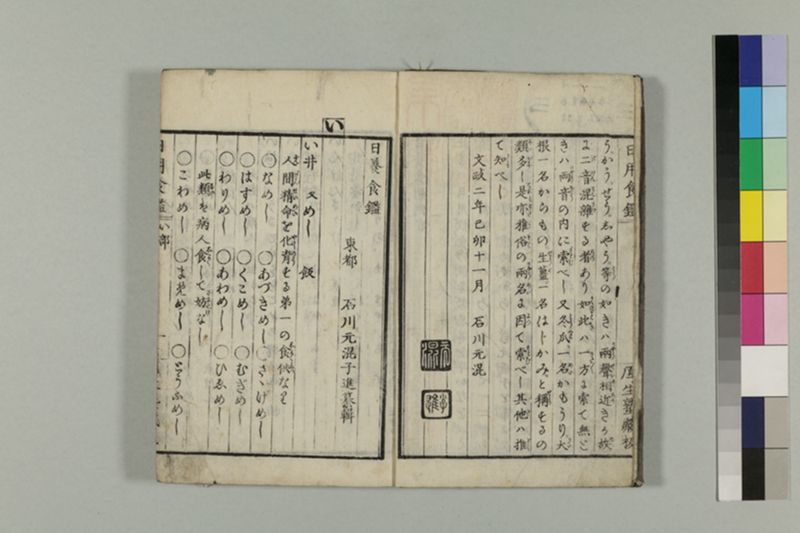
翻刻
【右丁】
う。かう。せう。しやう。等(とう)の如きは両声(りやうせい)《振り仮名:相近|あ■ちか》きか故(ゆへ)
に二音(にいん)混雑(こんざつ)する者(もの)あり如此(かくのごとき)は一方(かた〳〵)に索て無と
きは両音(りやうほう)の内に索(もとむ)べし又 冬瓜(とうぐわ)。一 名(めい)かもうり。大(だい)
根一名からもの。生薑(せうが)。一名はじかみ。と称(せう)するの
類(るい)多(おほ)し是亦(これもまた)雅俗(がぞく)の両名(りやうめい)に因(よつ)て索(もとむ)べし其 他(た)は推(をし)
て知(しる)べし
文政二年己卯十一月 石川元混
【陰刻印】#2【陽刻印】#3
【左丁】
日養食鑑
東都 石川元混子進纂輯
[い]【欄外上部に見出しとして四角囲みで】
いゐ 《割書:又》めし 飯
人間(にんげん)精命(せいめい)を化育(やしのう)する弟#1一の食供(しよくもつ)なり
○なめし ○あづきめし ○さゝげめし
○はすめし ○くこめし ○むぎめし
○わりめし ○あわめし ○ひゑめし
此 類(るい)は病人 食(しよく)して妨(さまたげ)なし
○こわめし ○まめめし ○とうふめし
現代語訳
【右丁】
う・かう・せう・しやうなどのように両音が相近いため
に二つの音が混同される場合がある。このような場合は一方で探して無い
ときは両方の音で探すべきである。また冬瓜、一名かもうり、大
根一名からもの、生姜、一名はじかみと称する
類が多い。これもまた雅語と俗語の両方の名前によって探すべきである。その他は推し
て知るべきである。
文政二年己卯十一月 石川元混
【陰刻印】【陽刻印】
【左丁】
日養食鑑
江戸 石川元混子進編集
[い]【欄外上部に見出しとして四角囲みで】
いい またの名 めし 飯
人間の生命を養い育てる第一の食べ物である
○軟らかい飯 ○小豆飯 ○ささげ飯
○蓮飯 ○くこ飯 ○麦飯
○割り飯 ○粟飯 ○稗飯
この類は病人が食べても差し支えない
○こわ飯 ○豆飯 ○豆腐飯
英語訳
【Right page】
In cases where double sounds like "u・kou・seu・syau" etc. are phonetically similar,
there are instances where the two sounds become confused. In such cases, if one cannot find it under one reading,
one should search under both pronunciations. Also, winter melon (tougan), also called kamouri; daikon radish,
also called karamono; ginger (shouga), also called hajikami - there are
many such cases. These should also be searched under both the formal and colloquial names. Other cases can be inferred
from these examples.
Bunsei 2, year of the Earth Rabbit, 11th month Ishikawa Genkon
【Intaglio seal】【Relief seal】
【Left page】
Mirror of Daily Nourishing Foods
Edo Compiled by Ishikawa Genkon Shishin
[I]【Framed heading in upper margin】
ii also called meshi Rice
This is the primary food that nourishes and sustains human life
○Soft rice ○Red bean rice ○Black-eyed pea rice
○Lotus rice ○Lycium rice ○Barley rice
○Cracked rice ○Millet rice ○Barnyard millet rice
These types cause no harm when consumed by sick people
○Hard rice ○Bean rice ○Tofu rice