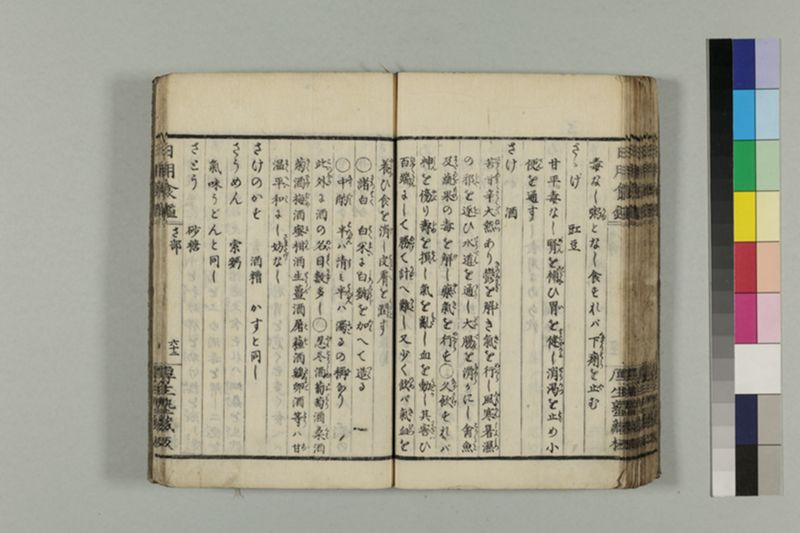
翻刻
【右丁】
毒なし粥(かゆ)となし食すれば下痢(くだりはら)を止(や)む
さゝげ 豇豆
甘平。毒なし腎(ぢん)を補(おぎな)ひ胃(い)を健(すこやかに)し消渇(せうかつ)を止(とゞ)め小
便(べん)を通す
さけ 酒
苦甘辛(にがくあまくからく)大熱(だいねつ)あり鬱(きのふさぎ)を解(と)き気(き)を行(めぐら)し風寒(ふうかん)暑湿(しよしつ)
の邪(じや)を逐(を)ひ水道(せうべん)を通(つう)し大腸(だいべん)を滑(なめら)かにし禽魚(とりうを)
及(また)蔬果(あをもの)の毒を解(け)し薬気(やくき)を行(めぐら)す○久飲(ながさけ)すれば
神(しん)を傷(やぶ)り寿(じゆ)を損(そん)し気を乱(みだ)し血を動(うごか)し其 害(わざは)ひ
百端(ひやくたん)にして勝(あげ)て計(かぞ)へ難(かた)し又少く飲(のめ)ば気血(きけつ)を
【左丁】
養(やしな)ひ食を消(け)し皮膚(はだへ)を潤(うるを)す
○諸白(もろはく) 白米(はくまい)に白麹(しろこうじ)を加(くわ)へて造(つく)る
○中酌(なかくみ) 半(はんぶん)は清(す)み半(はんぶん)は濁(にご)るの称(な)なり
此外(このほか)に酒の名目(めいもく)数(かず)多し○忍冬酒(にんとうしゆ)葡萄酒(ぶどう )桑酒(くわ )
菊酒(きくさけ)梅酒(むめ )蜜柑酒(みかん ) 生薑酒(せうが )屠蘇酒(とそ )鶏卵酒(たまご )等(とう)は甘(あ)
温(まく)平和(へいわ)にし妨(さまたげ)なし
さけのかす 酒糟 かすと同し
さうめん 索麪
気味うどんと同し
さとう 砂糖
現代語訳
【右丁】
毒なし。粥にして食べれば下痢を止める。
ささげ 豇豆
甘平。毒なし。腎を補い、胃を健やかにし、消渇を止め、小便を通す。
さけ(酒) 酒
苦甘辛にして大熱あり。気の塞ぎを解き、気を巡らし、風寒・暑湿の邪気を追い払い、小便を通し、大便を滑らかにし、鳥・魚および野菜・果物の毒を解し、薬気を巡らす。○長く飲み続ければ、精神を傷つけ、寿命を縮め、気を乱し、血を動かし、その害は百通りにも及び、数え切れない。また少量飲めば、気血を
【左丁】
養い、食物を消化し、皮膚を潤す。
○諸白(もろはく) 白米に白麹を加えて造る酒のこと。
○中汲み(なかくみ) 半分は澄み、半分は濁る酒の称である。
この他にも酒の種類は数多くある。○忍冬酒・葡萄酒・桑酒・菊酒・梅酒・蜜柑酒・生姜酒・屠蘇酒・卵酒などは、甘く温かで平和であり、害がない。
さけのかす 酒糟 (糟と同じ)
そうめん 索麪
気味はうどんと同じ。
さとう 砂糖
英語訳
【Right Page】
Non-toxic. When made into porridge and eaten, it stops diarrhea.
Cowpea (sasage) - Vigna unguiculata
Sweet and neutral in nature. Non-toxic. Supplements the kidneys, strengthens the stomach, relieves excessive thirst (diabetes-like symptoms), and promotes urination.
Sake (alcoholic beverage) - Sake/Wine
Bitter, sweet, and spicy in flavor, with great warming properties. Relieves melancholy, circulates vital energy (ki), expels pathogenic influences of wind-cold and summer heat-dampness, promotes urination, lubricates the bowels, neutralizes toxins from birds, fish, vegetables, and fruits, and circulates medicinal properties. ○If consumed over a long period, it damages the spirit, shortens one's lifespan, disturbs the vital energy, agitates the blood — its harms are manifold and impossible to enumerate. However, consumed in small amounts, it nourishes vital energy and blood,
【Left Page】
aids digestion of food, and moistens the skin.
○Morohaku — A sake brewed by adding white koji mold to white rice.
○Nakakumi — A term for sake that is half clear and half cloudy.
Beyond these, there are many other varieties of sake. ○Nindō-shu (honeysuckle wine), budō-shu (grape wine), kuwa-shu (mulberry wine), kiku-sake (chrysanthemum wine), ume-shu (plum wine), mikan-shu (mandarin orange wine), shōga-shu (ginger wine), toso-shu (spiced New Year's wine), and tamago-shu (egg wine) are all sweet, warm, and mild in nature, and pose no harm.
Sake lees (sake no kasu) - Sake dregs (same as kasu/lees)
Sōmen (thin wheat noodles) - Thin wheat noodles
Same properties and flavor as udon noodles.
Sugar (satō) - Granulated sugar