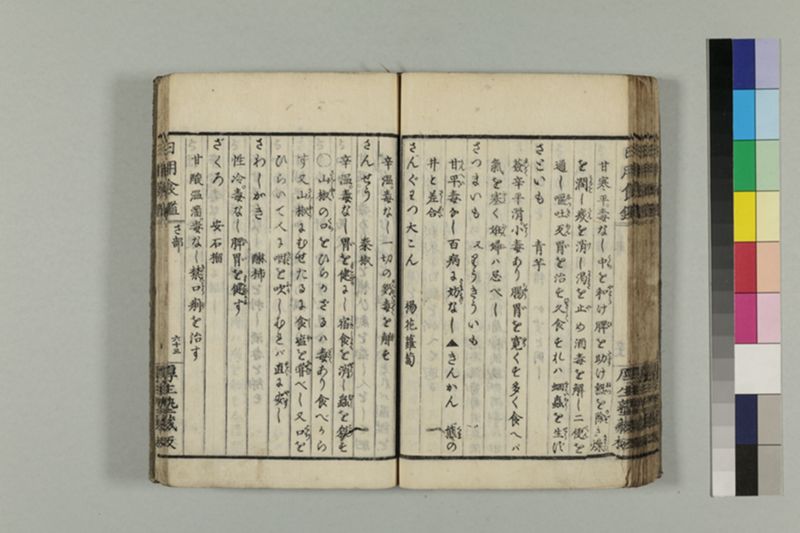
翻刻
【右丁】
甘寒平。毒なし中(うち)を和(やわら)け脾(ひ)を助(たす)け熱(ねつ)を除(のぞ)き燥(かわく)
を潤(うるを)し痰(たん)を消(け)し渇(かわき)を止(や)め酒毒を解し二 便(べん)を
通し嘔吐(ゑつき)反胃(ほんい)を治す久(ひさしく)食すれは蛔虫(くわいちう)を生(せう)ず
さといも 青芋
薟(ゑごく)辛平滑。小(せう)毒あり腸胃(ちやうい)を寛(ゆる)くす多く食へば
気を塞(ふさ)く妊婦(にんふ)は忌べし
さつまいも 《割書:又|》りうきういも
甘平(かんへい)。毒なし百病に妨(さまたげ)なし▲きんかん 熊(くま)の
ゐと差合(さしあい)
さんぐわつ大こん 楊花蘿蔔
【左丁】
辛温。毒なし一切の麪毒(めんるいのどく)を解(け)す
さんせう 秦椒
辛温。毒なし胃(い)を健(すこやか)にし宿食(しきしよく)を消(せう)し虫(むし)を殺(ころ)す
○山椒(さんしやう)の口(くち)をひらかざるは毒(どく)あり食べから
ず又 山椒(さんしやう)にむせたるに食塩(しほ)を嘗(なむ)べし又 口(くち)を
ひらいて人に咽(のど)を吹(ふか)しむれば直(すぐ)に安(やす)し
さわしかき 醂柿
性冷。毒なし脾胃(ひい)を健(すこやかに)す
ざくろ 安石榴
甘酸温濇。毒なし禁口痢(きんこうり)を治す
現代語訳
【右丁】
甘く寒平。毒なし。体内を和らげ、脾を助け、熱を除き、乾燥を潤し、痰を消し、渇きを止め、酒毒を解し、大小便を通し、嘔吐・反胃(胃の逆流)を治す。長く食べ続ければ回虫を生じる。
さといも 青芋(タロイモ)
えぐく辛く平滑。小毒あり。腸胃を緩やかにする。多く食べれば気を塞ぐ。妊婦は避けるべし。
さつまいも (別名:琉球いも)
甘平。毒なし。百病に差し障りなし。▲きんかん(金柑)は熊の胃と食い合わせが悪い。
さんがつだいこん 楊花蘿蔔(春大根)
【左丁】
辛温。毒なし。一切の麪類の毒を解す。
さんしょう 秦椒(サンショウ)
辛温。毒なし。胃を健やかにし、宿食(消化されずに滞った食物)を消化し、虫を殺す。
○山椒の口を開かないものは毒があるので食べてはならない。また、山椒でむせた時には食塩を舐めるとよい。また、口を開いた山椒を人の喉に吹きかければ、すぐに楽になる。
さわしがき 醂柿(さわしがき・渋抜き柿)
性冷。毒なし。脾胃を健やかにする。
ざくろ 安石榴(ザクロ)
甘酸っぱく温渋。毒なし。禁口痢(口を開けられないほどの重い赤痢様症状)を治す。
英語訳
【Right Page】
Sweet and cold-neutral in nature. Non-toxic. It harmonizes the interior of the body, aids the spleen, removes heat, moistens dryness, dissolves phlegm, stops thirst, counteracts alcohol toxicity, promotes both urination and defecation, and treats nausea and regurgitation. However, consuming it over a long period may give rise to roundworms.
Taro (satoimo) - Colocasia esculenta
Acrid, pungent, neutral, and smooth in nature. Mildly toxic. It relaxes the intestines and stomach. Eating too much will obstruct the qi. Pregnant women should avoid it.
Sweet potato (satsumaimo) - Also known as Ryūkyū potato
Sweet and neutral. Non-toxic. Causes no harm with any of the hundred diseases. ▲ However, kumquat (kinkan) has an incompatible interaction with bear stomach (熊の胃).
Spring radish (sangwatsu daikon) - Yanghua luobo (spring/March radish)
【Left Page】
Pungent and warm. Non-toxic. It counteracts all toxins from noodle-based foods.
Japanese pepper (sanshō) - Zanthoxylum piperitum
Pungent and warm. Non-toxic. It strengthens the stomach, aids in digesting undigested food that has stagnated, and kills intestinal worms.
○ Japanese pepper berries that have not opened at the seam are toxic and must not be eaten. Also, when one chokes on Japanese pepper, one should lick some salt. Furthermore, if an opened Japanese pepper berry is blown into a person's throat, the discomfort will immediately subside.
Astringency-removed persimmon (sawashigaki) - Rin-gaki
Cool in nature. Non-toxic. It strengthens the spleen and stomach.
Pomegranate (zakuro) - Punica granatum
Sweet, sour, warm, and astringent in nature. Non-toxic. It treats dysentery with lockjaw (kinkoori — a severe form of dysentery accompanied by inability to open the mouth).