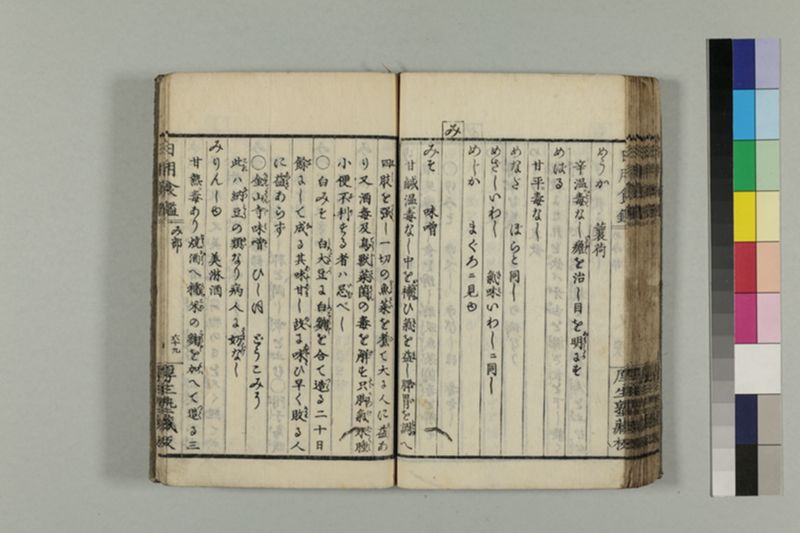
翻刻
【右丁】
めうが 蘘荷
辛温。毒(どく)なし瘧(ぎやく)を治し目を明(あきらか)にす
めばる
甘平。毒なし
めなだ ぼらと同し
めざしいわし 気味(きみ)いわしに同し
めじか まぐろに見ゆ
[み]【欄外上部に見出しとして四角囲みで】
みそ 味噌
甘鹹温。毒なし中を補(おぎな)ひ気(き)を益(ま)し脾胃(ひい)を調(とゝの)へ
【左丁】
四肢(しし)を強(つよく)し一切の魚菜(ぎよさい)を煮(に)て大に人に益(ゑき)あ
り又酒毒及 鳥獣(てうじう)菜菌(さいきん)の毒を解(け)す只(たゞ)脚気(かつけ)水腫(むくみ)
小便 不利(ふり)する者は忌(いむ)べし
○白みそ 白大豆(しろだいづ)に白麹(しろこうじ)を合て造(つく)る二十日
余(よ)にして成(な)る其 味(あじ)甘(あま)し故(ゆへ)に味(あじわ)ひ早く敗(かわ)る人
に益(ゑき)あらず
○金山寺味噌(きんざんじみそ) ひしほ どうこみそ
此(これ)は納豆(なつとう)の類(るい)なり病人に妨(さまたげ)なし
みりんしゆ 美淋酒
甘熱。毒あり焼酒(せうちう)へ糯米(もちこめ)の麹(こうじ)を加(くは)へて造(つく)る三
現代語訳
【右丁】
みょうが(茗荷) 蘘荷(じょうか)
辛く温。毒なし。瘧(おこり)を治し、目を明らかにする。
めばる(眼張)
甘く平。毒なし。
めなだ ぼら(鯔)の項目を参照のこと。
めざしいわし(目刺し鰯) 気味(きみ)はいわし(鰯)に同じ。
めじか(目近・雌鹿) まぐろ(鮪)の項目を参照のこと。
〔み〕【欄外上部の見出し】
みそ(味噌) 味噌(みそ)
甘く塩辛く温。毒なし。体の中枢を補い、気を増し、脾と胃を整え、
【左丁】
四肢を強くし、あらゆる魚や野菜を煮て、大いに人の益となる。また酒の毒およびとり・けもの・野菜・きのこの毒を解する。ただし脚気・水腫(むくみ)・小便の通りが悪い者は慎むべし。
○白みそ(白味噌) 白大豆に白麹を合わせて造る。二十日余りで出来上がる。その味は甘い。ゆえに味わいは早く劣化する。人の益にならない。
○金山寺味噌(きんざんじみそ)・ひしほ(醤)・どうこみそ(胴壺味噌)
これらは納豆の類いである。病人に差し支えなし。
みりんしゅ(味醂酒) 美淋酒(びりんしゅ)
甘く熱。毒あり。焼酎に糯米(もち米)の麹を加えて造る。三…(次頁に続く)
英語訳
【Right Page】
Myōga (Japanese ginger; Zingiber mioga) - Ránghé
Spicy and warm. Non-toxic. It treats malaria/intermittent fevers (okori) and brightens the eyes.
Mebaru (rockfish; Sebastes spp.)
Sweet and neutral. Non-toxic.
Menada (striped mullet) — See the entry for bora (mullet).
Mezashi iwashi (skewered and dried sardines) — The flavor and properties are the same as iwashi (sardines).
Mejika (young bluefin tuna / female deer) — See the entry for maguro (tuna).
[Mi] 【Heading in a box at the top margin】
Miso (fermented soybean paste) - Wèizēng
Sweet, salty, and warm. Non-toxic. It tonifies the body's center, increases qi, regulates the spleen and stomach,
【Left Page】
strengthens the four limbs, and when used to cook all manner of fish and vegetables, is of great benefit to people. Furthermore, it neutralizes the toxic effects of alcohol and the poisons of birds, beasts, vegetables, and mushrooms. However, those suffering from beriberi, edema (swelling), or poor urination should avoid it.
○ White miso (shiro miso) — Made by combining white soybeans with white kōji (mold culture). It is ready in just over twenty days. Its flavor is sweet, and for that reason, it deteriorates quickly in taste. It is not of particular benefit to people.
○ Kinzanji miso, hishio (a fermented condiment similar to soy sauce paste), and dōko miso (barrel-aged miso)
These belong to the same category as nattō (fermented soybeans). They are safe for sick people.
Mirin (sweet cooking sake) - Bilin-shū (sweet rice liquor)
Sweet and hot. Toxic. It is made by adding kōji made from glutinous rice (mochi rice) to shōchū (distilled spirits). Three… (continues on next page)