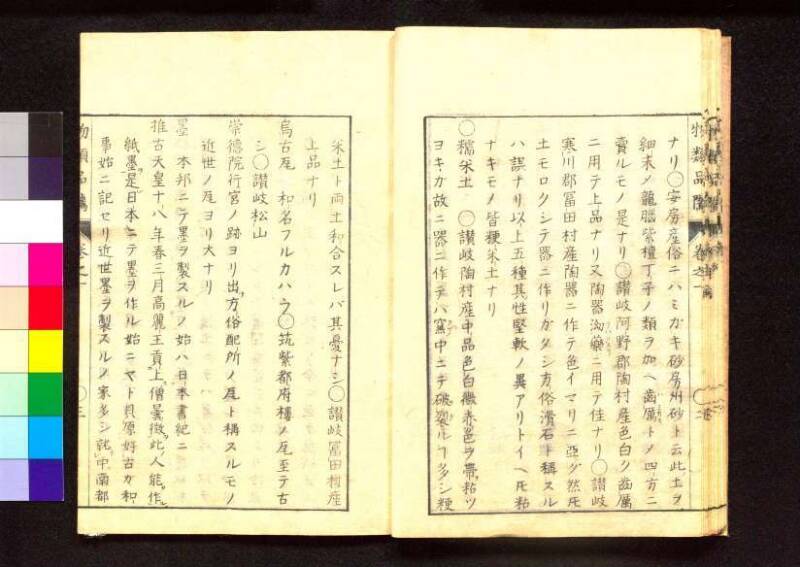
翻刻
【柱】物類品隲 巻之一 ○二
ナリ○安房産俗ニハミガキ砂房州砂ト云此 ̄ノ土ヲ
細-末シテ龍-脳紫檀丁-子ノ類ヲ加ヘ《振り仮名:歯-厲|ハミガキ》トシテ四-方ニ
売ルモノ是ナリ○讃岐阿-野郡陶-村産色白ク歯-厲
ニ用テ上-品ナリ又 陶-器 《振り仮名:泑-薬|ウハクスリ》ニ用テ佳ナリ○讃岐
寒-川郡富-田村産陶-器ニ作テ色イマリニ亞グ然トモ
土モロクシテ器ニ作リカタシ方-俗滑-石ト称スル
ハ誤ナリ以-上五-種其種其 ̄ノ性堅軟ノ異アリトイヘトイヘトモ粘
ナキモノ皆粳-米-土ナリ
○糯米土 ○讃岐陶-村産中-品色-白微-赤-色ヲ帯 ̄フ粘ツ
ヨキガ故ニ器ニ作テハ窯(カマノ)中ニテ《振り仮名:破-裂|サク》ルコト多シ粳
米土ト両土和-合スレバ其憂ナシ○讃岐冨-田村産
上品ナリ
烏古尾 和-名フルカハラ○筑紫都-府楼ノ瓦至テ古
シ○讃岐松-山
崇徳院行-宮ノ跡ヨリ出 ̄ツ方-俗配-所ノ瓦ト称スルモノ
近世ノ瓦ヨリ大ナリ
墨 本邦ニテ墨ヲ製スルノ始ハ日-本書-紀ニ
推古天皇十-八年春三-月高-麗-王貢_二-上 ̄ス僧曇徴 ̄ヲ_一此 ̄ノ人能 ̄ク作 ̄ル_二
紙-墨 ̄ヲ_一是 ̄レ墨ヲ作ル始ニヤト貝-原好-古ガ和-
事始ニ記セリ近-世墨ヲ製スルノ家多シ就 ̄テ_レ 中 ̄ニ南都
【柱】物類品隲 巻之一 ○三
現代語訳
【柱】物類品隲 巻之一 ○二
である。○安房産は俗にハミガキ砂、房州砂という。この土を細末にして龍脳・紫檀・丁子の類を加え、歯磨きとして四方に売るものがこれである。○讃岐阿野郡陶村産は色が白く、歯磨きに用いて上品である。また陶器の上薬に用いて良い。○讃岐寒川郡富田村産は陶器に作って色が伊万里に次ぐ。しかし土がもろくて器に作るのが難しい。地方の俗に滑石と称するのは誤りである。以上五種はその種類によってその性質に堅軟の違いがあるといっても、粘りのないものは皆粳米土である。
○糯米土 ○讃岐陶村産は中品で、色は白く微赤色を帯びる。粘りが良いため器に作ると窯の中で割れることが多い。粳米土と両土を混合すればその心配はない。○讃岐富田村産は上品である。
古瓦 和名はフルカワラ。○筑紫都府楼の瓦は至って古い。○讃岐松山の崇徳院行宮の跡より出る。地方の俗に配所の瓦と称するものは、近世の瓦より大きい。
墨 本邦にて墨を製造する始まりは、『日本書紀』に「推古天皇十八年春三月、高麗王が僧曇徴を貢上す。この人は紙墨を作ることができる」とある。これが墨を作る始まりかと貝原好古が『和事始』に記している。近世、墨を製造する家は多い。その中でも南都
【柱】物類品隲 巻之一 ○三
英語訳
【Header】Classification of Natural Products Volume One ○2
○The product from Awa province is commonly called tooth-polishing sand or Bōshū sand. This earth is ground into fine powder, mixed with camphor, red sandalwood, cloves and the like, and sold throughout the land as tooth powder. ○The product from Tō village in Ano district, Sanuki is white in color and of superior quality when used for tooth cleaning. It is also excellent when used as glaze for pottery. ○The product from Tomita village in Samukawa district, Sanuki, when made into pottery, has a color second only to Imari. However, the clay is brittle and difficult to work into vessels. The local custom of calling it talc is erroneous. Although the above five varieties differ in hardness and softness according to their type, those without adhesiveness are all glutinous rice earth.
○Non-glutinous rice earth ○The product from Tō village, Sanuki is medium grade, white in color with a slight reddish tinge. Because it has good adhesiveness, vessels often crack in the kiln. If mixed with glutinous rice earth, there is no such concern. ○The product from Tomita village, Sanuki is superior grade.
Ancient roof tiles The Japanese name is Furukawara. ○The tiles from Dazaifu in Chikushi are extremely ancient. ○Those that emerge from the ruins of Emperor Sutoku's temporary palace at Matsuyama in Sanuki. What the locals call "tiles from the place of exile" are larger than modern tiles.
Ink The beginning of ink manufacturing in our country is recorded in the Nihon Shoki: "In the 18th year of Empress Suiko, spring, third month, the King of Koguryeo presented the monk Donchō. This person was skilled at making paper and ink." Kaibara Ekiken recorded in his "Waji Hajime" that this may have been the beginning of ink making. In recent times, there are many households that manufacture ink. Among them, Nanto
【Header】Classification of Natural Products Volume One ○3