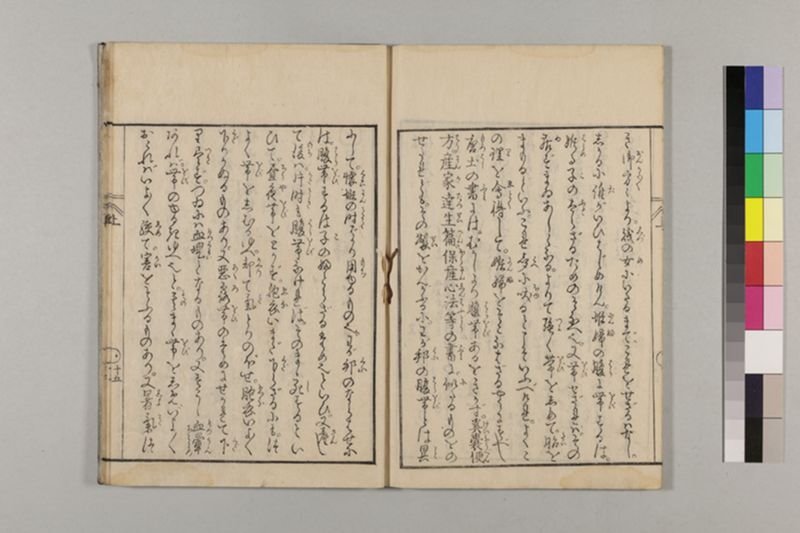
翻刻
【右丁】
き御方々(おんかた〳〵)より。賎(しづ)の女(め)にいたるまで。これをせざるはなし。
しかるに誰(た)がいひはじめけん。妊婦(にんふ)の腹(はら)に帯(をび)するは。
妊(はらめ)る子(こ)の太(ふと)らざるためのそなへ也。又 帯(をび)せざれは。その
居(ゐ)ずまゐあしくなる。よりて強(つよ)く帯(をび)をしめて。胎(たい)を
まもるといふ。これ声(こへ)に吠(ほゆ)るとこそいふべけれ。よくこ
の理(り)を会得(ゑとく)して。妊婦(にんふ)をそこなはざるやうにすべし
唐土(もろこし)の書(ふみ)には。むかしより腹帯(はらをび)あるをきかず。奚嚢便(けいなうべん)
方(はう)。産家達生篇(さんかたつせいへん)。保産心法(ほうさんしんはふ)等(とう)の書(ふみ)に。似(に)たるものをの
せたれども。その製(せい)をかんがふるに。わが邦(くに)の腹帯(はらをび)とは異(こと)
【左丁】
にして。懐妊(くわいにん)の時(とき)ばかり用(もち)ゆるもの也。わが邦(くに)のならはせに
は。腹帯(はらをび)するは子(こ)のふとらざるため也といひ。又 産(さん)し
て後(のち)は。片時(かたとき)も腹帯(はらをび)なければ。そのまゝ死(し)するとい
ひて。昼夜(ちうや)帯(をび)をとかず。胞衣(ゑな)いまだ下(くだ)らざるにも。つ
よく帯(をび)をしむるゆへ。却(かへり)て気(き)とりのぼせ【注】。胞衣(ゑな)いよ〳〵
下(くだ)りかぬるものあり。又 悪露(あくろ)帯(をび)のためにせかれて下(くだ)
り尽(つき)ず。つゐには血塊(けつくわい)となるものあり。又すこし血暈(けつうん)【左ルビ:ちこゝろ】
あれば。帯(をび)のゆるきゆへ也と。其(その)まゝ帯(をび)をしめ。いよ〳〵
おこればいよ〳〵絞(しめ)て。害(かい)をそふるものあり。又 暑気(しよき)つ
【注 「とり」は接頭語。≪多く「気を取りのぼす」の形で≫分別を失わせる。】
現代語訳
【右丁】
高貴な御方々から、身分の低い女性に至るまで、これをしないということはない。
しかるに誰が言い始めたのであろうか。妊婦の腹に帯をするのは、
妊娠している子が太らないようにするための備えである、また帯をしなければ、その
姿勢が悪くなる、よって強く帯を締めて、胎児を
守るという。これこそ「声に反応して吠える」というべきであろう。よくこの
道理を理解して、妊婦を害さないようにすべきである。
中国の書物には、昔から腹帯があるということを聞かない。『奚嚢便
方』『産家達生篇』『保産心法』等の書物に、似たような
ものを載せているけれども、その作りを考えるに、わが国の腹帯とは異なって
【左丁】
おり、妊娠の時だけ用いるものである。わが国の習慣では、
腹帯をするのは子が太らないようにするためであるといい、また出産
した後は、少しの間も腹帯がなければ、そのまま死ぬと
いって、昼夜帯を解かない。胞衣がまだ下りないのにも、強
く帯を締めるため、かえって気が上って混乱し、胞衣がますます
下りにくくなることがある。また悪露が帯のために妨げられて下り
きらず、ついには血の塊となることがある。また少し血暈(めまい)
があれば、帯が緩いためであるとして、そのまま帯を締め、ますます
症状が起これば、ますます絞めて、害を増すことがある。また暑気に当たって
英語訳
【Right page】
From noble ladies down to women of low status, there is no one who does not do this.
But who began saying this? That pregnant women wear sashes around their bellies
to prevent the unborn child from growing too large, and also that without the sash,
their posture becomes poor, so they tightly bind the sash to
protect the fetus. This is exactly what should be called "barking at the sound." One should well
understand this principle and avoid harming pregnant women.
In Chinese books, we do not hear of belly bands from ancient times. In books such as "Keinō Benpō"
(Portable Prescriptions), "Sanka Tassei-hen" (Obstetrics for Successful Birth), "Hōsan Shinpō" (Mental Methods for Safe Birth) and others, similar
items are mentioned, but considering their construction, they differ from our country's belly bands
【Left page】
and are used only during pregnancy. According to our country's customs,
belly bands are worn to prevent the child from growing too large, and after giving birth,
if there is no belly band even for a moment, the woman will die immediately,
so they keep the sash tied day and night. Even when the placenta has not yet descended, they
tightly bind the sash, which instead causes qi to rise and create confusion, making the placenta even more
difficult to descend. Also, lochia is obstructed by the sash and does not
discharge completely, eventually forming blood clots. When there is even slight blood dizziness,
they say it is because the sash is loose, so they tighten it as is, and when symptoms
worsen, they tighten it even more, adding to the harm. Also, when affected by summer heat