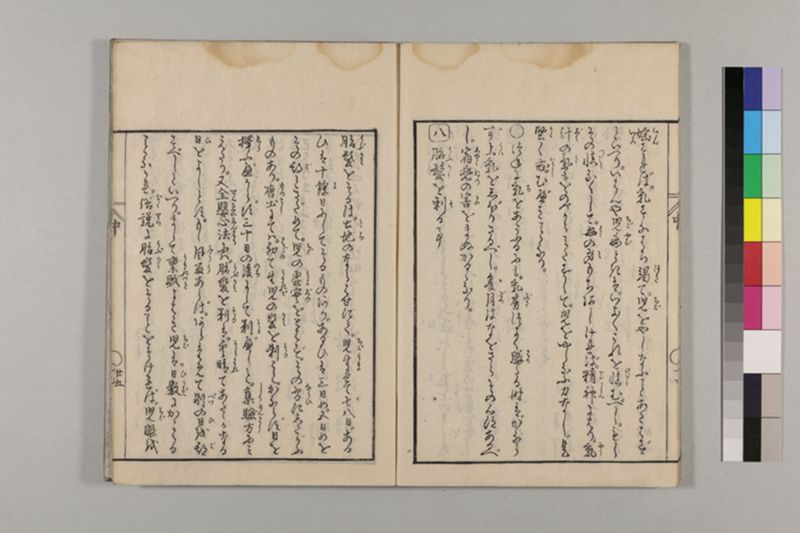
翻刻
【右丁】
淫(いん)【左ルビ:いろ】すれば。乳すなはち竭(つき)て。児(ちご)をやしなふことあたはず
といへり。いはんや児(ちご)病(やむ)ときは。いよ〳〵これを慎(つゝし)むべし。もし
その慎(つゝしみ)なくして。母(はゝ)の身(み)もちあしければ。精神(せいしん)よはり。乳(にう)
汁(じう)の気(き)もをのづからみたずして。児をやしなふ力なし。是
堅(かた)く戒(いまし)むべきことなり。
○つねに乳(ち)をあたふるにも。乳 房(ぶさ)つよく張(はり)たる時は。かなら
ず上(うは)乳をしぼりさるべし。夏月(かげつ)はなをさらその心得あるべ
し。宿熱(しゆくねつ)の害(かい)をまぬかるゝなり。
八【四角で囲む】胎髪(うぶかみ)を剃(そ)【刺は誤記】る事
【左丁】
胎髪(うぶかみ)をそるは。土地(とち)のならはせにて。児(ちご)生(うま)れて七八日。ある
ひは十 余(よ)日にしてそるものあり。あるひは三日め。五日めを
その期(ご)とさだめて。児(ちご)の虚実(きよじつ)をとはず。その習(ならひ)にしたがふ
ものあり。唐土(もろこし)にては。初(はじめ)て生児(うまれご)の髪(かみ)を剃(そる)こと。かならず日を
択(ゑら)ふべからず三十日の後(のち)にして剃(そる)べしと。集験方(しうけんはう)にみ
えたり。又 全嬰心法(せんゑいしんはう)には。胎髪(うぶかみ)を剃(そる)は。空(そら)晴(はれ)てあたゝかなる
日(ひ)をよしとす。もし風雨(ふうう)あらば。あらためて別(べつ)の日(ひ)を期(ご)
すべしといへり。まして稟賦(うまれつき)よはき児(ちご)は。日数(ひかず)にかゝはる
ことなかれ。俗説(ぞくせつ)に胎髪(うぶかみ)をそることをそければ。児(ちご)眼を
現代語訳
【右丁】
淫らな行為をすれば、乳はたちまち枯れて、児を養うことができなく
なるという。まして児が病気の時は、いよいよこれを慎むべきである。もし
その慎みがなくて、母の身体の調子が悪ければ、精神が弱り、乳汁
の気も自然と満たされずして、児を養う力がない。これは
堅く戒めるべきことである。
○常に乳を与える際も、乳房が強く張った時は、必ず
上乳を搾り去るべきである。夏の月はなおさらその心得があるべき
である。宿熱の害を免れるためである。
八 胎髪を剃ること
【左丁】
胎髪を剃るのは、土地の習慣によって、児が生まれて七八日、ある
いは十数日で剃る者がある。あるいは三日目、五日目を
その期日と定めて、児の虚実を問わず、その習慣に従う
者がある。中国では、初めて生まれた児の髪を剃ることは、必ずしも日を
選ぶ必要はないが、三十日の後に剃るべきだと、集験方に
見えている。また全嬰心法には、胎髪を剃るのは、空が晴れて暖かな
日がよいとする。もし風雨があれば、改めて別の日を期
すべきだという。まして生まれつき弱い児は、日数にこだわる
ことはない。俗説に胎髪を剃ることを怠れば、児が目を
英語訳
【Right page】
if she engages in lewd conduct, the milk will immediately dry up, making it impossible
to nourish the child. Especially when the child is ill, one should be even more careful about this. If
there is no such restraint and the mother's physical condition is poor, her spirit will weaken, and the vital energy
of her milk will naturally become insufficient, leaving no strength to nourish the child. This
should be strictly prohibited.
○Even when regularly giving milk, when the breasts are strongly swollen, one must
squeeze out the upper milk first. In the summer months, this awareness should be
even greater. This is to avoid the harm of accumulated heat.
Eight: On Shaving the Birth Hair
【Left page】
Shaving the birth hair varies according to local customs; some shave it seven or eight days after the child
is born, or after ten or more days. Others set
the third or fifth day as the appointed time, and regardless of the child's condition of excess or deficiency, follow
this custom. In China, when first shaving a newborn's hair, it is not necessary to
choose a specific day, but it should be shaved after thirty days, as stated
in the Shūkenpo. Also, the Zen'ei Shinpō states that for shaving birth hair, a clear and warm
day is best. If there is wind and rain, one should
reschedule for another day. Moreover, for children who are constitutionally weak, one should not be concerned
with the number of days. Folk wisdom says that if one neglects to shave the birth hair, the child's eyes will