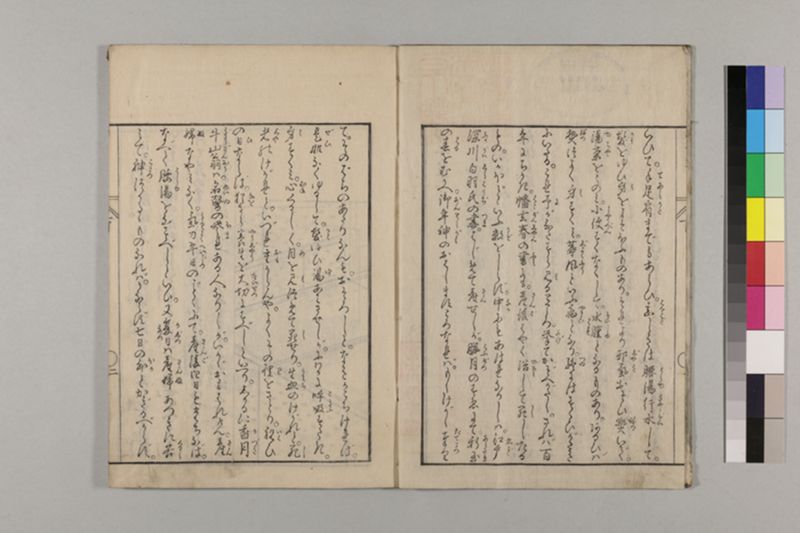
翻刻
【右丁】
いひて。手(て)足(あし)肩(かた)までもあらひ。甚(はなはだ)しきは腰湯(こしゆ)行水(きやうずい)して。
髪(かみ)をゆひ身(み)をよそほふものあり。それより邪気(じやき)おそひ熱(ねつ)いで。
湯茶(ゆちや)をこのみ。小便(しやうべん)すくなくして。水腫(すいしゆ)【左ルビ:はれ】となるものあり。あるひは
熱(ねつ)つよく身(み)すくみ。蓐風(じよくふう)といふ病(やまひ)となり。終(つゐ)にはすくひがたき
にいたる。これ予(よ)がひたすら見(み)るところ。挙(あげ)てかぞへがたし。されば百
年にちかき。幡玄春(はたげんしゆん)の書(ふみ)にも。産後(さんご)はやく浴(ゆあみ)して死(し)したる
もの。いかほどゝいふ数(かず)をしらず。中(なか)にもあはれなりしは。江戸(ゑど)
深川(ふかがは)白羽(しらは)氏(うぢ)の妻(つま)。はじめて産(さん)せしが。臘月(らふげつ)のすゑにて。新玉(あらたま)
の春(はる)をむかへ。御年神(おんとしがみ)のおはしますころなれば。もしけがし奉(たてまつ)り
【左丁】
て。そのばちのあたりなんも。おそろしと。なきかこちければ。
是非(ぜひ)なくゆるして。髪(かみ)ゆひ湯(ゆ)あみさせしが。にわかに呼吸(こきふ)すたき。
身(み)すくみ。心(むね)くるしく。目(め)を見(み)つめて死(し)せり。生血(うみち)のけがれと。死(し)
者(しや)のけがれと。いづれ重(おも)からんや。よくその理(り)をさとり。祝(いは)ひ
の日(ひ)ならば。猶(なを)さら養生(やうじやう)を大切(たいせつ)にすべしといへり。しかるに香月(かづき)
牛山(ぎうざん)翁(おう)は。名医(めいい)の誉(ほま)れある人なりしが。いかゞおもはれけん。産(さん)
婦(ふ)なやみなく。気力(きりよく)平日(へいじつ)のごとくにて。産後(さんご)四日もたちなば。
なべて腰湯(こしゆ)をなすべしといひ。又 夏日(かじつ)【左ルビ:なつ】は産婦(さんふ)あつきに苦(くるし)
みて。神(こゝろ)つかるゝものなれば。かならず七日の外(ほか)とかぎるべからず。
現代語訳
【右丁】
と言って、手足から肩まで洗い、甚だしい場合は腰湯や行水をして、髪を結い身なりを整える者がいる。それによって邪気に襲われ熱が出て、湯茶を好むようになり、小便が少なくなって水腫(むくみ)となる者がいる。あるいは熱が強く身体が硬直し、蓐風という病気となり、ついには救い難い状態に至る。これは私がひたすら見てきたところで、数え上げることができないほどである。そこで百年近く前の幡玄春の書物にも、産後早く入浴して死んだ者がどれほどの数になるか分からないとある。中でも哀れだったのは、江戸深川の白羽氏の妻で、初めて出産したが、12月の末で新年を迎え、年神様がおいでになる頃だったので、もし穢れをお与えして、その罰が当たったら恐ろしいと、泣いて嘆いたので、
【左丁】
やむを得ず許可して、髪を結い湯浴みをさせたところ、にわかに呼吸が止まり、身体が硬直し、胸が苦しくなって、目を見つめたまま死んでしまった。出産の血の穢れと死者の穢れと、どちらが重いだろうか。よくその道理を悟り、祝いの日であればなおさら養生を大切にすべきだと言っている。ところが香月牛山翁は名医の誉れある人だったが、どう思われたのか、産婦に悩みがなく、気力が平日のようであって、産後四日も経てば、一般に腰湯をするべきだと言い、また夏は産婦が暑さに苦しんで心が疲れるものなので、必ずしも七日以降と限るべきではないと言っている。
英語訳
【Right page】
...and they wash from hands and feet up to the shoulders, and in extreme cases take hip baths and ablutions, tie their hair, and dress themselves up. From this they are attacked by evil qi and develop fever, crave hot tea, urinate little, and develop edema (swelling). Or they develop strong fever and body stiffness, contracting an illness called puerperal wind, eventually reaching a state beyond救salvation. This is what I have constantly observed, and the cases are too numerous to count. Therefore, in the writings of Hata Genshun from nearly a hundred years ago, it states that the number of those who died from bathing too early after childbirth is unknown. Among these, the most pitiful case was the wife of Mr. Shiraha of Fukagawa in Edo, who gave birth for the first time. It was at the end of the twelfth month, welcoming the New Year when the year deity was present, so fearing that if she offered defilement to the deity and incurred divine punishment, she wept and lamented,
【Left page】
so they had no choice but to permit it, allowing her to tie her hair and bathe. Suddenly her breathing stopped, her body stiffened, her chest became painful, and she died staring fixedly. Between the defilement of birth blood and the defilement of the dead, which is heavier? One should well understand this principle and take even greater care of one's health on celebratory days. However, the venerable Katsuki Gyuzan, who had the reputation of being a famous physician, thought somehow differently. He said that if a new mother has no troubles and her vitality is as usual, then generally she should take hip baths after four days postpartum. Also, in summer, new mothers suffer from the heat and their spirits become exhausted, so one should not necessarily limit it to after seven days.