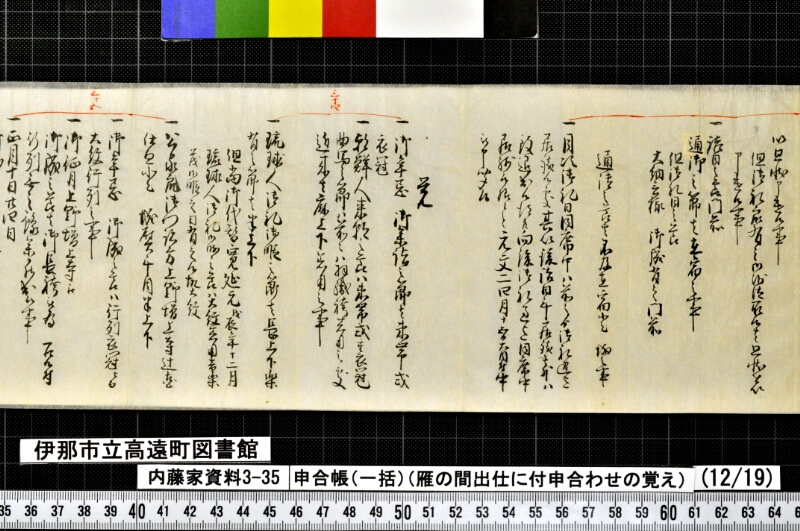
翻刻
一 詰日之節門前
通御之節は在宿之事
但御礼日之節
大納言様 御成有之門前
通御之節は不及在宿登 城之事
一 月次御礼日同席中は前々ゟ御礼過迄
居残候処其以後詰日斗居残其外は
致退出候得共向後御礼過迄同席中
居残候様にと元文二四月十五日大目付中
被申聞候
【ここまで三十三】
覚
一 御年忌御参詣之節は束帯或
衣冠
一 朝鮮人来朝之節は束帯或衣冠
曲馬之節は前々は羽織袴着用之処
近来は麻上下着用之事
一 琉球人御礼御暇之節は長上下楽
有之節は半上下
但当御代替寛延元戊辰年十二月
琉球人御礼御暇之節は大紋着用音楽
も御暇之日有之候故大紋
【ここまで三十四】
一 公家衆御門跡方上野増上寺辻固
仕廻登 城熨斗目半上下
一 御年忌 御成之節は行列衣冠にて
大紋行列之事
一 御征月上野増上寺え
御成之節は御長袴被為 召候付
行列無之予参罷出候
【以降、次コマ】
現代語訳
一、詰日の節、門前を
通られる節は在宿のこと。
但し御礼日の節、
大納言様の御成りがあり門前を
通られる節は在宿に及ばず登城のこと。
一、月次御礼日に同席中は前々より御礼が過ぎるまで
居残っていたところ、その以後は詰日のみ居残り、その外は
退出していたが、向後は御礼が過ぎるまで同席中は
居残るようにと、元文二年四月十五日に大目付中より
申し聞かされた。
覚
一、御年忌御参詣の節は束帯或いは
衣冠
一、朝鮮人来朝の節は束帯或いは衣冠
曲馬の節は前々は羽織袴着用のところ、
近来は麻上下着用のこと。
一、琉球人御礼御暇の節は長上下、楽が
ある節は半上下
但し当御代替の寛延元戊辰年十二月、
琉球人御礼御暇の節は大紋着用、音楽
も御暇の日にあったため大紋
一、公家衆・御門跡方・上野増上寺辻固め
仕舞い登城は熨斗目半上下
一、御年忌御成りの節は行列・衣冠にて
大紋行列のこと
一、御征月に上野・増上寺へ
御成りの節は御長袴をお召しになるため
行列はなく、予め参り罷り出ること
英語訳
One: On duty days, when passing through the gate area, remain in residence. However, on formal ceremony days when the Great Councilor makes a formal visit and passes through the gate area, it is not necessary to remain in residence—ascend to the castle instead.
One: On monthly formal ceremony days, colleagues had previously remained until after the ceremonies were completed, but thereafter only remained on duty days and withdrew on other occasions. However, going forward, colleagues should remain until after the ceremonies are completed, as instructed by the senior inspectors on the 15th day of the 4th month of Genbun 2 (1737).
Memorandum
One: For anniversary memorial services and visits, wear sokutai court dress or ikan court dress.
One: When Korean envoys come to court, wear sokutai court dress or ikan court dress. For equestrian performances, previously haori jackets and hakama were worn, but recently hemp formal dress is worn.
One: For Ryukyu people's formal audiences and departure ceremonies, wear long formal dress; when there is music, wear half formal dress. However, during the current reign change in the 12th month of Kan'en 1, year of the dragon (1748), for Ryukyu people's formal audience and departure ceremonies, large-crested dress was worn, and since there was also music on the departure day, large-crested dress was used.
One: For court nobles, imperial temple heads, and completion of guard duties at Ueno and Zōjōji temples, ascend to the castle wearing noshime half formal dress.
One: For anniversary memorial service formal visits, wear court dress in procession and large-crested dress for the procession.
One: For征月 visits to Ueno and Zōjōji temples, since His Lordship wears long hakama, there is no procession, and one should appear in advance.