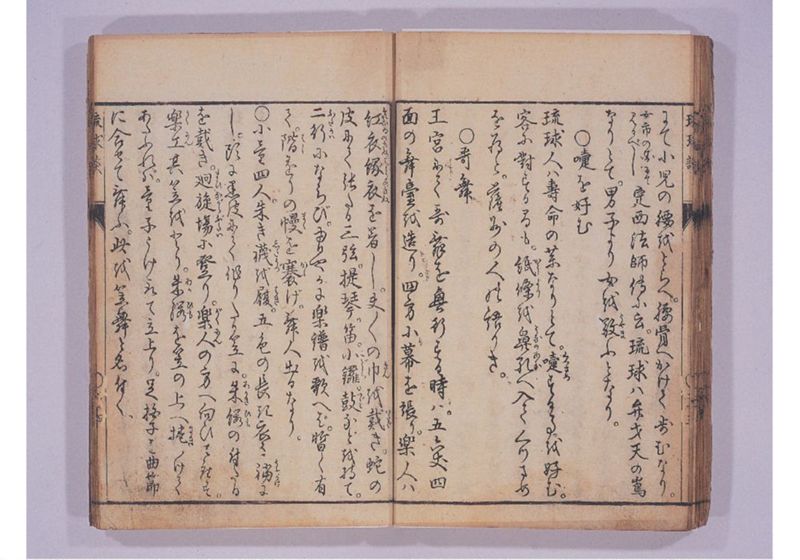
翻刻
にて小児の腰をとらへ、腰骨へかけて歩むなり、
《割書:女市の図にて|見るべし》定西法師伝に云、琉球は弁才天の島
なりとて、男子より女を敬(うやま)ふとなりふとなり、
〇嚏を好む
琉球人は寿命の薬なりとて、嚏(くつさめ)する事、を好む、
客に対する間も、紙条(かうより)を鼻孔(はなのあな)へ入てくつさめ
を為と、薩州の人の語りき、
〇哥舞
王宮にて哥舞を興行する時は、五六丈四
面の舞台を造り、四方に幕を張り、楽人は
紅衣(くれなゐのきぬ)緑衣( みどりのきぬ )を着し、夫〳〵の巾(きん)を戴(いたゞ)き、蛇の
皮にて張たる三弦、提琴、笛、小鑼(こどら)、鼓(つゞみ)などを持て、
二行(ふたかは)にならび、ゆるやかに楽譜を歌へば、暫く有
て、階(はし)懸りの幔(まく)を褰(かゝ)げ、舞人出るなり、
〇小童四人、朱き襪(したうづ)を履(はき)、五色の長き衣を襠(うちかけ)に
し、頭に黒皮にて作りたる笠に、朱纓(あかきひも)の付たる
を戴き、廻旋(まひながら)場(ぶたい)に登り、楽人(がくにん)の方へ向ひて座す、
楽工(がくにん)其笠をとり、朱纓(あかひも)を笠の上へ捲(まき)■【つヵ】けて
あたふれば、童子うけ取て立上り、足拍子を曲節
に合せて舞ふ、此を笠舞と名付く、
現代語訳
子供の腰を捉え、腰骨にかけて歩いている。《割書:女性の図を見るとよい》定西法師伝に言うには、「琉球は弁才天の島である」として、男子よりも女を敬うということである。
○くしゃみを好む
琉球人は長寿の薬であるとして、くしゃみをすることを好む。客に対している間も、紙片を鼻孔へ入れてくしゃみをすると、薩摩の人が語った。
○歌舞
王宮で歌舞を興行する時は、五六丈四面の舞台を造り、四方に幕を張り、楽人は紅色の衣、緑色の衣を着し、それぞれの頭巾を戴き、蛇の皮で張った三線、提琴、笛、小さな銅鑼、鼓などを持って、二列に並び、ゆっくりと楽譜を歌う。しばらくすると、階段がかりの幕を掲げ、舞人が出てくる。
○小童四人が、朱色の足袋を履き、五色の長い衣を打掛けにし、頭に黒い皮で作った笠に、朱色の紐の付いたものを戴き、回転しながら舞台に登り、楽人の方へ向かって座る。楽工がその笠を取り、朱色の紐を笠の上へ巻きつけて渡すと、童子は受け取って立ち上がり、足拍子を曲節に合わせて舞う。これを笠舞と名付ける。
英語訳
They hold the child's waist with one hand, supporting them on their hip bone while walking. 《Marginal note: This can be seen in illustrations of women》According to the Biography of Monk Jōsai, since "Ryukyu is the island of Benzaiten," men respect women more than themselves.
○Fondness for Sneezing
Ryukyu people, believing it to be medicine for longevity, are fond of sneezing. Even while receiving guests, they insert paper strips into their nostrils to induce sneezing, as told by people from Satsuma.
○Song and Dance
When song and dance performances are held at the royal palace, a stage of five or six jō square is constructed, curtains are hung on all four sides, and musicians wear red and green robes, each wearing their respective headgear. They hold three-stringed instruments covered with snake skin, fiddles, flutes, small gongs, drums, and other instruments, arranging themselves in two rows and slowly singing musical scores. After a while, the curtain at the stage approach is raised and the dancers emerge.
○Four young boys wear vermillion tabi, don long robes of five colors as outer garments, and wear caps made of black leather with attached red cords on their heads. They ascend the stage while spinning, and sit facing the musicians. When the musicians take their caps and wind the red cords around the tops of the caps before returning them, the boys receive them, stand up, and dance with foot rhythms matching the musical phrases. This is called the "Hat Dance."