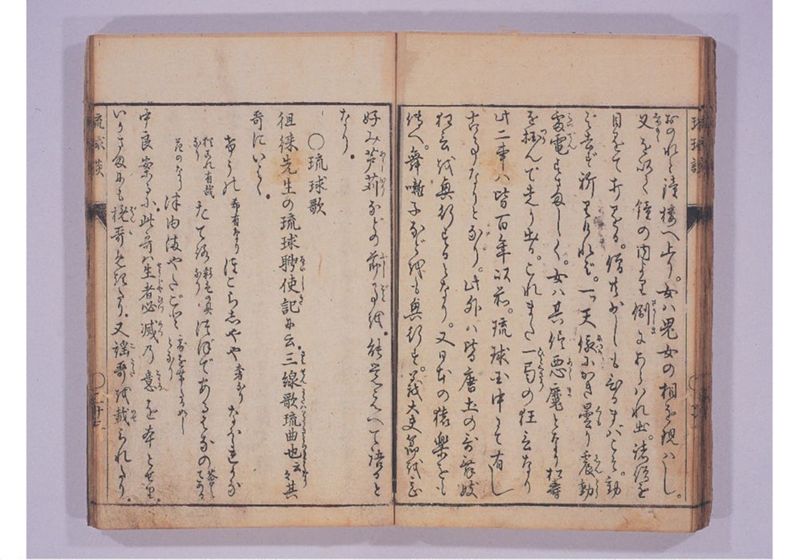
翻刻
おのれと鐘楼へ上り、女は鬼女の相を現はし、
叉(しゆもく)を以て鐘の内より倒(さかしま)にあらはれ出、諸僧を
目懸て打懸る、僧共少しもひるまばこそ、動
ず去ず祈りければ、一 ̄ツ天 俄(にはか)にかき曇(くも)り震動(しんとう)
雷電(らいでん)すさましく、女は其儘 悪魔(あくま)となり松寿
を掴(つか)んで走り出る、これまた一局(ひとくさり)の狂言なり
此二事は皆百年以前、琉球国中にて有し
古事なりとなり、此外は皆唐土の歌舞妓
狂言を興行するとなり、又日本の猿楽をも
伝へ、舞囃子などをも興行す、義太夫節を甚
好み芦苅(あしかり)などの節事(ふしごと)を、能覚えへて語ると
なり、
〇琉球歌
徂徠先生の琉球 聘使記(へいしき)に云、三線歌琉曲也(さんせんうたはりうきうのきよくなり)《割書:云| 云》其
哥にいはく、
けうの《割書:希有なり| 》ほこらしやや《割書:奢なり| 》なほるれかな
《割書:猶これ有哉|なり》たてろ《割書:彩色の具|なり》つぼであるはなの《割書:莟み|てある》
《割書:花のなり| 》つゆまやたごと《割書:露を帯たる如し|となり》
中良案るに、此哥は生者必滅(せうじやひつめつ)の意(こゝろ)を本とせり、
いかさまにも挽哥(ばんか)めきたり、又 謡哥(こうた)を載(のせ)られたり、
現代語訳
自ら鐘楼へ上がり、女は鬼女の姿を現し、撞木を使って鐘の内から逆さまに現れ出て、僧たちを狙って打ちかかった。僧たちは少しもひるまず、動かずに祈り続けていると、突然天がにわかに曇り、大地が震動し、雷電が激しく起こった。女はそのまま悪魔となり、松寿を掴んで走り去った。これもまた一つの狂言である。
この二つの話はいずれも百年以前に琉球国内で起こった古い出来事だということである。この他は皆、中国の歌舞伎狂言を上演するということである。また日本の猿楽も伝わっており、舞囃子なども上演する。義太夫節を非常に好み、「芦苅」などの節回しを上手に覚えて語るということである。
○琉球の歌
徂徠先生の『琉球聘使記』に言う、「三線の歌は琉球の曲である」。その歌に言うには、
けうの(稀有な)ほこらしやや(奢りな)なほるれかな
(なお、これがあることよ)たてろ(彩色の具)つぼであるはなの(蕾んでいる)
(花の)つゆまやたごと(露を帯びているようだ)
中良が考えるに、この歌は「生者必滅」の意味を根本としている。いかにも挽歌めいている。また謡歌も載せられている。
英語訳
The bell itself rose to the bell tower, and the woman manifested the appearance of a demon woman. Using the striking mallet, she emerged upside down from inside the bell and struck at the monks. The monks did not flinch in the slightest and continued praying without moving. Then suddenly the sky darkened, the earth shook violently, and thunder and lightning raged fiercely. The woman became a demon as she was and grabbed Shōju and ran away. This too is one act of a kyōgen play.
These two stories are both ancient events that occurred in the Ryukyu Kingdom over a hundred years ago. Besides these, they perform Chinese kabuki kyōgen plays. Japanese sarugaku (Noh comedy) has also been transmitted, and mai-hayashi (dance with musical accompaniment) are performed as well. They greatly favor gidayū-bushi (a style of narrative music) and skillfully learn and recite the melodic passages of works like "Ashikari" (The Reed Cutter).
○ Ryukyu Songs
In Master Sorai's "Ryukyu Heishi-ki" (Record of Ryukyu Envoys), it states: "Songs with sanshin are Ryukyu music." The song says:
Kyō no (rare) hokorashi ya ya (luxurious) nahoru re kana
(Indeed, this exists) tatero (coloring materials) tsubo de aru hana no (budding)
(flowers) tsuyu maya ta goto (as if bearing dew)
Nakara considers that this song is fundamentally based on the meaning of "shōja hitsumetsu" (the living must die). It certainly resembles a lament. Utai-uta (Noh chanting songs) are also included.