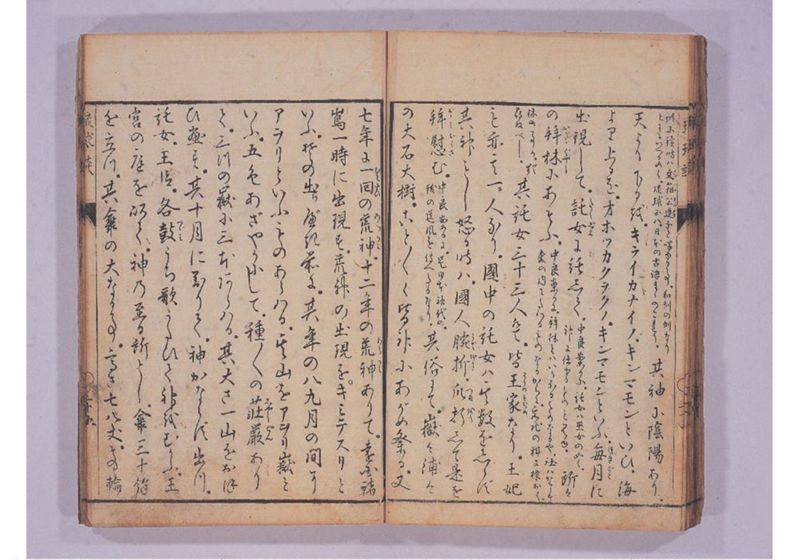
翻刻
《割書:訓に読時は文箱(フンハコ)公達(キンタチ)なと呼ふる事、和訓の例なり|此にていへる如く、琉球には、日本の古語まゝのこれり、》其神に陰陽あり、
天より下るを、キライカナイノ、キンマモンといひ、海
より上るを、オホツカクヲクノ、キンマモンといふ、毎月(つきごと)に
出現して、託女(たくじよ)に託して、《割書:中良案るに、託女は巫女の如く、|神に仕ゆるものと見ゆ、》所々
の拝林(おがみばやし)にあそふ、《割書:中良案るに、拝林とはいかなるものなるや、社はかならす|森の内にたつるものなるからに、宮地の■【祖ヵ】に標おく、》
《割書:体の事か、猶|尋ぬべし、》其託女三十三人は、皆 王家(わうのすぢめ)なり、王妃
も亦其一 ̄チ人なり、国中の託女は其数を知らず
其神み〳〵怒る時は、国人 腕折(うでおり)、爪折(つめおり)して是を
拝慰(おかみなくさ)む、《割書:中良案るに、是日本神代の、|祓の遺風を伝へたるなり、》其俗にて、嶽々浦々
の大石大樹、こと〳〵く皆神にあがめ祭る、又
七年に一回(ひとたひ)の荒神(あらかみ)、十二年の荒神(あらかみ)ありて、遠国諸
島一時に出現す、荒神の出現を、キミテスリと
いふ、その出 ̄ツ べき前に、其年の八九月の間に
アヲリといふものあらはる、其山をアヲリ嶽と
いふ、五色あざやかにして、種〳〵の荘厳(しやうごん)あり
て、三つの嶽に三本あらはる、其大さ一山をおほ
ひ尽す、其十月に到りて、神かならず出つ、
託女、王臣、各 鼓(つゞみ)うち歌うたひて神をむかふ、王
宮の庭を以て、神の至る所とし、傘三十余
を立つ、其傘の大なる事、高さ七八丈、その輪
現代語訳
(訓読する時は文箱(フンハコ)公達(キンタチ)などと呼ぶことは、和訓の例である。ここで言うように、琉球には日本の古語がそのまま残っている。)その神に陰陽がある。
天より降るものを、キライカナイノ、キンマモンといい、海より上るものを、オホツカクヲクノ、キンマモンという。毎月出現して、託女(神に仕える女性)に憑依して、(中良が考えるに、託女は巫女のように、神に仕える者と思われる。)所々の拝林で遊ぶ。(中良が考えるに、拝林とはどのようなものだろうか。社は必ず森の内に立つものであるから、宮地の■【祖か】に標を置く。体のことか、なお尋ねるべきである。)
その託女三十三人は、皆王家の血筋の女である。王妃もまたその一人である。国中の託女はその数を知らない。その神々が怒る時は、国人は腕を折り、爪を折ってこれを拝み慰める。(中良が考えるに、これは日本神代の祓いの遺風を伝えたものである。)その風俗では、各地の嶽や浦の大石大樹を、すべて神として崇め祭る。また七年に一度の荒神、十二年の荒神があって、遠国諸島に一時に出現する。荒神の出現を、キミテスリという。その出現するであろう前に、その年の八九月の間にアヲリというものが現れる。その山をアヲリ嶽という。五色鮮やかで、種々の荘厳があって、三つの嶽に三本現れる。その大きさは一山を覆い尽くす。その十月に至って、神が必ず出現する。託女、王臣は、各々鼓を打ち歌を歌って神を迎える。王宮の庭を神の至る所とし、傘三十余を立てる。その傘の大きなことは、高さ七八丈、その輪は...
英語訳
(When reading with Japanese pronunciation, calling them "funhako" (document box) and "kintachi" (young nobles) is an example of Japanese reading. As stated here, in Ryukyu, ancient Japanese language remains unchanged.) These deities have both yin and yang aspects.
Those that descend from heaven are called Kiraikanai no Kinmamon, and those that rise from the sea are called Ohotsukakuwoku no Kinmamon. They appear every month and possess takujo (women who serve the gods). (Nakara considers that takujo are like shrine maidens who serve the gods.) They play in various sacred groves called ogamibayashi. (Nakara considers: what exactly are these sacred groves? Since shrines are always built within forests, markers are placed at the ancestral sites of shrine grounds. Perhaps this refers to the physical aspects - this should be further investigated.)
These thirty-three takujo are all women of royal blood. The queen is also one of them. The number of takujo throughout the country is unknown. When these gods become angry, the people break their arms and fingernails to worship and appease them. (Nakara considers that this transmits the ancient tradition of purification rituals from Japan's age of gods.) In their customs, they revere and worship all the large stones and great trees of every peak and inlet as deities. There are also rough gods (arakami) that appear once every seven years and once every twelve years, manifesting simultaneously across distant islands. The appearance of rough gods is called Kimitesuري. Before their appearance, during the eighth and ninth months of that year, something called Awori appears. That mountain is called Awori-dake. It is brilliantly colored in five hues with various ornamentations, appearing as three objects on three peaks. Their size covers an entire mountain. When the tenth month arrives, the gods certainly appear. The takujo and royal retainers each beat drums and sing songs to welcome the gods. The palace courtyard serves as the place where gods arrive, and over thirty umbrellas are erected. These umbrellas are enormous, with heights of seven to eight jō, and their circumference...