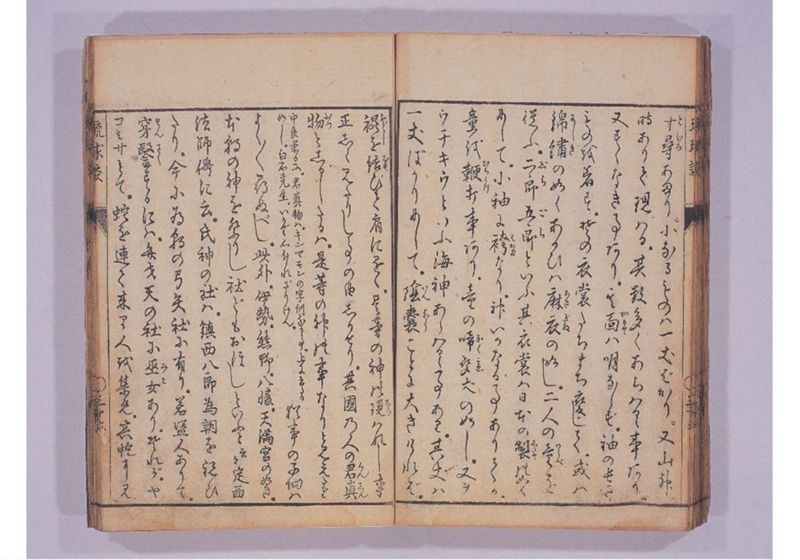
翻刻
十尋(とひろ)あまり、小なるものは一丈ばかり、又山神
時ありて現はる、其数多くあらはるゝ事あり、
又すくなき事あり、其 面(おもて)は明ならず、袖の長き
ものを着す、その衣裳たちまち変じて、或は
錦繡(にしき)の如くあるひは麻衣(あさきぬ)の如し、二人の童(わらべ)を
従ふ、二郎(じら)五郎(ごら)といふ其衣裳は日本の製(したて)の如く
にして、小袖に袴(はかま)なり、神いかなる事ありてか、
童を鞭打(むちうつ)事あり、童の啼声(なくこゑ)犬の如し、又ヲ
ウチキウといふ海神あらはるゝ事あり、其丈は
一丈ばかりにして、陰嚢(いんなう)ことに大きければ、
緄(ふどし)を結(むす)びて肩に懸く、是等の神の現(あら)はれし事
正しく見たりし事の由しるせり、其国の人の君真(くんしん)
物(ぶつ)としるしたるは、是等の神の事なりと見えたり
《割書:中良案るに、君真物は、キンマモンの字訓なる事、上に書たる|如し、白石先生、いかで心付れざりけん、》猶事の子細は
よく〳〵尋ぬべし、此外、伊勢、熊野、八幡、天満宮の如き、
本朝の神を祭りし社どもおほしといふと《割書:云| 云》定西
法師伝に云、氏神の社は、鎮西八郎為朝を祝ひ
たり、今に為朝の弓矢社に有り、若盗人ありて、
穿鑿(せんさく)するには、弁才天の社に巫女(みこ)あり、それが、ヤ
コミサとて、蛇を連て来り人を集め、其蛇に見
現代語訳
十尋余り、小さなものは一丈ほどである。また山神が時々現れることがある。その数多く現れることもあり、また少ないこともある。その顔は明らかではなく、袖の長い衣を着ている。その衣装はたちまち変化して、ある時は錦のようであり、ある時は麻衣のようである。二人の童を従えており、二郎(じら)五郎(ごら)という。その衣装は日本の仕立てのようで、小袖に袴である。神がどのようなことがあってか、童を鞭打つことがある。童の泣き声は犬のようである。またヲウチキウという海神が現れることがある。その丈は一丈ほどで、陰嚢が特に大きいので、褌を結んで肩に掛けている。これらの神が現れたことを確かに見たという事が記されている。その国の人の君真物と記したのは、これらの神のことであると思われる。
(中良が考えるに、君真物は、キンマモンの字訓であることは、上に書いた通りである。白石先生は、なぜ気づかれなかったのだろうか。)なお事の詳細はよくよく尋ねるべきである。この他、伊勢、熊野、八幡、天満宮のような、日本の神を祭った社が多くあるということである。
定西法師伝によると、氏神の社は、鎮西八郎為朝を祀っている。今でも為朝の弓矢が社にある。もし盗人があって、詮議するには、弁才天の社に巫女がおり、それがヤコミサといって、蛇を連れて来て人を集め、その蛇に見せて...
英語訳
over ten fathoms, while the smaller ones are about one jō. Mountain gods also appear from time to time. Sometimes many appear, and sometimes few. Their faces are unclear, and they wear garments with long sleeves. Their clothing changes instantly, sometimes appearing like brocade, other times like hemp cloth. They are accompanied by two children called Jirō and Gorō. Their clothing is like Japanese tailoring, consisting of kosode (short-sleeved kimono) and hakama (divided skirts). For some reason, the gods sometimes whip the children. The children's crying sounds like dogs. There is also a sea god called Wouchikiu that appears. It is about one jō tall, and because its scrotum is particularly large, it ties a loincloth and hangs it over its shoulder. It is recorded that these divine manifestations were actually witnessed. What the people of that country recorded as "kunshin-butsu" appears to refer to these gods.
(Nakara considers that kunshin-butsu is the character reading of Kinmamon, as written above. I wonder why Master Hakuseki did not notice this.) The details of these matters should be thoroughly investigated. Besides these, there are said to be many shrines that worship Japanese deities such as those of Ise, Kumano, Hachiman, and Tenmangū.
According to the Biography of Priest Jōsai, the ujigami (clan deity) shrine enshrines Chinzei Hachirō Tametomo. Tametomo's bow and arrows are still in the shrine today. When there is a thief and an investigation is needed, there is a shrine maiden at the Benzaiten shrine who, called Yakomisa, brings a snake to gather people and shows it to the snake...