翻刻
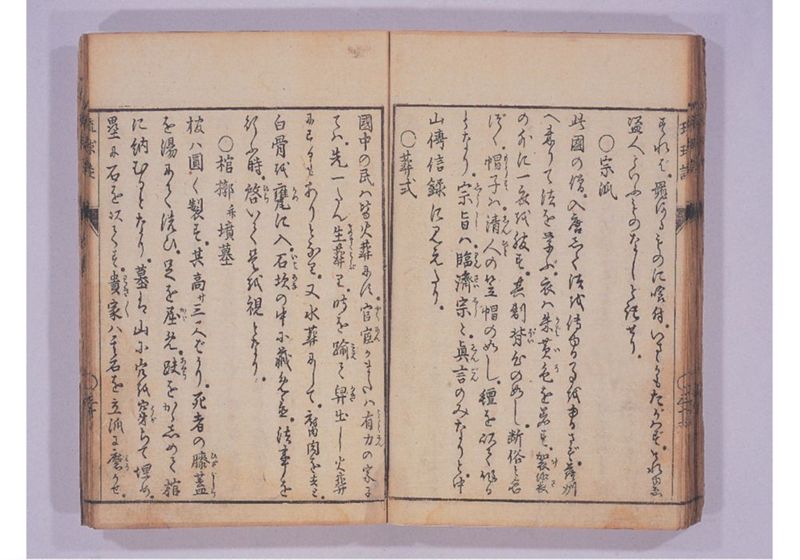
すれば、罪あるものに喰付、いさゝかもたがはず、それゆゑ
盗人といふものなしと記せり、
○宗派
此国の僧、入唐して法を伝ゆる事をゆるさず、薩州
へ来りて法を学ぶ、衣は朱黄色(かばいろ)を着す、袈裟(けさ)
の外に一衣を服す、其制 背(ぼい)心の如し、断俗と名
づく、帽子(もうす)は、清人(しんひと)の笠帽の如し、氈を以て作る
となり、宗旨(しうし)は、臨済宗(りんさいしう)と、真言(しんごん)のみなりと、中
山伝信録に見えたり、
○葬式
国中の民は皆火葬にす、官宦(やくにん)かまたは有力(はさとにん)の家に
ては、先一たん生葬(そのまゝほうぶ)り、時を踰(こえ)て舁(かき)出し火葬
にするもありとなり、又水葬にして、腐肉を去と、
白骨を甕(かめ)に入、石坎(いはあな)の中に蔵め置、法事を
行ふ時、啓(ひら)いて是を視となり、
○棺槨《割書:并|》墳墓
棺は円く製す、其高 ̄サ三尺ばかり、死者の膝蓋(ひざがしら)
を湯にて洗ひ、足を屈(かゞ)め、趺(あくら)をかゝしめて棺
に納むるとなり、墓は山に穴を穿(うが)ちて埋め、
塁に石を以てす、貴家(わき〳〵)は其石を立派に磨(みか)かせ、
現代語訳
すれば、罪のある者に噛み付き、少しも間違うことがない。それゆえ盗人というものはいないと記されている。
○宗派
この国の僧は、入唐して仏法を伝えることを許されず、薩摩国へ来て仏法を学ぶ。衣は樺色を着用し、袈裟の外にもう一つの衣を着る。その制度は背心のようである。断俗と名付ける。帽子は、中国人の笠帽のようで、フェルトで作るという。宗旨は、臨済宗と真言宗のみであると、中山伝信録に見える。
○葬式
国中の民は皆火葬にする。役人あるいは有力者の家では、まず一旦そのまま土葬し、時を経て掘り出して火葬にすることもあるという。また水葬にして、腐肉を取り去り、白骨を甕に入れ、石穴の中に蔵しておき、法事を行う時、開いてこれを見るという。
○棺槨並びに墳墓
棺は円く作る。その高さは三尺ほどで、死者の膝を湯で洗い、足を曲げ、胡座をかかせて棺に納めるという。墓は山に穴を掘って埋め、石を積み上げる。貴い家では、その石を立派に磨かせ、
英語訳
then it would bite those who are guilty, never making a mistake. Therefore, it is recorded that there are no thieves.
○Religious Sects
The monks of this country are not permitted to enter Tang China to transmit Buddhist teachings, so they come to Satsuma Province to study the Dharma. They wear clothing of a reddish-brown color and, in addition to the kesa (Buddhist stole), they wear another garment. This system is like a vest and is called "danzoku" (severing worldly ties). Their caps are like the hat-caps of Chinese people and are made of felt. The religious sects are only Rinzai Zen and Shingon, as recorded in the Chuzan Denshin-roku.
○Funeral Rites
All the people in the country practice cremation. In the houses of officials or influential people, they sometimes first bury the body as is, then after some time has passed, dig it up and cremate it. They also practice water burial, removing the decayed flesh, placing the white bones in jars, storing them in stone caves, and when conducting memorial services, they open them to view the remains.
○Coffins and Tombs
Coffins are made round, about three feet in height. They wash the deceased's knees with hot water, bend the legs, make them sit cross-legged, and place them in the coffin. For graves, they dig holes in mountains to bury the dead and pile up stones. Noble families have these stones finely polished,