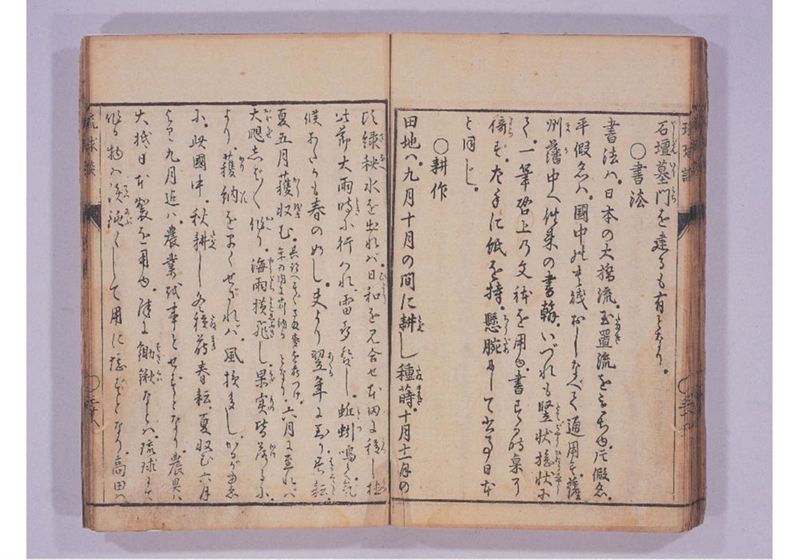
翻刻
石壇(いしだん)墓門(はかくち)を建るも有となり、
○書法
書法は、日本の大橋流、玉置(たまき)流をもちゆ、片仮名、
平仮名は、国中の貴賤おしなべて通用す、薩
州藩(まか)中へ往来の書翰、いづれも竪状(たてじやう)捻状(ひねりしやう)に
て、一筆啓上の文体を用ゆ、書する時桌に
倚(よら)ず、左手に紙を持、懸腕(ちうだめ)にして書事日本
と同じ、
○耕作
田地は、九月十月の間に耕(たがへ)し種蒔(たねまき)、十月十一月の
頃 緑秧(さなへ)水を出れば、日和(ひより)を見合せ本田に移(うつ)し植(うゑ)
此節大雨 時(とき)に行はれ、雷声発し、蚯蚓(みゝつ)鳴く、気
候あたかも春の如し、夫より翌(あくる)年に到り、春耘(はるくさきる)、
夏五月 穫収(かりをさ)む、《割書:其跡へすぐさま麦を蒔つけ、|年の内に苅納る となり、》六月に至れば
大颶(おほかぜ)しば〳〵作(おこ)り、海雨(ゆうだち)横飛(よこしふき)し、果実(くだもの)皆 落(おつ)るに、
より、穫納(かりいれ)を早くせざれば、風損多し、かるがゆゑ
に、此国中、秋 耕(たがへ)し冬 種蒔(たねまき)春耘、夏収む六月
より九月迄は、農業を事とせずとなり、農具は
大抵日本製を用ゆ、殊に鋤鍬(すきくは)なとは、琉球にて
作る物は鉄鈍(てつにぶ)くして用に堪ずとなり、高田は
現代語訳
石壇や墓門を建てることもあるという。
○書法
書法は、日本の大橋流、玉置流を用いる。片仮名、平仮名は、国中の貴賤を問わず広く通用している。薩摩藩領内への往来の書簡は、いずれも縦書きの捻り状で、「一筆啓上」の文体を用いる。書く時は机に寄りかからず、左手に紙を持ち、宙に腕を浮かせて書くことは日本と同じである。
○耕作
田地は、九月十月の間に耕して種蒔きし、十月十一月の頃に緑の苗が水面に出れば、天候を見計らって本田に移植する。この時期に大雨がしばしば降り、雷が鳴り、ミミズが鳴き、気候はあたかも春のようである。それより翌年に至り、春に草を刈り、夏五月に収穫する。(その跡地にすぐさま麦を蒔き付け、一年の内に刈り納めるという。)六月に至れば大風がしばしば起こり、にわか雨が横殴りに降り、果実が皆落ちるため、収穫を早くしなければ風による損害が多い。そのため、この国では、秋に耕し冬に種蒔き、春に草刈り、夏に収穫し、六月から九月までは農業を行わないという。農具は大抵日本製を用いる。特に鋤や鍬などは、琉球で作る物は鉄が鈍くて用に堪えないという。高田は
英語訳
and some build stone platforms and tomb gates.
○Calligraphy
For calligraphy, they use the Japanese Ohashi school and Tamaki school styles. Katakana and hiragana are commonly used throughout the country by both high and low classes alike. Correspondence with the Satsuma domain territory all uses vertical writing in the twisted letter format, employing the "Ippitsu keijo" (I take up my brush) literary style. When writing, they do not lean on the desk but hold the paper with their left hand and write with their arm suspended in the air, the same as in Japan.
○Agriculture
Rice fields are plowed and sown between September and October. Around October and November, when the green seedlings emerge from the water, they watch the weather and transplant them to the main rice paddies. During this season, heavy rains frequently occur, thunder sounds, and earthworms sing - the climate is just like spring. From then until the following year, they weed in spring and harvest in summer in May. (Immediately after that, they sow wheat in the same fields and harvest it within the year.) When June arrives, great winds frequently arise, sudden rains blow sideways, and all fruits fall, so if the harvest is not done early, there is much wind damage. Therefore, in this country, they plow in autumn, sow in winter, weed in spring, harvest in summer, and do not engage in agriculture from June to September. For farming tools, they mostly use Japanese-made ones. Particularly for plows and hoes, those made in Ryukyu have dull iron that is not suitable for use. The highland fields are