翻刻
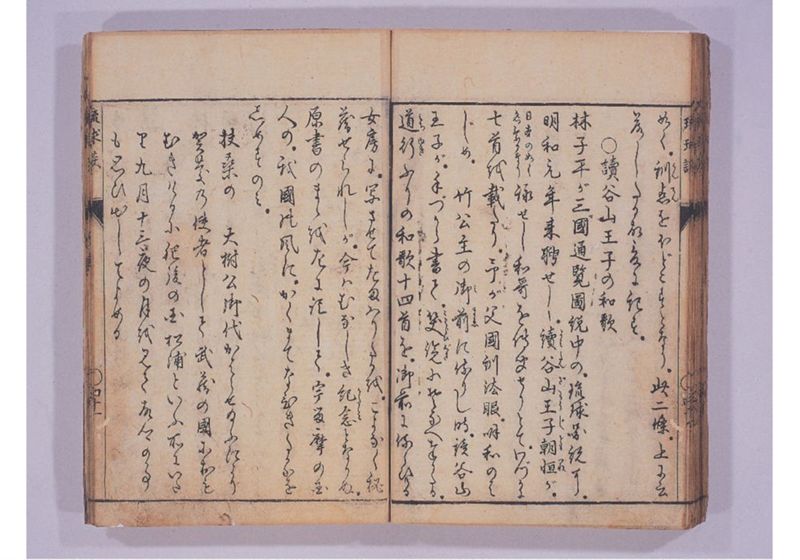
如く、訓点(くんてん)をほどこすとなり、此二条、上に云
落したる故爰に記す、
○読谷山王子の和歌
林子平が三国通覧図説中の、琉球図説に、
明和元年来聘せし、読谷山王子(よみたんざわうじ)朝恒(ともつね)が、
《割書:日本の如く|名乗るなり》詠せし和哥を伝聞せりとて、わづかに
七首を載たり、予が父国訓法眼、明和のは
じめ、竹公主の御前(みまゑ)に侍りし時、読谷山
王子が、手づから書て、笑覧(みわらひぐさ)にそなへ奉りたる、
道行(みちゆき)ふりの和歌十四首を、御前に侍らひける
女房に、写させてたまはりたるを、こよなく秘
蔵せられしが、今はむなしき紀念(かたみ)となりぬ、
原書のまゝを左に記して、宇留摩の国
人の、我国の風に、かくまてなひきたるを
しめすのみ、
扶桑の 大樹公御代かはらせ給ふにより
賀慶の使者として武蔵の国におも
むきけるに肥後の国松浦といふ所にいた
り九月十三夜の月を見て故郷の事
も思ひ出してよめる
現代語訳
ように、訓点を施すということである。この二条は、上で言い落としたため、ここに記す。
○読谷山王子の和歌
林子平の『三国通覧図説』中の琉球図説に、明和元年に来聘した読谷山王子朝恒が(日本のように名乗るのである)詠んだ和歌を伝聞したとして、わずかに七首を載せている。私の父である国訓法眼は、明和の初めに竹公主の御前に侍っていた時、読谷山王子が手ずから書いて、ご笑覧に供え奉った道行振りの和歌十四首を、御前に侍っていた女房に写させていただいたものを、この上なく秘蔵していたが、今は亡き人の形見となってしまった。原書のままを以下に記して、琉球の国の人が、我が国の風習にこれほどまでに馴染んでいることを示すだけである。
扶桑の大樹公の御代が変わられることにより、賀慶の使者として武蔵の国へ赴いたところ、肥後の国松浦という所に至り、九月十三夜の月を見て故郷のことも思い出して詠んだ歌
英語訳
like the Japanese do, they apply reading marks (kunten). These two items were omitted from what I said above, so I record them here.
○Waka Poetry by Prince Yomitanzan
In Hayashi Shihei's "Sangoku Tsūran Zusetsu" (Illustrated Survey of Three Countries), specifically in the Ryukyu section, he records only seven waka poems that he claims to have heard were composed by Prince Yomitanzan Tomotsune, who came as an envoy in the first year of Meiwa (they adopt names in the Japanese manner). My father, Hokkyo Kokukun, when he was serving in the presence of Princess Take at the beginning of the Meiwa era, received fourteen waka poems in the style of michiyuki (travel narrative) that Prince Yomitanzan had personally written and humbly offered for her amusement. These were copied by a lady-in-waiting who served in her presence, and my father treasured them greatly, but now they have become mere mementos of the deceased. I record them below exactly as in the original manuscript, merely to show how thoroughly the people of Uruma (Ryukyu) have become familiar with the customs of our country.
Composed when, due to the change in the reign of the Great Lord of Fusō (Japan), he traveled to Musashi Province as a congratulatory envoy, and upon reaching a place called Matsuura in Higo Province, he saw the moon on the thirteenth night of the ninth month and was reminded of his homeland: